





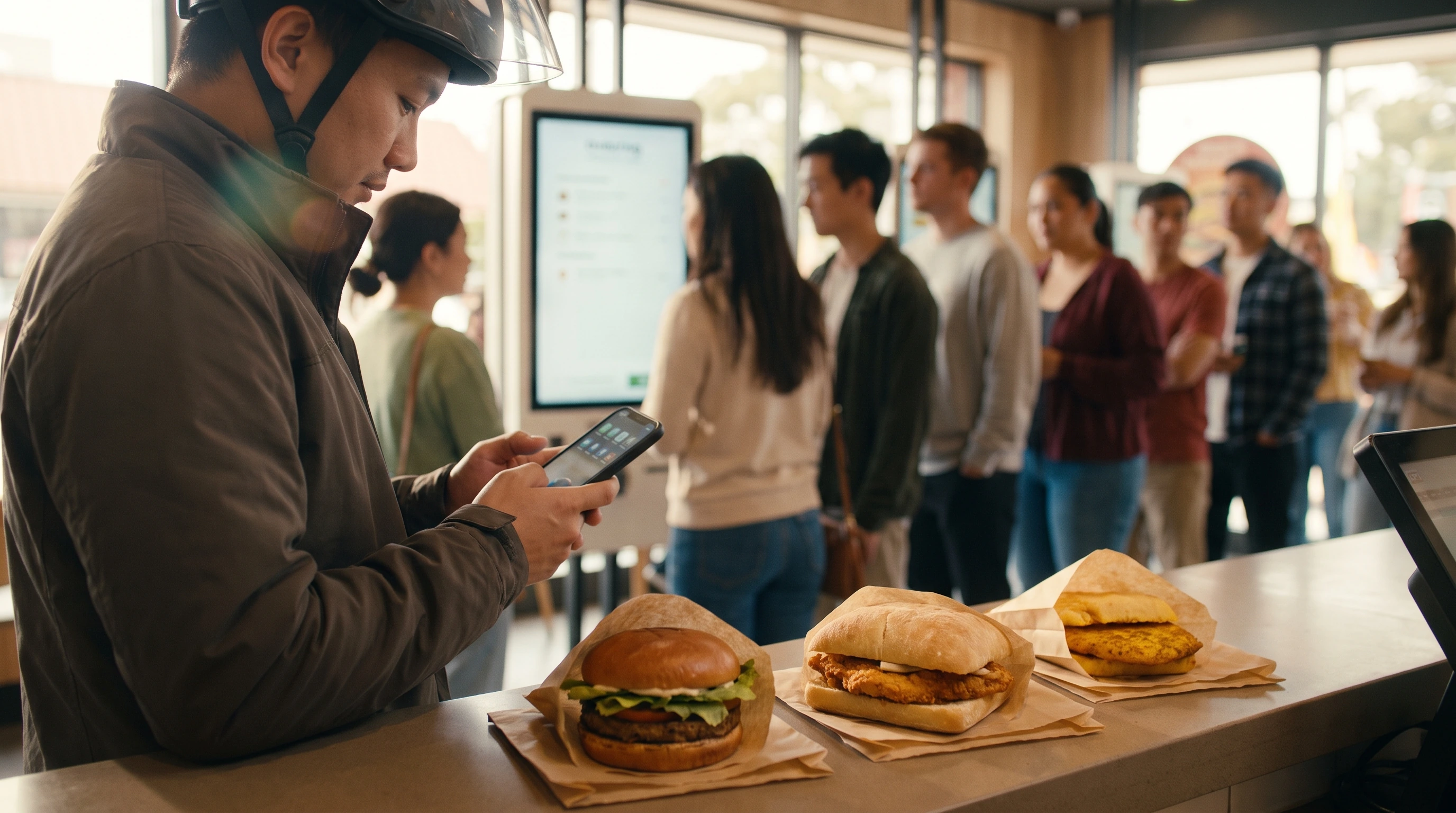
Across continents the golden arches are no longer a uniform symbol of a single menu. Instead, the biggest American quick-service brands are rewriting their playbooks, swapping standardised burgers for dishes that echo local street food, and reshaping their economics around app-driven delivery. The result is a patchwork of regional menus that still carry the promise of speed and consistency, but speak the language of the neighbourhood they serve.
India offers perhaps the most vivid illustration. Since its 1996 entry, McDonald’s has built a largely vegetarian empire, even opening a fully vegetarian restaurant near the Golden Temple in Amritsar. Separate kitchens for meat and veg, a menu anchored by the McAloo Tikki burger and the Chicken Maharaja Mac, and aggressive value pricing have turned the chain into a household name while respecting religious and cultural taboos. The Afaqs case study notes that local sourcing and a cold-chain investment backbone have been crucial to keeping prices low without sacrificing the brand’s global quality standards.
South-east Asia shows a different flavour of adaptation. In 2021 McDonald’s Korea launched a "Taste of Korea" project, creating region-specific burgers such as the Changnyeong garlic burger and a green tea pork variant. The concept proved popular enough to cross borders, with Taiwan introducing the Korea garlic beef and chicken burgers in August 2026. The Korea Times reports that the Taiwanese rollout leverages the Korean recipe while tapping the wider Hallyu wave, proving that localisation can become a exportable brand asset in its own right.
Singapore’s market demonstrates another layer of partnership-driven localisation. After nine months of iterative testing, McDonald’s teamed up with heritage snack maker Old Chang Kee to launch the Curry Potato Chicken Burger. The senior director of marketing at McDonald’s Singapore explained that the collaboration was designed to satisfy a growing appetite for familiar heritage flavours presented in a fast-food format, a trend highlighted by a 2026 Olam Food Ingredients report that found seven in ten Asian consumers willing to try traditional foods reimagined.
China, meanwhile, remains the crown jewel of Yum! Brands’ overseas portfolio. In the second quarter of 2026 Yum China opened 560 net new stores - a 67 % increase on the previous year-pushing its total footprint to 19,297 outlets. KFC and Pizza Hut together drove a 13 % rise in revenue to US$3.1 billion, while system sales grew 6 % year-on-year. Inside Retail Asia notes that same-store transactions rose 5 % and that delivery now accounts for a sizeable slice of restaurant margin, offsetting higher rider costs but confirming the centrality of app-based ordering in Chinese fast-food economics.
The strategic foundations of these successes are outlined in QSR Pro’s expansion playbook. The report warns against chasing market size alone and stresses that early decisions - from deal structure to menu design and regulatory navigation-determine whether a brand wins or loses abroad. Both McDonald’s and Yum China illustrate this principle: they entered with a willingness to remodel kitchens, co-develop menus with local partners and embrace delivery platforms that reshape the unit economics of the quick-service model.
What emerges is a clear pattern: localisation is no longer a peripheral experiment but a core growth engine. Whether it is vegetarian menus in Delhi, garlic-infused burgers in Taipei, heritage collaborations in Singapore or a delivery-heavy rollout in Shanghai, the world’s biggest American QSRs are learning that the path to the next billion consumers runs through kitchens that taste like home.
Yum Opinion: The future of fast food will be defined not by the uniformity of the golden arches but by the richness of the regional flavours they serve.