





Across the United States, the phrase "food desert" has become shorthand for neighbourhoods where a supermarket is a kilometre away and fresh fruit feels like a luxury. Food justice activists argue that the term masks a deeper truth: the pattern is not natural but a product of decades of disinvestment, zoning decisions and market choices. Karen Washington, who popularised the concept of "food apartheid", insists that the language must reflect the deliberate policies that separate communities from nutritious food (Vinella-Brusher, 2023). The result is a landscape where a postcode can dictate health outcomes.
The USDA’s Food Access Research Atlas flags roughly 19 million low-income Americans living more than a mile from a full-service grocery store. Yet distance alone does not tell the whole story. In many rural counties, even when a shop is technically within reach, residents face higher food prices, limited variety and unreliable transport. A recent Civicmedia investigation found that low-income families in these areas are forced to trade nutrition for shelter as housing costs climb, highlighting how income and mobility intersect with geography (Civicmedia US, 2026).
Compounding the scarcity of healthy options are "food swamps" - zones saturated with fast-food outlets and convenience stores but lacking fresh produce. The academic study on food apartheid notes that these swamps can be more damaging than deserts because the presence of cheap, high-calorie choices actively steers diets away from healthful foods (Vinella-Brusher, 2023). In cities like Chicago, the recent collapse of a grocery chain left whole neighbourhoods without any full-service store, pushing residents toward the nearest corner shop that stocks mostly processed snacks (The Post Millennial, 2026).
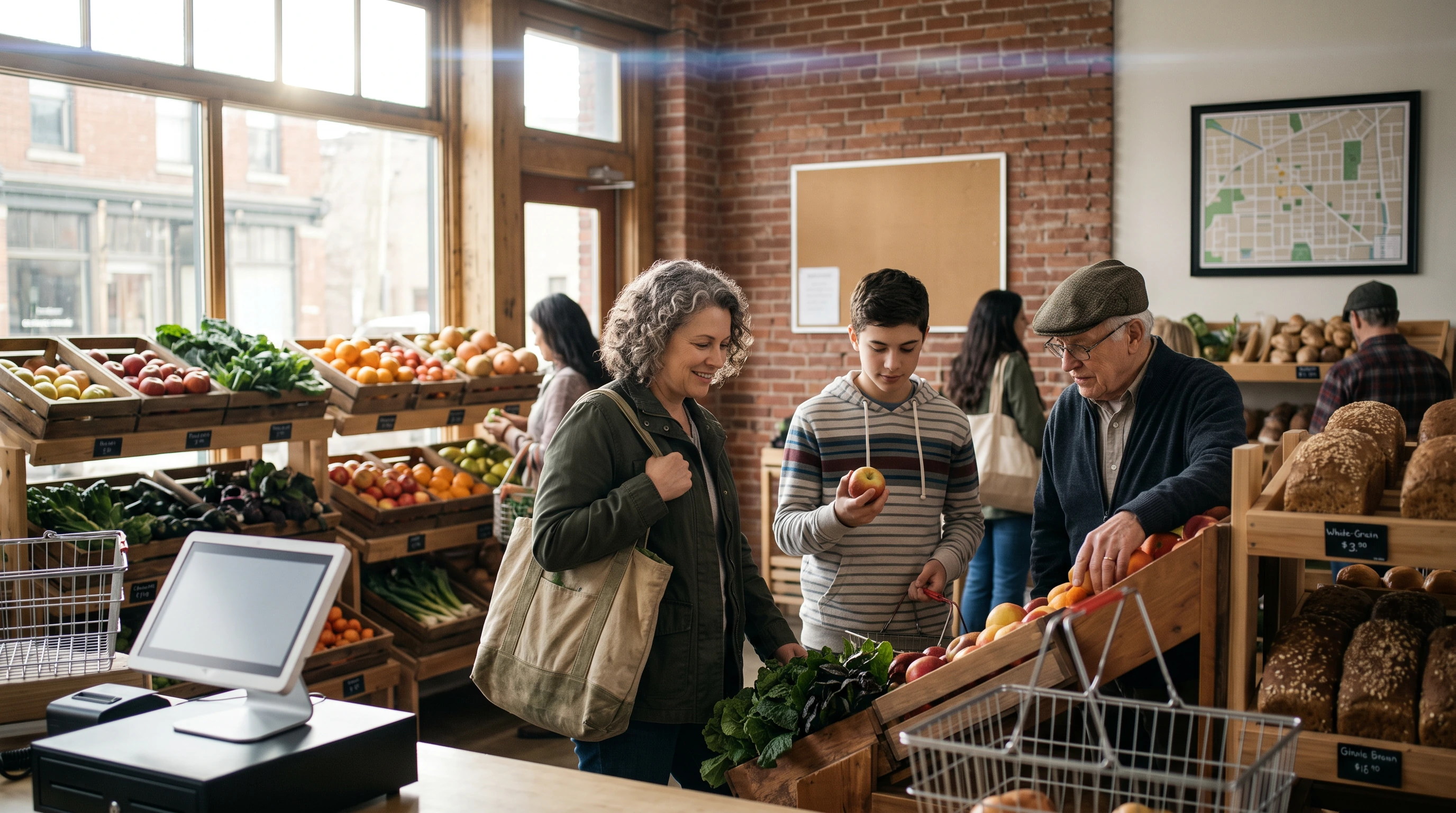
Where the private market has withdrawn, community-owned models are emerging as a counter-force. In Kensington, Philadelphia, the neighbourhood trust bought a vacant building, partnered with a local entrepreneur and opened a co-op grocery that stocks locally sourced produce and accepts SNAP benefits. Residents helped govern the venture, ensuring that pricing reflects the purchasing power of the area. Early reports suggest the store has increased fresh-food sales by 30 percent and reduced travel time for shoppers by half (Nextcity, 2026).
Rural America tells a parallel story. A study cited by Civicmedia shows that in sparsely populated counties, residents often travel over an hour to the nearest supermarket, paying double the price for fresh meat and vegetables compared with urban markets. When housing costs rise, families cut back on food budgets, opting for cheaper, shelf-stable items. The trade-off is stark: a family may choose a cheaper two-bedroom house over a nutritious diet, a decision that fuels long-term health disparities.
Digital solutions have been promoted as a panacea. Online grocery delivery, bolstered by SNAP online purchasing pilots, promises to bring fresh food to doorsteps. In practice, however, delivery fees, limited broadband access and the lack of retailer participation mean that the lowest-income households remain excluded. The Post Millennial’s coverage of the Save A Lot closures underscores that without a physical storefront, even the most sophisticated delivery platform cannot fill the gap.
Policymakers are beginning to see the link between housing, transport and food access. The upcoming SNAP reauthorisation and USDA budget discussions present an opportunity to fund mobile markets, support community trusts and incentivise retailers to locate in underserved zip codes. Until such measures become standard, the geography of hunger will continue to be drawn in postcode lines, leaving millions to navigate an uneven food map.
Yum Opinion: Real equity will only arrive when food policy is woven into housing, transport and urban planning, not treated as an afterthought.