





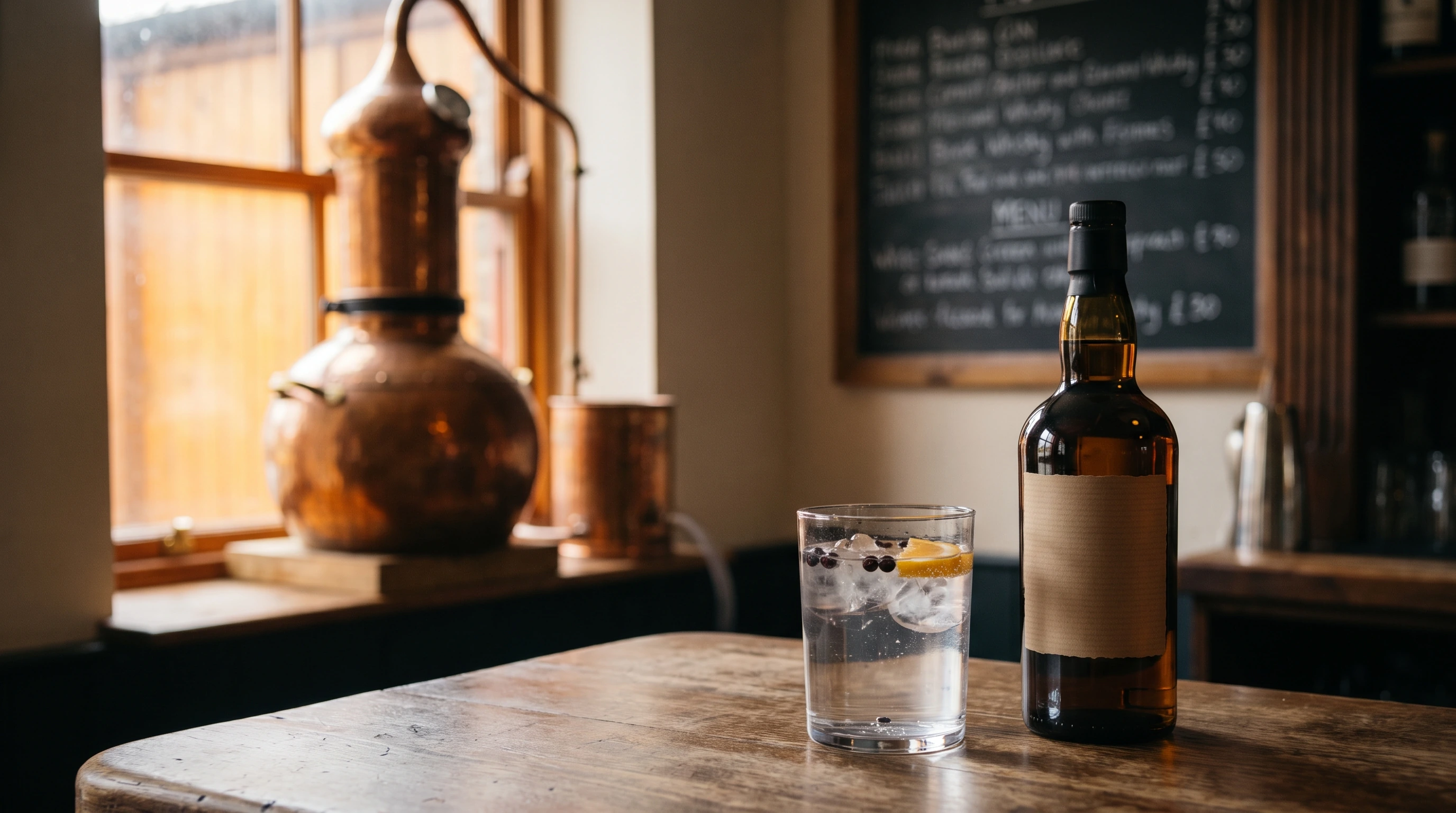
The last decade has seen a tidal wave of micro-distilleries sprouting from city lofts, rural farms and even university labs. From boutique gin to micro-aged whisky, the promise of a story-filled bottle has turned the category into a cultural touchstone for a generation that prizes provenance. Yet the same enthusiasm that fuels curiosity also fuels a market that is expanding faster than the supply of truly distinctive spirits.
According to a recent IMARC Group analysis, the global craft spirits market was valued at US$36.8 billion in 2025 and is projected to reach US$241.1 billion by 2034 - a compound annual growth rate of roughly 22.5 per cent. North America accounts for more than 59 per cent of that 2025 share, underscoring the region’s appetite for premium, small-batch products. The report notes that double-digit growth has persisted since 2015, driven by a consumer shift toward artisanal narratives and a willingness to pay a premium for perceived authenticity.
What, however, counts as “craft” remains a murky question. The American Craft Spirits Association offers a benchmark-small-scale production, independent ownership and a focus on local ingredients - but no jurisdiction enforces a legal definition for spirits. As Midtown Spirits points out, the label “craft” can appear on any vodka bottle, even when the producer is a multinational conglomerate. CrushBrew warns that the same terms-craft, boutique, artisanal - have been co-opted by large brands to ride the authenticity wave, a practice often dubbed “craftwashing”. For the discerning palate, the challenge is to separate genuine small-batch ingenuity from marketing gloss.
Gin has become the poster child of this boom, with a flood of botanical experiments emerging from unexpected corners of the globe. Nordic distillers are blending aquavit-style herbs, East African producers are highlighting indigenous fruits, and Indian houses are foregrounding spice-forward profiles. This diversification has enriched cocktail menus worldwide, yet the sheer volume of new releases has also led to a glut of undifferentiated products that blur the line between innovation and imitation. The result is a market where a traveller can find a gin infused with cloudberries in a Reykjavik bar and a citrus-heavy expression in a Nairobi lounge on the same night.
American craft whisky tells a more complicated story. Distilleries that opened in the early 2010s are only now releasing their first aged barrels, creating a bottleneck that forces many to sell younger, unaged “new make” spirits to stay afloat. Quality varies dramatically, with some producers delivering nuanced, oak-kissed profiles while others churn out hurried, thin-bodied releases that lack depth. This disparity has sparked debate among connoisseurs about whether the craft label guarantees a certain standard or merely signals a smaller production run.
Across the Pacific, Japan’s meteoric rise in whisky has attracted both admiration and fraud. Experts in spirits authentication report a surge in counterfeit bottles that masquerade as Japanese whisky but contain no Japanese malt at all. The proliferation of such fakes has prompted collectors and retailers to adopt stricter verification methods, from serial-number tracking to laboratory analysis, to protect the reputation of genuine Japanese expressions.
The rapid expansion has also exposed a structural fragility. AInvest notes that the craft distilling boom is now confronting a downturn, with retail volumes slipping and bankruptcy filings climbing since 2025. Over-saturation, shifting post-pandemic consumer habits and rising regulatory costs have forced some producers to pivot-even turning their stills to vinegar production - as a survival tactic. The industry appears poised for consolidation, where only the most efficient, well-connected distilleries will thrive.
Policy makers are beginning to respond. A bipartisan bill, the SPIRIT Act, proposes a steep reduction in federal excise tax for distillers that produce fewer than 100 000 proof gallons per year and source at least 90 per cent of their agricultural inputs domestically. The American Craft Spirits Association backs the measure, arguing that it would lower the cost base for truly local producers and encourage a return to regional grain, sugarcane and botanicals. If enacted, the tax cut could provide a lifeline for small operations struggling against the twin pressures of market dilution and rising ingredient prices.
For consumers, the takeaway is clear: a craft label is no longer a guarantee of quality, but it remains a useful clue when paired with diligent research. Understanding the economics, the regulatory gaps and the provenance of each bottle can turn a simple purchase into an informed act of support for genuine artisans. As the market continues to swell, the onus is on drinkers to sift through the hype and champion the spirits that truly embody the craft ethos.
Yum Opinion: The next wave of craft spirits will succeed only if producers marry bold flavour with transparent storytelling, and if drinkers demand both.