





Supermarkets remain the backbone of modern grocery retail, yet their dominance is being eroded on several fronts. IGD projects global supermarket and hypermarket sales to reach US$3.5 trillion by 2030, but the channel’s share of the overall grocery market will dip from 36 percent today to 34.3 percent in five years. The modest 3 percent compound annual growth rate for supermarkets contrasts with the 4 percent pace of discount and online channels, signalling a steady bleed of market share even as the total spend continues to rise.
Discount discounters are the most visible symptom of that bleed. In Germany, Foodnavigator notes that Aldi, Lidl, Edeka and Rewe together command roughly 80 percent of grocery sales, and both Aldi and Lidl are now expanding aggressively beyond their traditional strongholds. Their low-price model forces legacy chains to tighten margins and, in many cases, to adopt the discounter’s own private-label strategy to stay competitive. The German market’s concentration illustrates a broader trend: hard-discount retailers are no longer niche players but powerful forces reshaping the entire value chain.
One of the most effective weapons in the discounter’s arsenal is private-label branding. Massmarketretailers reports that consumers, squeezed by inflation, are increasingly demanding justification for price, not just low price itself. Health, wellness and transparency have become the new currencies of value, prompting supermarkets to launch premium own-brand ranges that promise tangible benefits. The shift is measurable-private-label penetration has hit record highs across Europe and North America, turning store shelves into laboratories of nutrition and sustainability.
Online grocery, once hailed as the death knell for brick-and-mortar, is now a double-edged sword. A Korean analysis published by the Seoul Economic Daily shows that, for the first time, online food sales accounted for 50.5 percent of total retail food turnover, overtaking offline sales. Yet the rapid rise of e-commerce has not translated into profitability for many delivery platforms, as unit-economics of last-mile logistics remain stubbornly thin. Grocery Dive adds that while Amazon, Whole Foods, Costco and Walmart have nudged their market-share upwards, traditional chains such as Kroger and Albertsons have seen their share contract, underscoring the difficulty of turning digital traffic into sustainable earnings.
Convenience is the third pillar reshaping the sector. Small-format urban stores, office micro-markets and dark-store fulfilment hubs are proliferating, offering shoppers a blend of speed and specificity that larger formats struggle to match. Massmarketretailers highlights that convenience now sits alongside health and price as a core driver of consumer choice, prompting supermarkets to experiment with pop-up formats and automated pick-up points in city centres.
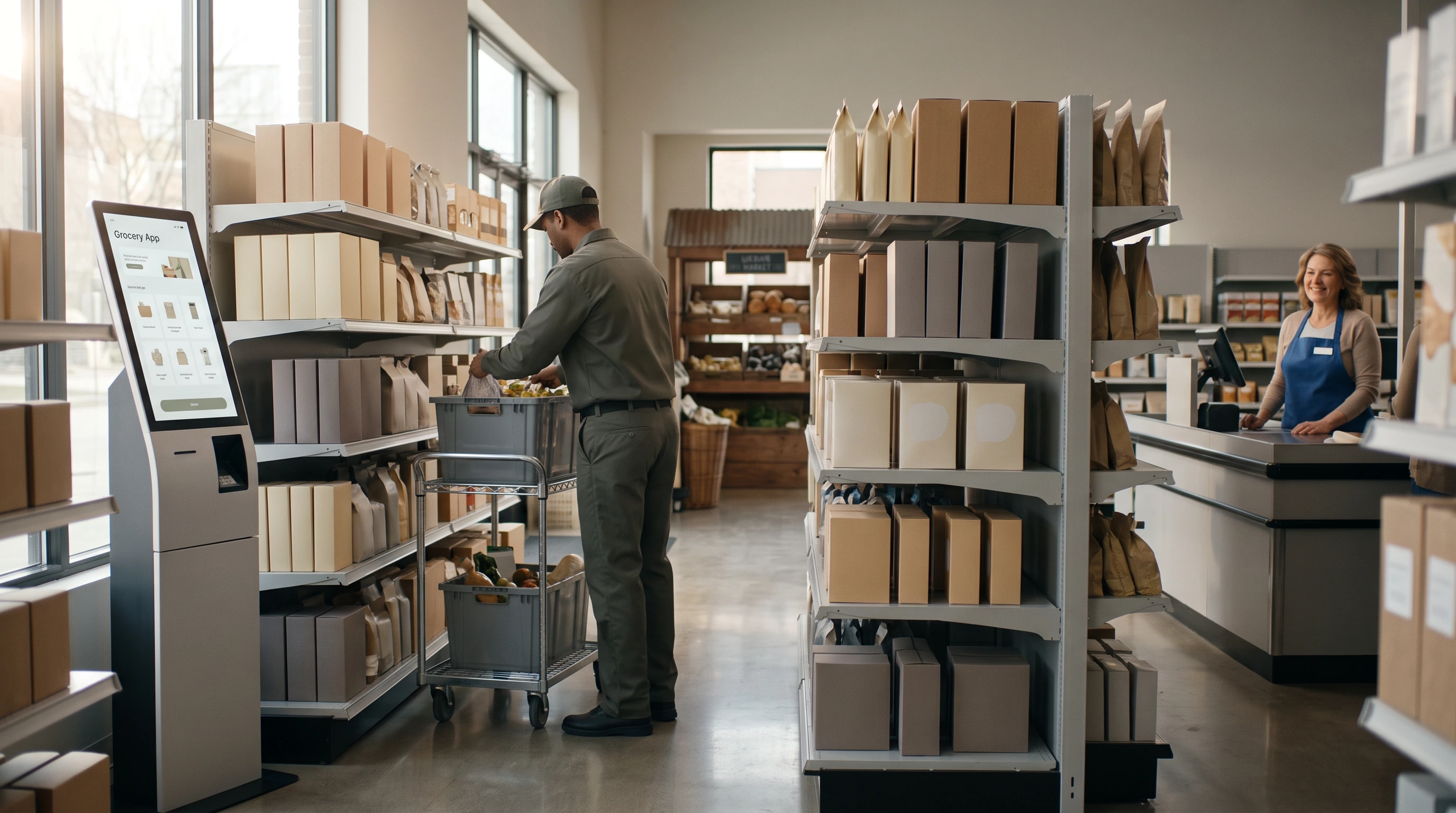
Technology-driven checkout solutions have also hit a reality check. The promise of autonomous checkout, popularised by Amazon Go, has stalled as labour costs rise and theft concerns linger. Premium supermarkets are therefore re-investing in staffed checkout lanes, using human interaction to reinforce brand loyalty and to manage higher-margin product assortments.
In response, legacy grocers are diversifying their portfolios. Kroger and Albertsons, despite shrinking share, are pouring resources into omnichannel ecosystems, expanding private-label lines, and forging partnerships with local producers to bolster wellness credentials. Meanwhile, retailers such as Rewe and Edeka are moving further up the value chain, acquiring or creating their own food-manufacturing facilities - a trend Foodnavigator describes as “retailers expanding into food manufacturing”. This vertical integration gives supermarkets greater control over quality, cost and supply-chain resilience.
The landscape suggests that supermarkets will survive, but only by embracing a broader definition of value that blends price, health, convenience and experience. As global sales continue to swell, the sector’s ability to innovate at the intersection of these drivers will determine whether the traditional supermarket can hold its ground or become a relic of a bygone retail era.
Yum Opinion: The supermarket’s last stand will be won not by fighting price wars, but by convincing shoppers that the aisle they walk offers more than a transaction-it offers a justified, convenient and health-forward lifestyle.