





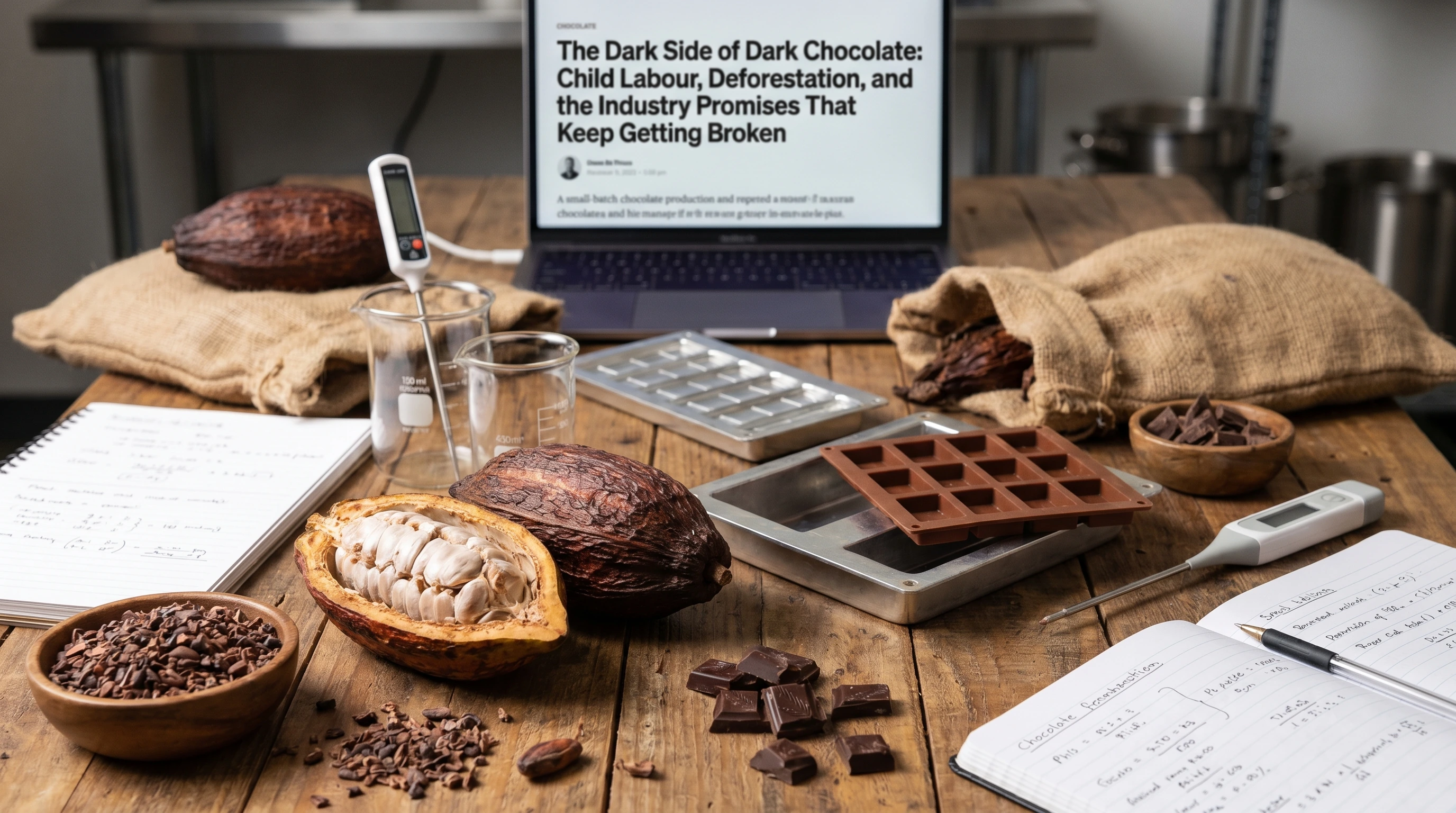
The global cocoa industry has promised to eliminate child labour and deforestation from its supply chains multiple times over the past two decades. The problem persists. As a new generation of bean-to-bar makers claims to offer a genuine alternative, this article asks: what does ethical chocolate actually look like?
The first signal is practical rather than theoretical: An estimated 1.56 million children work in cocoa farming in Ghana and Côte d'Ivoire - the world's two largest cocoa producers-according to the most recent US Department of Labour assessment. Cocoa prices hit a 50-year high in 2024 following poor harvests-which paradoxically improves farmer incomes but may also increase economic pressure to expand into forest areas.
A second signal is the speed at which the story is moving across markets. The EU Deforestation Regulation (EUDR), which requires supply chain due diligence for cocoa products entering the EU market, has been delayed but remains on the legislative agenda. Bean-to-bar chocolate makers who source directly from farmers can often trace their cacao to specific farms and cooperatives, offering genuine transparency - but at a significant price premium.
The most useful nuance is that this is not developing in one direction only. A cocoa shortage is affecting the entire confectionery industry-mass market manufacturers are reducing cocoa content in products and reformulating to use cocoa butter alternatives.
FoodNavigator Europe provides one current reference point with "What if chocolate’s flavour was never really about cocoa?". Its summary points to this part of the story: Cocoa-free chocolate is moving into the mainstream as manufacturers search for resilience amid volatile cocoa prices, climate disruption and supply-chain pressure.
DairyReporter provides one current reference point with "Big brands unite on regenerative ag - but who will pay to scale it?". Its summary points to this part of the story: Forty leading global food and agriculture companies have signed a joint declaration to accelerate regenerative agriculture, aligning behind SAI Platform’s Regenerating Together Programme to create common frameworks and metrics. While this marks a significant move towards industry-wide action, the core challenge remains unresolved: financing the transition at the farm level, where upfront investments and financial risks often fall on farmers. The success of scaling regenerative agriculture hinges on developing new economic incentive models and shared responsibility across supply chains. Ultimately, real progress will require deeper collaboration among industry players, financial institutions, and farmers to ensure econ
The next reporting layer should test the idea against evidence, not just mood. Useful checks include US Department of Labour's biennial report on child labour in cocoa; Barry Callebaut and Cargill sustainability reports (large commodity traders) - and their verification methods; Interview a bean-to-bar maker on their sourcing process and what 'transparency' actually means operationally.
A stronger version of the article would also look for voices close to the work: Track the EUDR legislative timeline and its implications for cocoa importers; Visit a cacao-growing cooperative if possible, or source content from journalists who have. Those voices matter because they keep the story grounded in people, budgets, supply chains, and daily behaviour rather than treating the trend as a detached cultural moment.
For The Yum Pandemic, this topic is strong enough to revisit because the cadence is clear: Major story pegs: EUDR updates, cocoa price movements, annual sustainability report releases, and World Cocoa Foundation events.
The reader question is not simply whether the subject is fashionable. The better question is who is changing their decisions because of it: producers choosing what to grow, buyers choosing what to stock, chefs choosing what to put on menus, and households choosing what deserves space in the kitchen. That is where a food trend becomes a food-system story.
That also gives the subject a useful editorial test. If the next round of reporting can show a clear link between public attention and real-world choices, the story deserves more space. If the evidence is thinner, the article should say so plainly and treat the trend as an early signal rather than a settled shift.
Taken together, the topic guide and the credited source mix support a longer-running food and drink story rather than a one-day headline. The editorial value is in following how the theme changes month by month, which companies or communities benefit, and where the public-facing trend starts to diverge from the original culture, science, or policy behind it.