





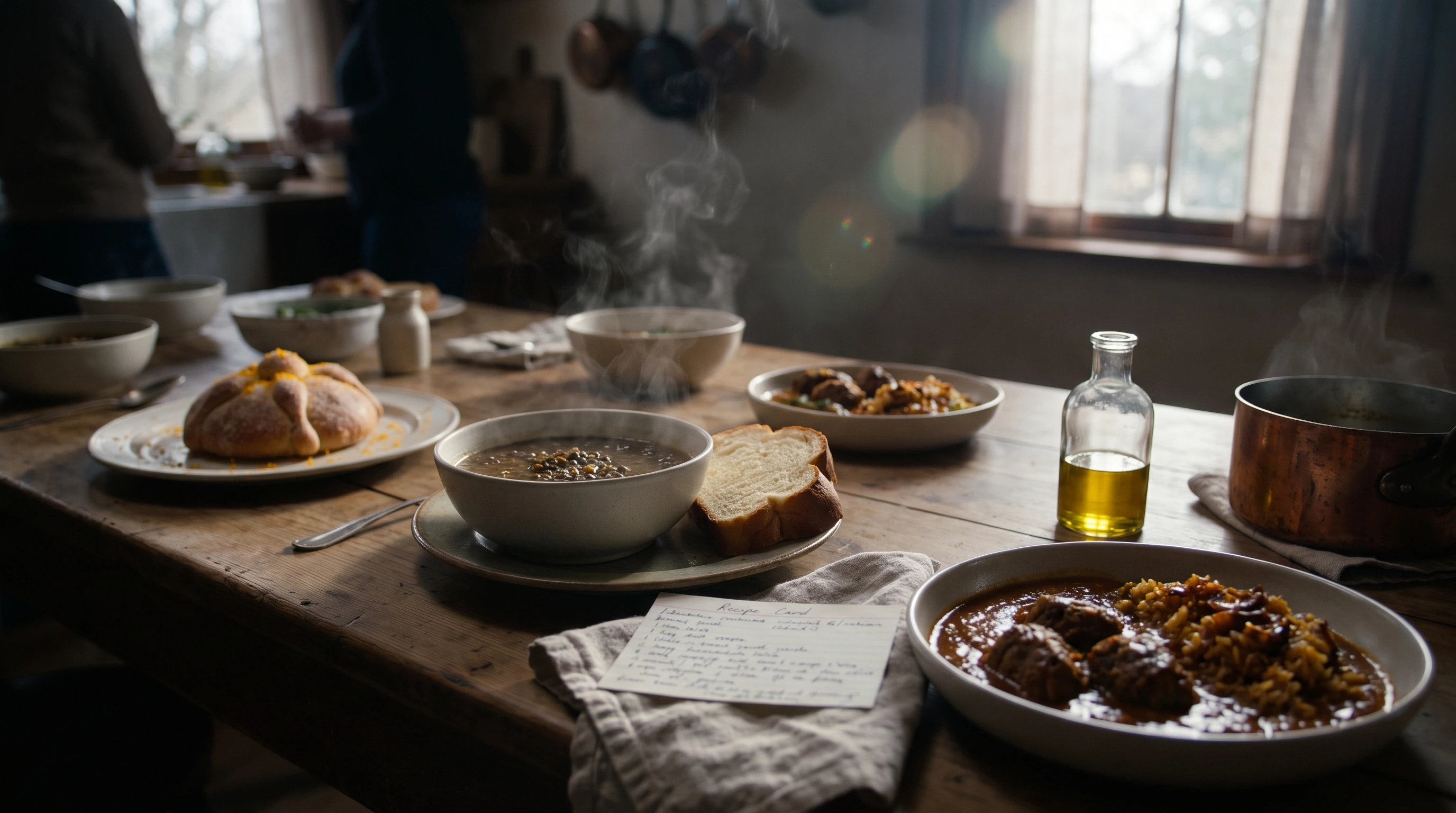
Grief is a universal experience, yet the way we soothe it often follows the same culinary script. Anthropologists note that funeral food serves two core purposes: it sustains mourners whose appetite for daily life has waned, and it knits together a community that might otherwise fracture under loss. From the first spoonful of broth to the final bite of a sweet loaf, the act of eating becomes a bridge between the living and the memory of the dead.
In Jewish tradition, the shiva table is a study in both restraint and generosity. Immediate family members are forbidden to cook, so neighbours and friends arrive bearing dishes that range from simple lentil soup to honey-glazed challah. The Globe and Mail describes the “sticky chocolate babka” that can sustain a bereaved household for days, while Deseret notes the ritual calendar taped to the refrigerator, a silent ledger of who is bringing what. The German term kummerspeck-literally “grief bacon” - captures the tendency to gain weight as comfort, a phenomenon observed when people turn to calorie-dense, soft foods during mourning.
Half a world away, Mexico’s Día de los Muertos turns grief into a colourful celebration of life. Families bake pan de muerto, a sweet, orange-zested bread topped with a cross that resembles bones. As Al Jazeera reports, the sugar-coated loaves are offered to the spirits, inviting them to share the feast. The ritual’s dual purpose-honoring the departed and providing a communal sweet treat-illustrates how food can act as a conduit for both remembrance and solace.
In the Parsi community of India, the post-funeral meal is a hearty dhansak, a stew of meat, pumpkin, lentils and caramelised rice. Economic Times explains that this dish marks the end of a four-day meat fast, symbolising the return to nourishment after a period of abstention. The richness of dhansak, with its sweet-sour balance, is intended to replenish the body and signal the continuation of life beyond the ceremony.
The Levantine world offers a quieter, more personal form of grief food. Al Rawiya recounts how the loss of a beloved cook can turn a familiar kitchen into a place of aching absence. When the familiar scent of garlic hitting hot oil disappears, the empty pot becomes a vessel of memory. Olive oil, a staple of Arab hospitality, can turn into a poignant reminder of a homeland that feels increasingly out of reach, turning everyday sustenance into an emotional trigger.
Science backs the instinct to reach for comfort-food in moments of distress. Studies show that warm, soft, calorie-dense items-soups, stews, fresh bread-activate brain pathways linked to safety and reward. The physiological response mirrors the body’s need for energy during a period when emotional resources are depleted, explaining why the same dishes appear in mourning rituals across continents.
Beyond communal tables, personal recipes become memorial artefacts. Many families keep handwritten cards from the deceased, reproducing a favourite dish on birthdays, anniversaries or the date of passing. This practice aligns with the “continuing-bond” theory in grief psychology, which posits that maintaining a symbolic connection to the lost loved one aids the healing process. The act of stirring a pot exactly as a parent once did can feel like a quiet conversation across time.
Whether it is a bowl of lentil soup, a slice of pan de muerto, a spoonful of dhansak or a simple loaf of flatbread, the foods that appear at moments of loss share a common purpose: they provide nourishment for bodies that are tired, and for souls that are searching for a tangible link to those who have gone. In each culture, the ritual of cooking and sharing becomes a language that words alone cannot convey.
Yum Opinion: The table is where grief finds its most honest voice, and the dishes we serve become the stories we tell about love, loss and the enduring taste of memory.