





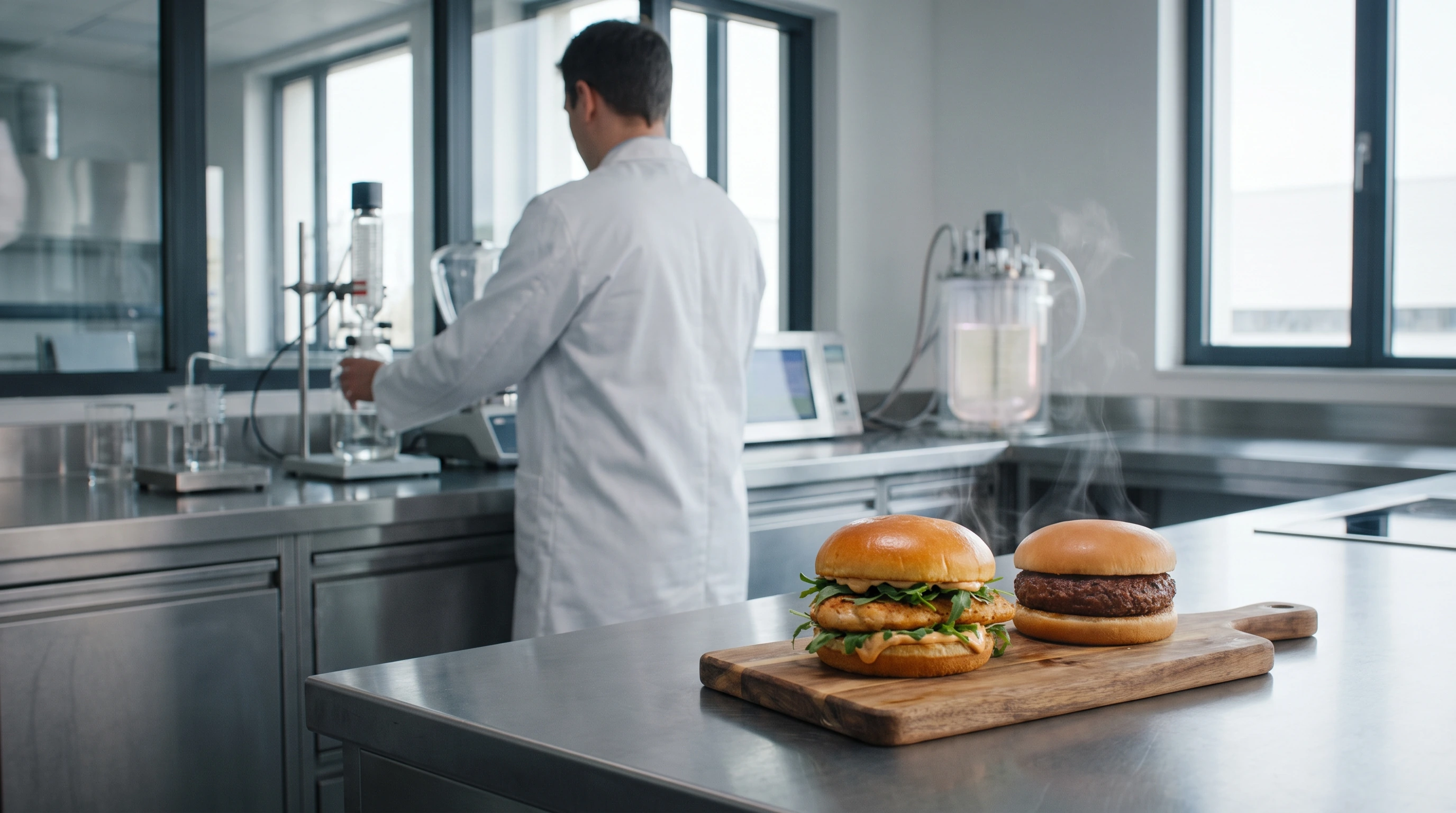
When a team in 2013 unveiled a lab-grown beef patty that cost the equivalent of a small house, the headline-grabbing price seemed to seal the fate of cultured meat as a niche curiosity. Yet the underlying promise-meat without slaughter, land-use or the greenhouse-gas burden of intensive farms - has kept investors, scientists and policymakers watching the sector’s slow march. As Firstpost outlines, the technology now grows animal cells in bioreactors, adds scaffolds for texture and blends in fats to mimic the mouthfeel of conventional cuts.
Regulatory approval remains the most visible gatekeeper. In the United States, the FDA and USDA jointly cleared cultured chicken from UPSIDE Foods in late 2022 and GOOD Meat in early 2023, but shelves have stayed empty, with only a handful of pilot-scale productions reported. Singapore, by contrast, granted the first global approval in 2020 and now serves cultivated chicken in a few upscale eateries, a fact highlighted by Foodnavigator’s coverage of the market’s early adopters. Europe’s stance is more cautious-Italy outright banned the product in 2023, and the EU continues to deliberate a harmonised framework, leaving many potential markets in limbo.
Cost trajectories have improved dramatically, but the gap to commodity meat is still wide. The initial $325,000 burger has given way to laboratory-scale chicken priced between $10 and $50 per kilogram, according to industry estimates cited by Farmchange Substack. Arthur D. Little’s latest viewpoint, referenced by Cultivated X, puts current finished-product costs in the low €40 kg range, with a roadmap that could see €10 kg by the decade’s end. The biggest expense, growth media, is edging toward €0.20 per litre, while cell densities of 55-100 g L⁻¹ bring cultivated processes into the same ballpark as traditional fermentation.
Scaling the bioreactor remains the technical bottleneck. Annual Reviews notes that moving from bench-scale flasks to industrial-size vessels introduces contamination risks that rise faster than the volume of product. Recent breakthroughs have pushed production runs beyond 22,000 litres, a milestone that shatters the previous ceiling and demonstrates that high-density cultures can be maintained at scale. Yet each litre added multiplies the engineering challenge of oxygen transfer, shear stress and consistent scaffold formation, meaning the industry is still perfecting the recipe for mass-production.
Even if the engineering hurdles are cleared, consumer acceptance looms large. Thecooldown reports that a “yuck” factor persists, with 35 % of meat-eaters and 55 % of vegetarians saying they would not even try cultivated meat. Skeptic’s survey of over 1,500 participants echoes this sentiment, noting that many respondents describe the product as feeling “unnatural” or reminiscent of a laboratory experiment. The emotional barrier appears as strong as the price tag, and it is reinforced by the perception that cultured meat is a novelty rather than a familiar staple.
Funding has ebbed and flowed with the sector’s fortunes. Early hype attracted billions, but a wave of closures-most notably Believer Meats, which folded after building a 12,000-tonne factory in North Carolina-illustrates the harsh reality that safety clearances do not guarantee commercial viability. Futurism’s analysis points to regulatory inertia as a key reason many startups never reach market, with investors growing wary of pouring capital into companies that may never break the approval bottleneck.
Nevertheless, pockets of progress hint at a viable future. Singapore’s restaurant pilots provide a proof-of-concept for premium-price models, while Foodnavigator suggests that price parity could be on the horizon if media costs continue to fall and supply chains mature. The sector’s emerging logistics - from specialised cold-chain containers to blank-label packaging that hides the lab origin - are quietly building the infrastructure needed for broader rollout.
What the industry now needs is not another breakthrough in cell biology-Cultivated X argues that the science is largely solved - but a coordinated push for large-scale orders, clearer labelling standards and a narrative that reframes cultured meat as a safe, sustainable choice rather than a laboratory curiosity. Aligning regulatory pathways across the US, EU and Asia, while tackling the lingering “yuck” perception, could finally turn the quiet hurdle into a stepping stone for the burger that never mooed.
Yum Opinion: Cultured meat is at the cusp of commercial reality, but only a concerted effort to tame cost, regulation and consumer doubt will let it cross the kitchen threshold.