





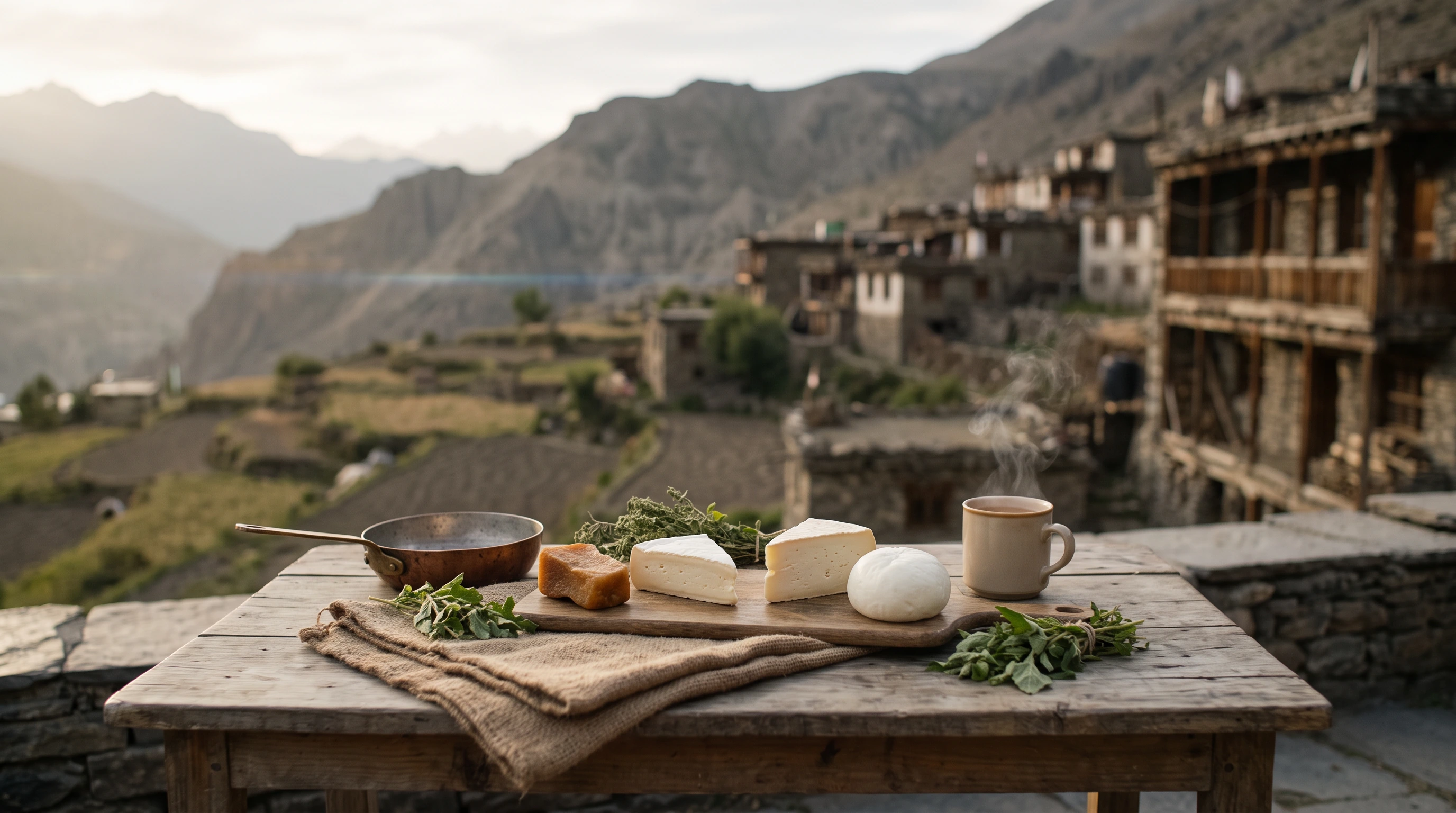
Cheese is arguably humanity’s oldest form of biotechnology - a simple coagulation that has been refined into a cultural language across continents. While the world recognises Brie, Cheddar and Gouda, countless regional varieties remain hidden beyond the reach of global supermarkets. These hidden cheeses are not curiosities; they are the result of centuries-old practices that tie together climate, migration and survival. From the high passes of the Himalayas to the pastoral valleys of Georgia, each bite tells a story of place, people and perseverance.
In northern Mexico, the Mennonite colonies have kept a melting cheese alive that most visitors to the region have never tasted. Known as queso Menonita, this mild semi-firm cow’s-milk cheese is produced by Quesería Holanda in the town of Nuevo Casas Grandes, Chihuahua. The cheese originated as a tool of sustainability for Mennonite settlers who arrived in the early twentieth century, and it remains a staple of local markets and family tables. Culturecheesemag highlights how the cheese’s simple texture and gentle flavour make it ideal for grilling, yet its story is anything but ordinary.
Further east, the remote Svaneti valleys of north-western Georgia harbour a cheese that locals describe as a divine gift. Narchvi, made from cow’s milk, develops a buttery texture and a salty-sweet finish that lingers on the palate. Saveur’s field report captures the ritual of making Narchvi in the kitchen of Ira Ansiani, where the cheese is aged in stone cellars and served alongside flatbreads and pomegranate-touched salads. The cheese’s pungent aroma and creamy body reflect the alpine pastures that feed the herds, and its production is a living link to centuries of Georgian supra traditions.
India’s cheese map is equally diverse, stretching from the snow-capped Himalayas to the sun-baked coasts of Bengal. The Better India outlines four indigenous varieties that have survived modern dairy homogenisation. In the high Himalayas, chhurpi - a hard yak-milk cheese - is chewed slowly for its smoky, nutty notes, while in Jammu and Kashmir, kalari, often called the “Mozzarella of Kashmir”, is a fresh, stretchy cheese made by heating curd in a copper pan. The same outlet notes that the Portuguese-influenced Bandel cheese, a salty, crumbly variety from West Bengal, still appears on village tables. Prime Minister Narendra Modi recently celebrated this mosaic on his Mann Ki Baat programme, underscoring how these regional cheeses embody India’s culinary heritage.
Even the most remote of these traditions can break into the global arena. Ladakh’s yak-milk chhurpi, a hard cheese prized for its durability, won a gold medal at the 2026 Mundial do Queijo do Brasil in São Paulo, despite its maker, Thenlay Nurboo, missing the flight due to a vaccination deadline. Indian Express reports that the cheese was sent by the National Dairy Development Board and impressed judges with its distinctive texture and high-altitude provenance. The win not only validates Ladakhi dairy practices but also introduces a product that traditionally survived only the winter months of the Changthang plateau.
What unites these stories is the way each cheese is anchored to a specific landscape and community. Production often occurs in family-run dairies, small cooperatives or even home kitchens, where knowledge passes from one generation to the next. Because the cheeses are rarely mass-produced, they seldom appear on supermarket shelves, but they thrive in local markets, regional festivals and the occasional export to specialist retailers who cater to adventurous palates.
International competitions and social media have begun to shine a spotlight on these hidden gems. The gold for Ladakhi chhurpi, the mention of kalari on a national broadcast, and the growing curiosity of food-travel writers all signal a rising appetite for authentic, terroir-driven cheeses. While the scale remains modest, the exposure encourages younger producers to preserve their methods and experiment with new markets, ensuring that the flavours of remote valleys and Mennonite farms do not disappear.
These cheeses remind us that the world’s dairy heritage is far richer than the brands that dominate aisles. By seeking out the hard-chewed chhurpi of the Himalayas, the buttery Narchvi of Georgia or the melt-in-your-mouth queso Menonita of Chihuahua, diners can taste histories that span migrations, mountain passes and centuries of ingenuity.
Yum Opinion: The more we venture beyond the familiar, the more we discover that true cheese culture lives in the hands of those who still make it for community, not commerce.