





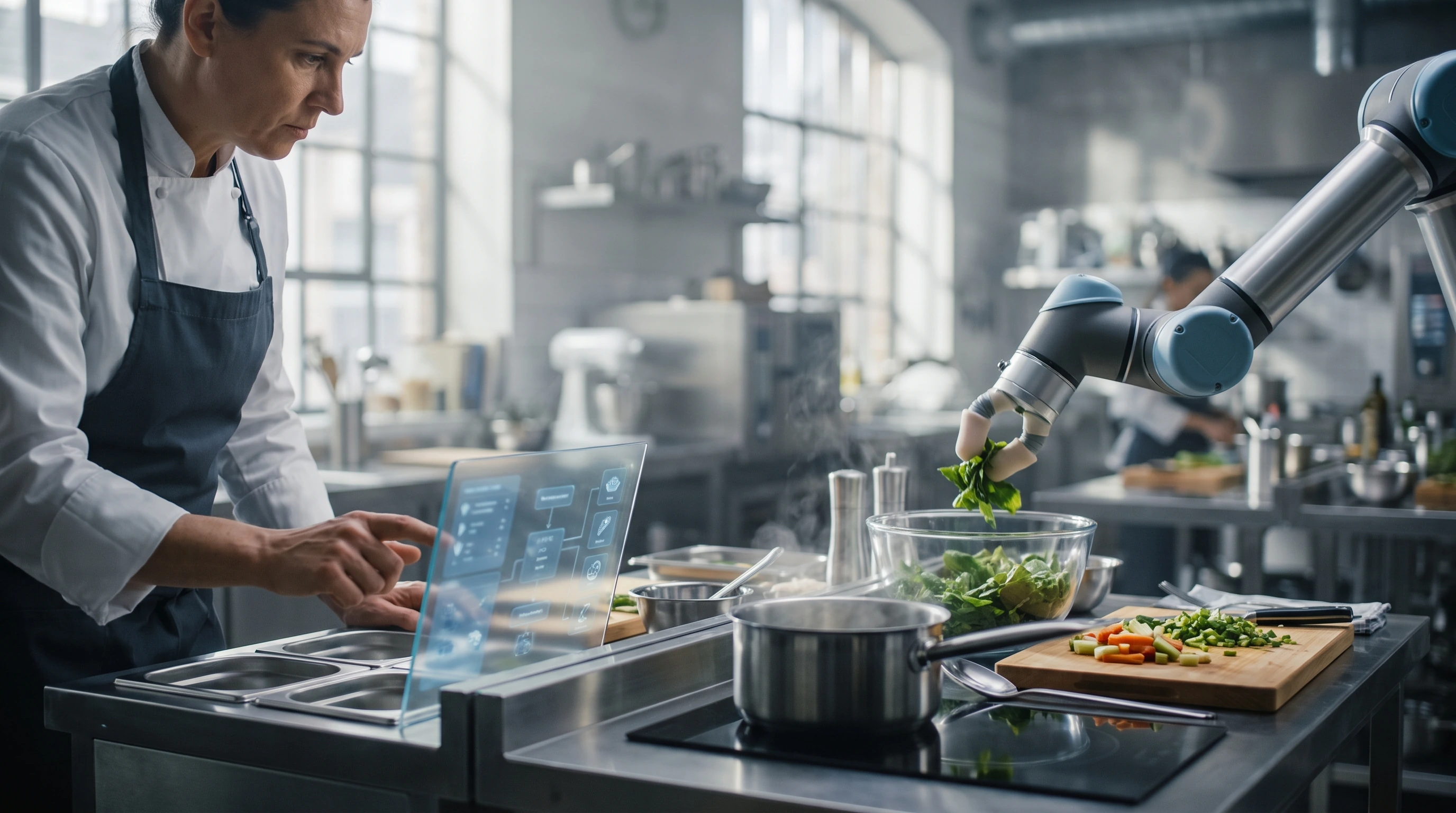
Across the globe, restaurant owners are being sold a tidy promise: artificial intelligence can plug the labour gap, slash food waste and smooth out the day-to-day chaos of a busy kitchen. The narrative is seductive - a sleek algorithm that predicts demand, orders stock and even suggests new dishes-yet the reality on the floor is far messier. From Dubai’s experimental “WOOHOO” restaurant to a suburban Chili’s in Texas, the technology is being trialled, tweaked and sometimes abandoned, as chefs wrestle with the question of how much of the cooking process can be handed over to a machine.
At its core, AI is proving most useful for the operational grind that most chefs would rather avoid. Demand-forecasting models that ingest point-of-sale data and local events can now predict a week’s inventory needs with a margin of error small enough to cut food waste by as much as 51 per cent, according to a recent Hotel Online case study. The same systems have been credited with trimming labour costs by over 12 per cent, freeing staff to focus on service rather than stock-taking. The Financial Times echoes this, noting that AI tools are “giving back time to restaurant teams” by automating routine tasks that would otherwise eat up shift hours.
Beyond the pantry, computer-vision cameras are being deployed to monitor portion sizes and plate presentation at speeds that would make a human line-cook blush. In high-volume chains, these systems flag deviations in real time, ensuring that a burger’s patty weight stays within a few grams of the target. Meanwhile, menu-engineering algorithms crunch sales figures, margin data and customer preferences to suggest which items to promote, retire or remix. An experimental AI chef called Aiman has even been used to generate novel flavour pairings, though developers stress that the final taste test still rests with a human palate.
Robotics have also entered the fray, but usually in a very targeted way. Automated fry stations, pizza-making robots and salad-assembly lines are now operating in a handful of quick-service concepts, from Sweetgreen’s salad bars to several Asian fast-food chains that tout speed and consistency. Chili’s, a large US casual-dining chain, has taken a more cautious route, investing in 23,000 iPads and 9,000 kitchen screens to digitise order flow while keeping the core cooking process manual. The company’s selective approach reflects a broader industry trend: hardware that can be retrofitted to existing kitchens is far more palatable than a wholesale robot overhaul.
Independent chefs, however, remain sceptical of a full-scale hand-over. In interviews compiled by NDTV, seasoned cooks argue that cooking is as much an emotional and cultural act as a technical one. “You cannot programme instinct, you cannot programme the memory of a grandmother’s broth,” one chef explained, noting that AI can suggest flavour combinations but cannot replicate the stories that give a dish its soul. The same sentiment appears in Hotel Online’s coverage, which warns that sensory judgement and real-time adaptation remain firmly in the human domain, especially when a dish must respond to a sudden change in ingredient quality or a guest’s dietary need.
The economics of AI adoption are equally nuanced. A Gartner report cited by FSR Magazine places many AI projects in the “trough of disillusionment”, where promised returns have yet to materialise. CBS NorthStar highlights a data problem: AI models need clean, real-time data streams, yet many operators still rely on manual exports from legacy POS systems. For a mid-size restaurant in Manchester, the upfront cost of a comprehensive AI suite-hardware, software licences and staff training-can run into six figures, meaning the pay-back period stretches well beyond a single fiscal year, especially when labour wages in major cities continue to climb.
Despite the hurdles, a hybrid model is emerging as the most viable path forward. Sodexo, which runs food-service operations in thousands of schools, hospitals and corporate sites, describes its AI tools as a “valued sous-chef”. By using the technology to standardise recipes, optimise nutrition profiles and accelerate menu development, Sodexo can roll out new dishes across 27,000 locations with a consistency that would be impossible to achieve by hand alone. The key, as Richard Arakelian of Sodexo notes, is to keep the human element at the centre of decision-making while allowing AI to handle the heavy lifting of data analysis and rapid prototyping.
Yum Opinion: AI will never replace the chef’s intuition, but it can free the kitchen to focus on the intuition that truly matters.