





A fermented drink can hold more than its ingredients. In Tripura, a biodiversity-rich state in Northeast India, nineteen officially recognised tribal communities maintain food cultures that include a diverse range of traditional fermented foods. Chuak, made from rice; Mui Borok, made from bamboo shoot; Berma, made from fish; and Saraieng, made from mustard leaf are described as expressions of indigenous knowledge, ecological expertise and long-standing nutritional wisdom [1].
That makes fermentation both an everyday practice and a form of accumulated attention. These foods are deeply embedded in community culture and have a role in maintaining community health, yet they have received limited systematic consideration [1]. Their importance is not confined to what microbes may do: the knowledge of how to prepare them, and the ecological understanding carried through that work, are part of the food itself.
Modern food science is now approaching the same transformation with a different set of tools. Fermented foods have been associated with enhanced gastrointestinal function, greater microbial diversity and improved nutrient bioavailability. Advanced microbiology and synthetic biology are also enabling novel production methods, including specialised starter cultures and precision fermentation. These techniques offer unusually close control over microbial interactions and the fermentation environment, while bringing emerging food-safety challenges into view [2]. The opportunity, then, is accompanied by a practical responsibility: greater control must still be matched by careful attention to safety.
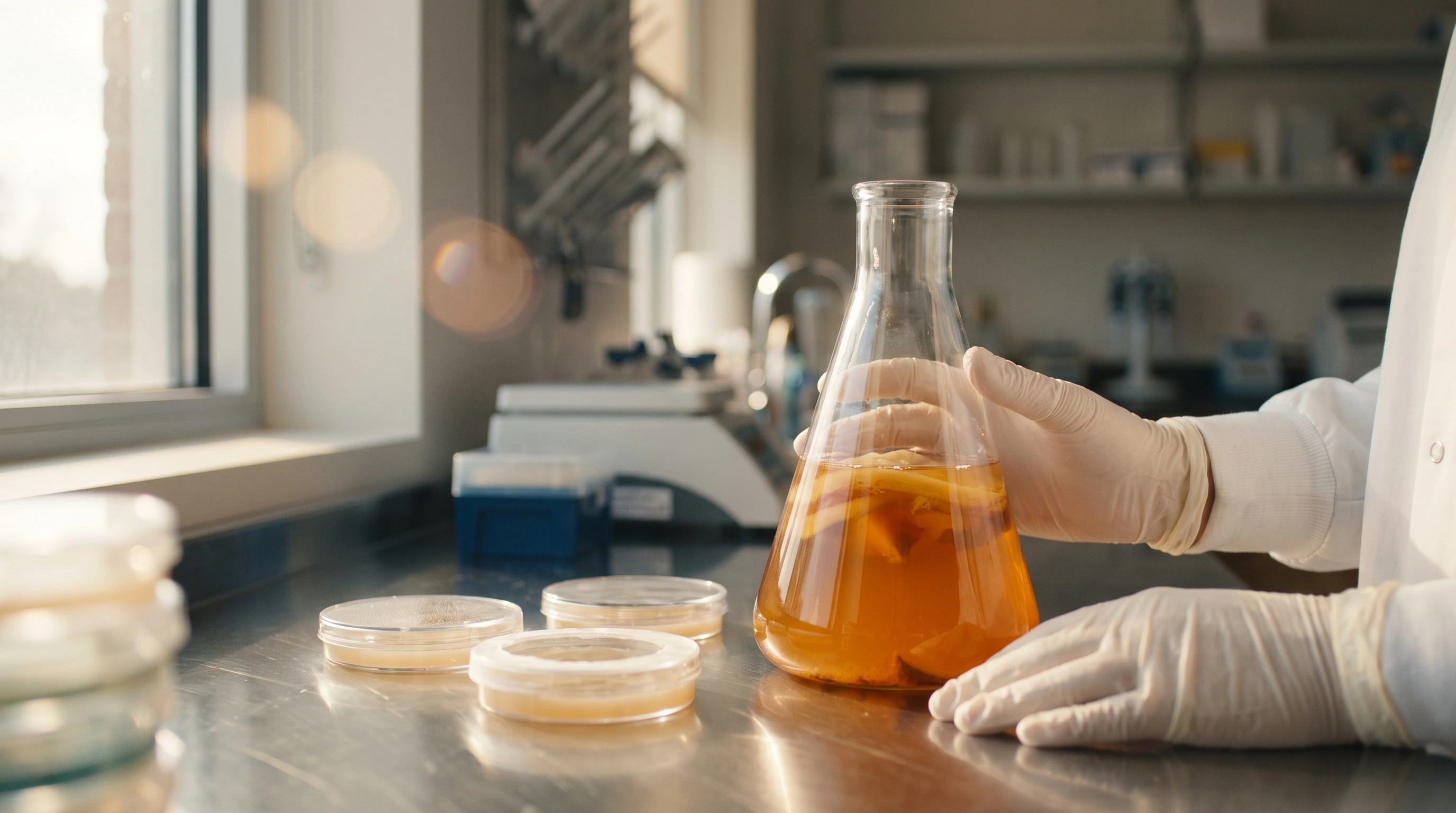
Kombucha provides a particularly focused glimpse of this expanding field. An exploratory study published in September 2026 examined Atlantic forest fruit-flavoured kombucha through simulated gastrointestinal digestion and gut fermentation, considering gut-microbiota dynamics and the bioaccessibility of bioactive compounds [3]. Because the work was conducted in vitro, it is best read as laboratory exploration rather than a promise about what drinking kombucha will do for a person. Even so, its attention to what may remain accessible through digestion shows how closely researchers can now follow a fermented food through a simulated digestive process.
The quiet turning point is not a choice between inherited practice and engineered precision. It is the recognition that fermentation can be understood at several scales at once: as community knowledge, as a managed microbial environment and as an object of close laboratory study. The most thoughtful path forward may be the one that preserves this full view, respecting the people and practices that have sustained fermented foods while applying newer techniques with enough restraint to keep safety, culture and uncertainty in sight.
Yum Opinion: I find the most valuable idea here is that scientific precision can deepen our respect for inherited food knowledge rather than displace it.