


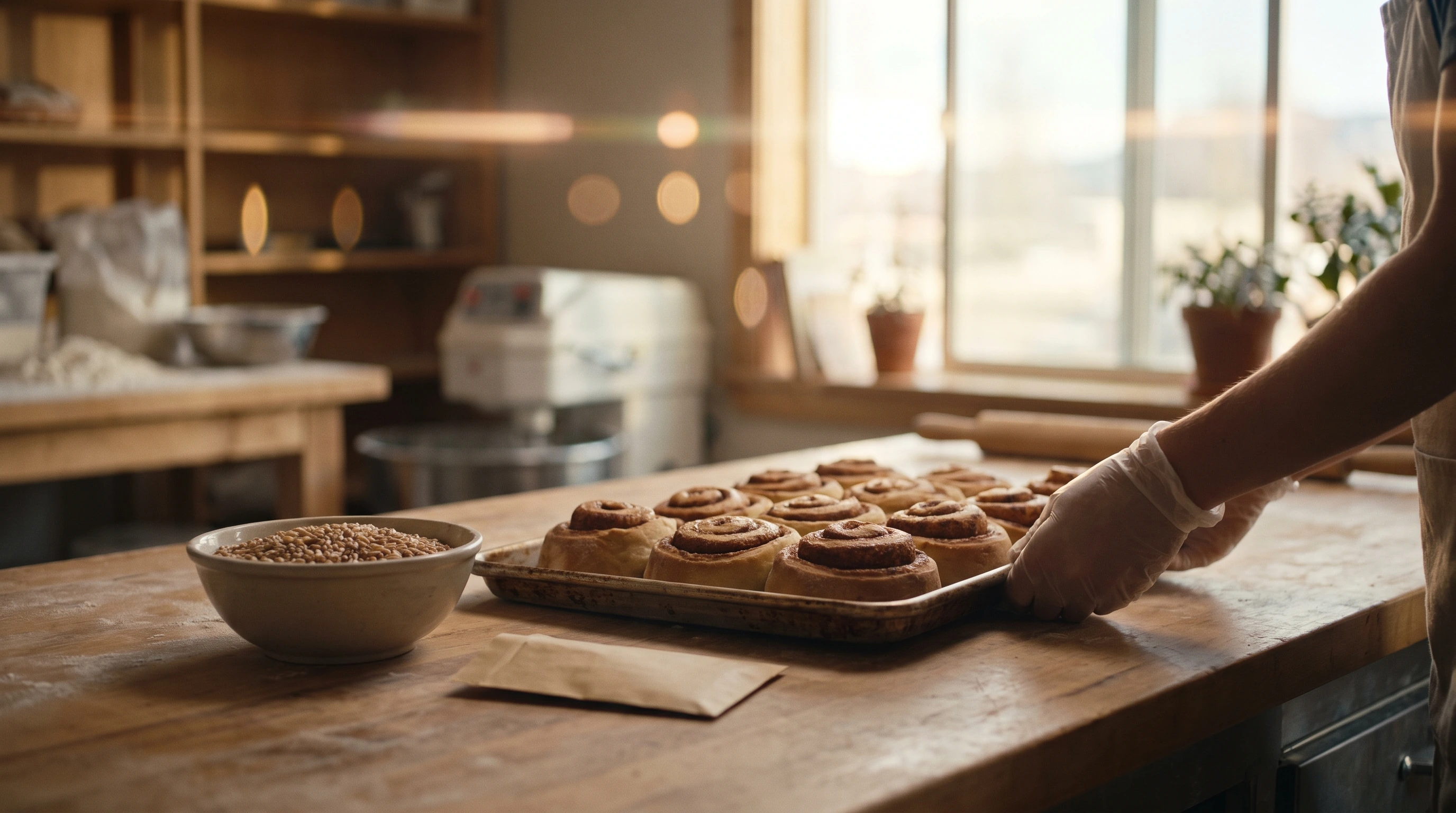
A tray of cinnamon rolls rests at Pueblo Seed & Food Company in Cortez, ready to replenish the front of the bakehouse. Co-owners Nanna Meyer and Dan Hobbs were preparing the rolls there in July, a modest act that places baking within one of Colorado’s most urgent questions: whether the state can do more with less water.[1]
The bakery and farm business in south-western Colorado is making a case for water-saving ancient grains through the food it sells. That journey runs from seed to store, and it can be daunting. Yet a familiar baked good offers customers a direct introduction to grains that might otherwise remain an agricultural idea rather than something encountered at the counter.[1]
One example is a Zuni cake. Its significance here is practical as well as culinary: Pueblo Seed & Food Company is encouraging people to embrace ancient grains while linking that choice to the effort to conserve water. The proposition has an appealingly human scale. A farmer and a baker are asking what a grain can contribute, then carrying the answer into food that people can buy.[1]
The urgency surrounding that work is unmistakable. Colorado is confronting historic drought, climate change and interstate conflict over limited river supplies. Across the state, the search for water security includes a difficult question: can particular conservation projects release meaningful amounts of water, or will local gains be overwhelmed by natural conditions and market realities?[2]
A bakery cannot answer that statewide question by itself, and the available account frames the larger impact as something still to be assessed. That uncertainty is important. It keeps the cinnamon roll from becoming a neat symbol of salvation and allows it to remain what it is: one tangible attempt to connect farming, food and water conservation.[2]
The idea has travelled beyond its original Colorado setting through online republication and aggregation, which repeated the central question about doing more with less water.[3] But its centre of gravity remains in Cortez, at the point where grain becomes a baked good and a broad environmental challenge becomes something small enough to hold, share and consider.
That is the quiet promise of this approach. It does not require a cake to carry the full burden of Colorado’s water future. It asks instead whether choosing and enjoying a different grain can become part of a local conservation effort whose wider potential is still being tested. In a period of drought and dispute, such experiments deserve attention precisely because they begin with ordinary work: growing seed, baking food and making room for curiosity at the counter.[1][2][3]
Yum Opinion: I like the honesty of treating one bakery’s work as a practical experiment rather than a complete answer to Colorado’s water crisis.