





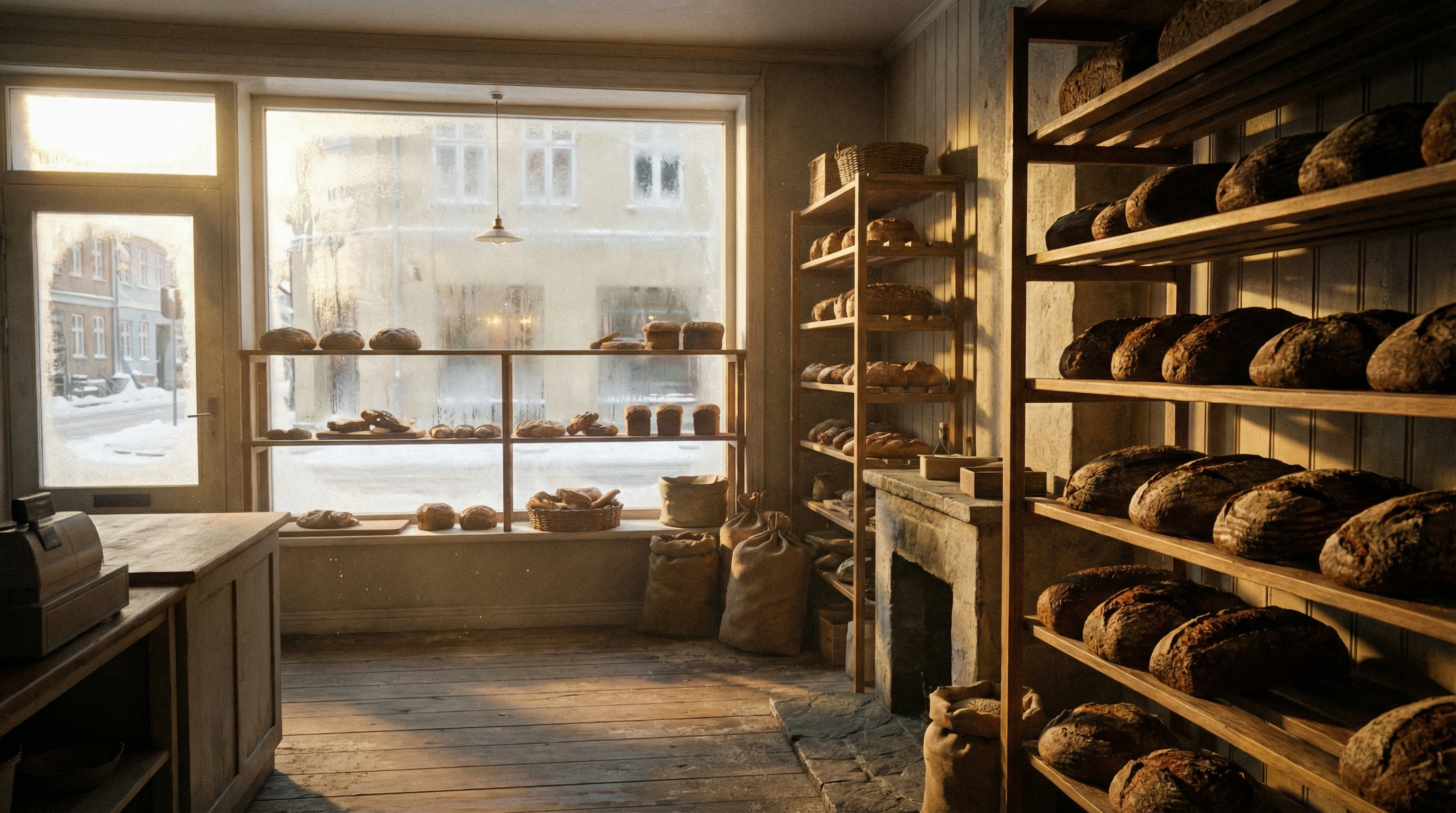
Overnight Danish Rye Bread (Rugbrød)
Rugbrod, Danish Rye, Nordic Rye Bread, Danish Wholegrain Rye, Seed-Studded Rye Loaf
Taste of the Past, Pride of the Region
Danish rye bread (rugbrod) has been a staple in Denmark for centuries, evolving from the need to preserve grain through long winters.
The tradition dates back to the Middle Ages when rye became the dominant grain in Nordic countries due to its hardiness in cold, wet climates where wheat struggled to thrive. Unlike the lighter wheat breads of southern Europe, rugbrod developed as a dense, long-lasting loaf that could sustain families through harsh Scandinavian winters.
The characteristic dense texture comes from the high proportion of rye flour combined with cracked grains and seeds, creating a low, heavy loaf that was traditionally baked only once every few weeks. The sourdough fermentation method (though modern versions often use yeast for convenience) originally developed naturally from airborne bacteria in Danish bakeries, giving the bread its distinctive tangy flavour profile. In Danish food culture, rugbrod serves as the foundation for smorrebrod, the famous open-faced sandwiches that have become a national culinary icon.
The bread's robust structure allows it to support generous toppings without becoming soggy, making it ideal for the elaborate preparations of herring, liver pate, and pickled vegetables that adorn Danish lunch tables. Today, rugbrod remains protected by Danish food traditions, with specific guidelines governing its composition to ensure it maintains the high fibre content and whole grain integrity that has sustained Danish populations for generations. The bread represents not just sustenance but a cultural connection to the agricultural heritage of the Nordic landscape. ■
See the full recipe for Overnight Danish Rye Bread (Rugbrød)

Yum User contributed this on 31 Mar 2026
Login or Register to comment