


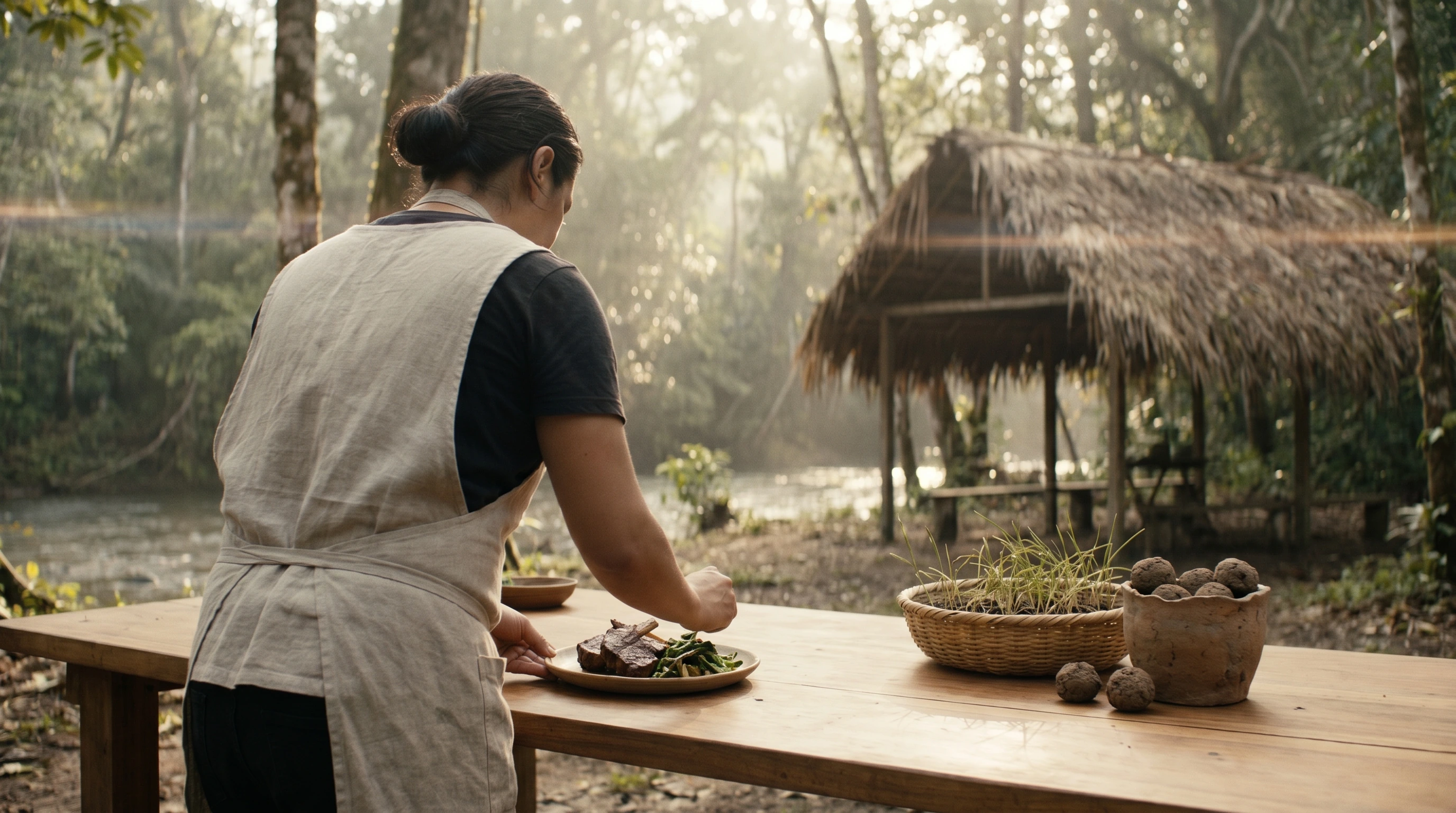

Across continents, Indigenous peoples are stitching together a culinary renaissance that challenges centuries of disruption. In North America, the movement has gained fresh momentum during Native American Heritage Month, while similar projects echo in the Colombian Amazon and beyond. The drive is more than a nostalgic return to ancient recipes-it is a strategic push for legal rights, ecological stewardship and economic independence, offering home cooks and industry leaders a new blueprint for sustainable gastronomy.
Santa Fe’s inaugural Indigenous Foodways Festival turned the Museum of Indian Arts and Culture into a bustling showcase of native flavours on 20 June. Organisers invited chefs from reservation kitchens and metropolitan restaurants to share dishes that honour tribal terroir. Among them, Tina Archuleta of Jemez Pueblo presented an entirely plant-based menu under the banner Itality, while Santa Clara Pueblo’s Ray Naranjo led a tasting that blended traditional corn-based staples with contemporary techniques. Panels discussed how culinary innovation can coexist with cultural preservation, underscoring the festival’s role as a conduit for knowledge exchange (Abqjournal).
Perhaps the most visible champion of this revival is Oglala Lakota chef Sean Sherman, whose James Beard-winning restaurant Owamni in Minneapolis serves only pre-contact ingredients. During a recent talk at the Academy of Natural Sciences, Sherman traced the journey from walleye and bison to the modern plate, arguing that Indigenous cuisine can be both beautiful and hopeful. His broader project, the North American Traditional Indigenous Food Systems network, pairs culinary training with community-led food production, creating a model that other tribes are eager to replicate (Inquirer).
On the Menominee reservation in northern Wisconsin, a different kind of revival is taking place beneath the surface of the lakes. Menominee fisherman DJ Micik and his son Liam have begun using clay-coated seed balls - a technique inspired by ancestral practices-to re-introduce wild rice, North America’s sole native grain, to waters that have been choked by pollution and broken treaties. The labour-intensive method mimics a mother’s womb, protecting the fragile seedlings until they can root naturally. While the effort is still fragile, it illustrates how traditional ecological knowledge can be married to modern restoration science, a crucial step in the tribe’s legal fight to protect manoomin under treaty rights (Circleofblue).
Further south, the Colombian Amazon offers a parallel example of Indigenous stewardship through the chagra system. Small, family-run plots are deliberately arranged to follow the forest’s own cycles, requiring no synthetic chemicals and allowing the land to revert to primary forest after a five-year cultivation phase. The practice, highlighted in a BBC feature, demonstrates that centuries-old farming logic can meet contemporary sustainability goals, providing a template that could inform North American restoration projects ranging from bison grazing to agroforestry.
These stories converge on a common theme: food is a frontline of sovereignty. Legal frameworks, such as those championed by the Indigenous Food and Agriculture Initiative, are being built to protect seed banks, water rights and grazing lands, while chefs and farmers translate policy into plate. For home cooks, the message is clear-sourcing heritage grains, supporting tribal restaurants and learning about seasonal, place-based cooking can contribute to a broader movement that respects both culture and climate.
Yum Opinion: Embracing Indigenous food systems not only enriches our palates but also plants the seeds of a more equitable and resilient food future.