




Plum Dumplings with Breadcrumbs
Zwetschgenknoedel, Szilvasgomboc, Knedle ze Sliwkami, Austrian Plum Dumplings, Hungarian Plum Dumplings
What the Land Remembers
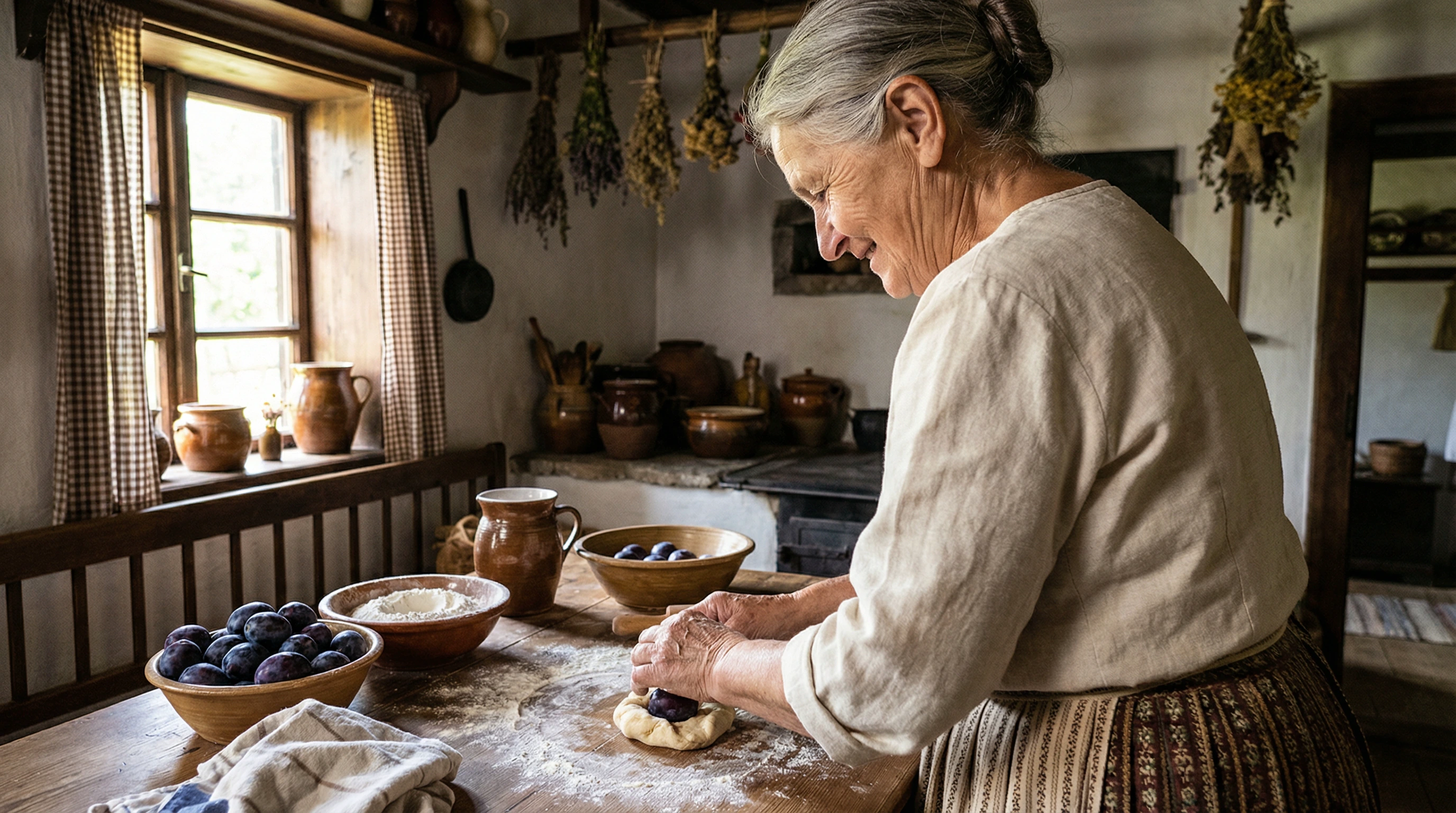
Plum dumplings (Zwetschgenknoedel in German-speaking regions, Szilvasgomboc in Hungary, and Knedle in Poland) represent a beloved tradition across Central and Eastern European culinary heritage.
These sweet parcels emerged from agrarian communities where seasonal fruit preservation and simple pantry staples created satisfying desserts. The dish likely originated in the Austro-Hungarian Empire's diverse culinary landscape during the nineteenth century, though similar preparations appear in Bavarian, Bohemian, and Slavic cookbooks from the same era. The technique of wrapping stone fruit in dough reflects broader European dumpling traditions, from Italian gnocchi to German Knoedel.
Plums became the preferred filling in regions where prune varieties like Zwetschge or Italian plums flourished in orchards. The breadcrumb coating, toasted in butter with cinnamon sugar, adds a distinctive textural contrast that distinguishes Central European versions from simpler boiled dumplings found elsewhere. Today, these dumplings remain a seasonal specialty, particularly during late summer when plums reach peak ripeness. Families often gather to prepare large batches, with recipes passed down through generations. While variations exist - some using potato dough, others adding quark or farmer's cheese to the mixture - the essential combination of sweet fruit, tender casing, and buttery crumb topping continues to define this comforting regional classic. ■

Yum User contributed this on 2 Apr 2026
Login or Register to comment