





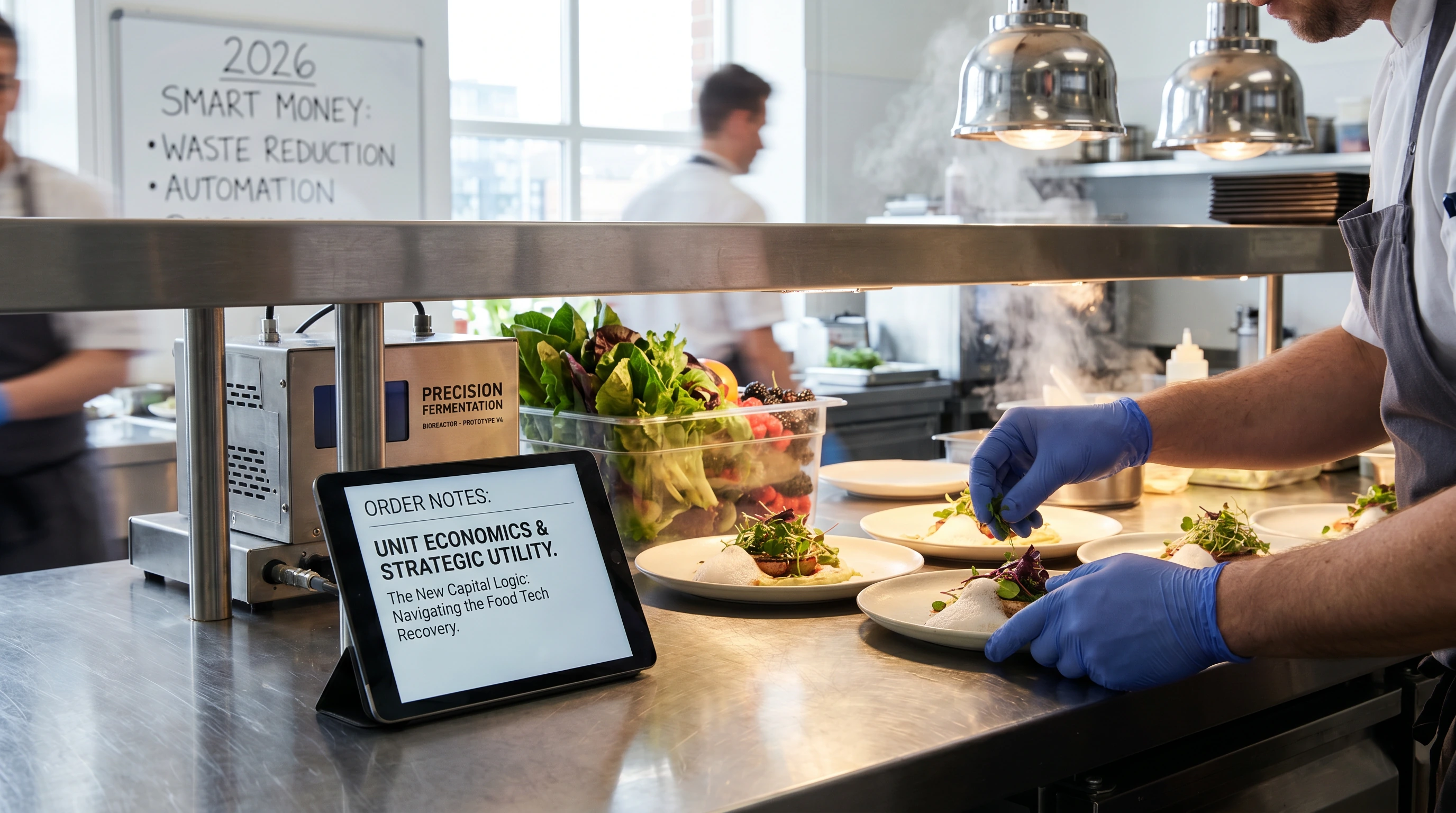
The landscape of food technology investment has undergone a profound transformation. After a volatile cycle of dramatic booms and subsequent busts, particularly within the direct-to-consumer and early plant-based sectors, capital is beginning to flow back into the market. However, the nature of this funding has shifted. Investors are no longer chasing raw growth at any cost; instead, they are demanding proven unit economics far earlier in the funding cycle, often requiring stability before a Series B round rather than waiting until Series D.
A significant pivot is visible in the protein space. While traditional plant-based meats once dominated the headlines, precision fermentation is now attracting more early-stage investment. By using microorganisms to create animal proteins without the animals, these startups offer a technical sophistication that appeals to a more cautious class of investor. This shift is mirrored in the dairy sector, where the battle for consumer loyalty is being fought in the coffee shop. According to DairyReporter, the barista-led environment has become the ultimate proving ground for alternative milks, forcing brands to prioritise performance and flavour over simple sustainability claims.
Beyond proteins, the fastest-growing sub-sector by deal count is restaurant technology. The focus has moved toward operational efficiency, with heavy investment in AI-driven ordering, smart inventory management, and kitchen automation. This trend reflects a broader industry move toward solving immediate labour and waste problems rather than imagining distant utopias. The integration of AI is also refining how companies approach flavour. FoodNavigator LATAM reports that digital tools are allowing both global giants like Cargill and specialists like Foodpairing to target consumer preferences with extreme precision across different geographies and demographics.
The identity of the investors themselves is changing. Corporate venture arms from industry leaders such as Nestlé, Danone, and Kraft Heinz have become increasingly active. These entities are less interested in purely financial returns and more focused on building strategic acquisition pipelines. This corporate interest is evident in recent market activity, such as Prodalim's acquisition of Better Juice, a food-tech firm specialising in sugar reduction solutions, as noted by Food Business News.
Geographically, the centre of gravity is shifting away from traditional hubs. Southeast Asia and the Middle East have emerged as critical new frontiers for food tech. In these regions, sovereign wealth funds are backing domestic technology to ensure food security, treating food tech not just as a commercial opportunity but as a national strategic necessity. This geopolitical layer adds a level of stability to funding that was absent during the previous speculative bubble.
Ultimately, the smart money of 2026 is concentrating on utility and precision. Whether it is the pursuit of personalised taste or the automation of a commercial kitchen, the goal is no longer just disruption. The current era of investment is defined by a desire for tangible efficiency and a rigorous approach to how technology can actually improve the bottom line of the global food system.