





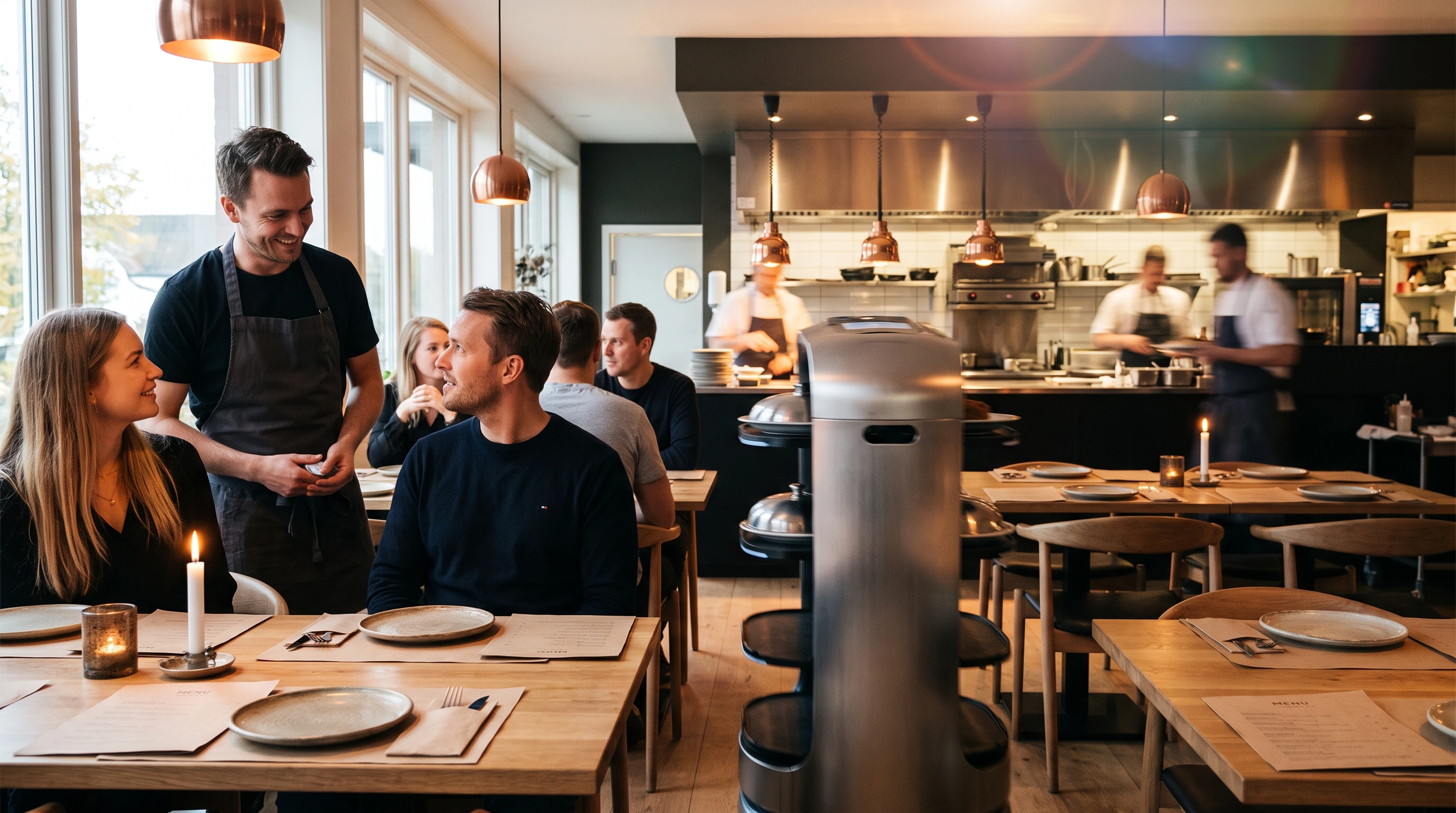
Across the globe, from a sleek Dubai kitchen where an AI-driven chef named "Chef Aiman" suggests flavour pairings, to a London bistro that has installed a robotic food runner, the restaurant world is experimenting with automation at a breakneck pace. The promise is clear: faster service, tighter margins and a buffer against the chronic labour shortage that has haunted the sector since the pandemic. Yet operators are learning that the same machines that can ferry plates across a dining room can also strip away the sense of place that makes a restaurant feel like a community hub.
Industry data underline the financial incentive. Restaurant365’s mid-year report, covering nearly 10,000 locations, identifies a "Restaurant Profitability Gap" - a measurable edge for establishments that have woven AI into back-office functions such as inventory forecasting, staff scheduling and cost analytics. Sixty-two percent of respondents said they already use AI in at least one area, and among those, 61 % reported lower food costs while 62 % saw labour expenses shrink. The gap is not a fleeting trend; it is becoming a benchmark for competitive advantage.
But the numbers tell only half the story. A recent piece on Restauranttech warned that when automation is pursued solely for efficiency, diners can feel as though they are eating in a vending machine rather than a restaurant. The article argues that technology should act as a curator of experience, not a replacement for the human moments that turn a meal into a memory. This sentiment echoes the viewpoint of Modern Restaurant Management, which stresses that AI is not a silver bullet for staffing woes - the real problem is not the lack of people but the need to empower the people who are already there.
In practice, the line between helpful and intrusive is being drawn in real time. The Restaurant HQ article maps out where operators are comfortable delegating tasks-such as predictive ordering and table-turnover analytics - while insisting that the act of greeting a guest, reading a table’s mood, or improvising a dish on the fly remains firmly in human hands. Restaurants that have embraced self-order kiosks, for example, have seen check sizes rise by up to 25 % because customers feel less pressure to conform to a server’s upsell cues. Yet the same establishments often pair those kiosks with a concierge-style host who greets guests, offers recommendations and adds the personal touch that a screen cannot provide.
International case studies illustrate how the balance can be struck. In Dubai, the "WOOHOO" restaurant uses a large-scale culinary language model to generate menu ideas, drawing on decades of food-science research. The AI suggests novel spice blends, but the head chef still decides which concepts make the final plate, tasting and tweaking each iteration. Across the Atlantic, a Manchester gastropub recently introduced a robotic runner to ferry dishes from kitchen to floor. Staff report that the robot frees servers to spend more time at the table, resulting in higher guest satisfaction scores even as the kitchen’s throughput improves.
Meanwhile, the broader industry is still wrestling with adoption barriers. The Restaurant365 press release notes that data-privacy concerns, doubts about algorithmic accuracy and implementation costs keep a sizable minority of operators on the sidelines. In the United Kingdom, the National Restaurant Association’s latest survey (cited by Restaurant365) shows that while 70 % of operators are optimistic about AI’s potential, only a third have moved beyond pilot projects. This cautious stance reflects a cultural emphasis on the “human element” that many UK diners still value highly.
Fast Casual’s analysis of AI-using restaurants highlights a concrete outcome: those that have integrated AI into both front- and back-of-house operations are pulling ahead of peers on key profitability metrics. The report describes a “profitability gap” where AI-enabled venues achieve lower waste, tighter labour scheduling and quicker decision-making, allowing them to keep menu prices stable while competitors resort to price hikes to protect margins. The advantage is not merely financial; it also frees managers to invest in staff training, culture and the kind of on-floor interaction that builds loyalty.
Ultimately, the future of dining appears to be a hybrid model where machines handle the repetitive, data-heavy tasks and humans focus on the relational. As AI becomes more adept at forecasting demand and optimising supply chains, the role of the server may evolve from order-taker to experience-designer, guiding guests through a narrative that blends technology-enhanced efficiency with authentic hospitality. The challenge for restaurateurs will be to keep that narrative genuine, ensuring that the sparkle of automation never outshines the warmth of a human smile.
Yum Opinion: The smartest restaurants will be those that let robots do the heavy lifting while letting people do what they do best-make guests feel welcome.