





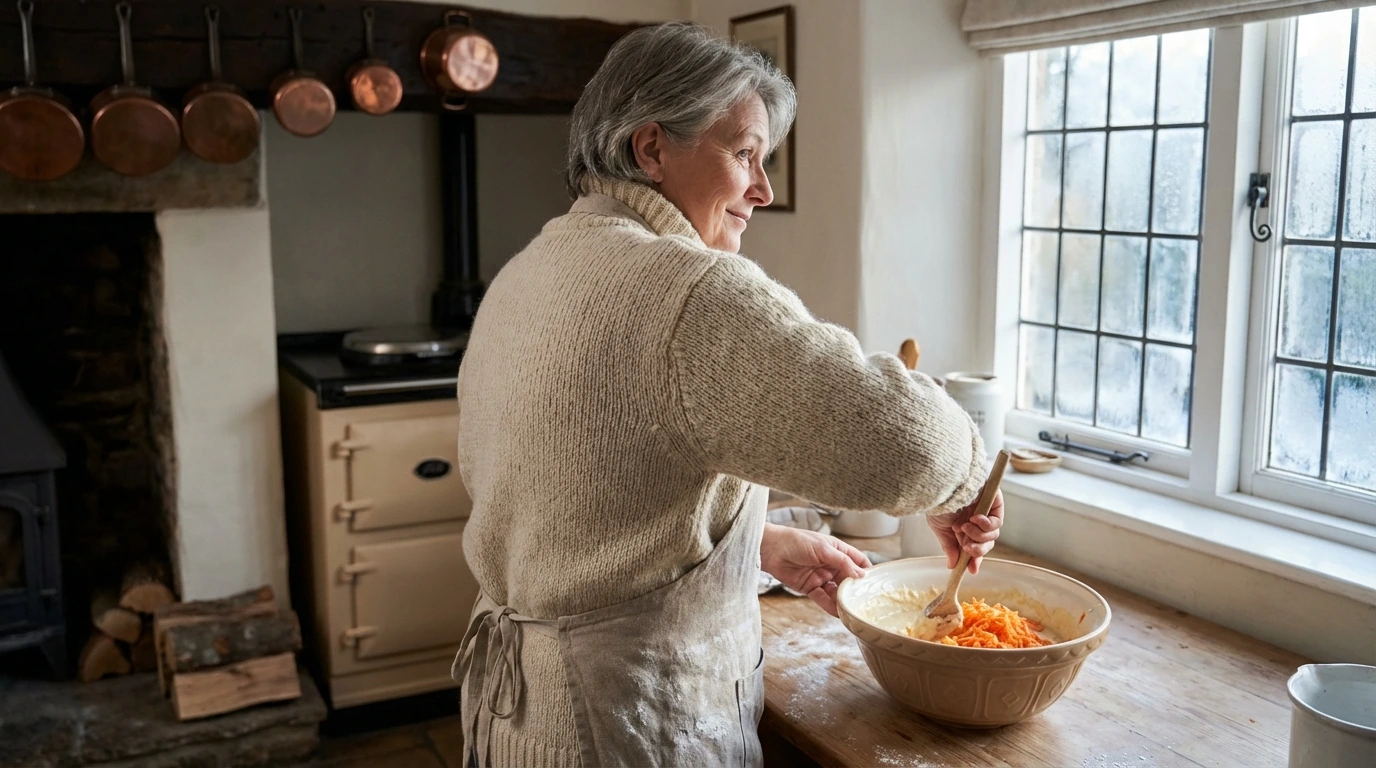
Eggless Carrot Loaf
Egg-free Carrot Bread, Carrot Quick Bread, Spiced Carrot Loaf, Vegan Carrot Cake, Moist Carrot Bread
How This Land Shaped What We Eat
Carrot-based cakes and loaves emerged in Britain during the Second World War when sugar rationing forced bakers to use naturally sweet vegetables.
The carrot loaf evolved from medieval carrot puddings, where carrots were boiled and mixed with flour and sweeteners, then steamed in cloth or baked in hearth ovens. These early versions were dense, pudding-like affairs rather than the light quick breads we recognise today. Post-war, the recipe travelled to America and beyond, adapting to local tastes with cream cheese frostings and spice variations.
The eggless adaptation addresses modern dietary requirements, replacing eggs with a combination of baking powder, bicarbonate of soda, and acidulated milk. This chemical leavening system relies on the reaction between acidic lemon juice and alkaline raising agents to create carbon dioxide bubbles that lift the batter. Enhanced by the moisture from grated carrots and oil, this method produces a texture comparable to traditional egg-based versions. The technique reflects contemporary plant-based baking movements while preserving the comforting spice profile of cinnamon that defines the genre.
In African baking traditions, carrot loaves have gained popularity as teatime treats and breakfast items, often prepared in domestic kitchens rather than commercial bakeries. The recipe's flexibility allows for local substitutions, such as using sunflower oil when butter is scarce or incorporating indigenous nuts like macadamias instead of pecans. Its enduring appeal lies in the vegetable's natural sweetness and the loaf's keeping qualities, making it practical for warm climates where refrigeration may be limited and ingredients must stretch across large families. ■

Yum User contributed this on 23 Mar 2026
Login or Register to comment