





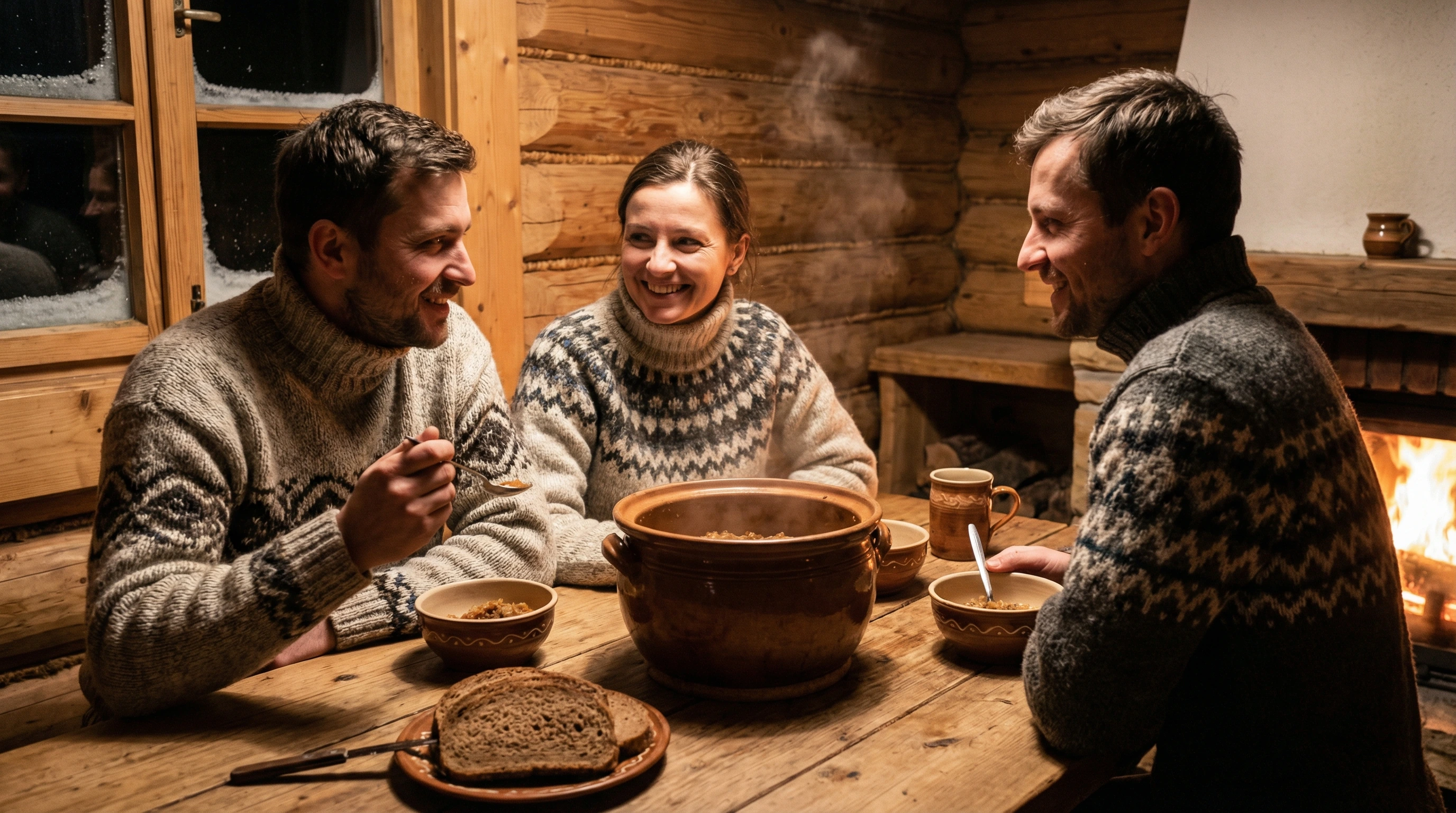
Bigos Polish Hunter’s Stew
Polish Hunter's Stew, Hunter's Stew, Bigos Myśliwski
Where History Meets the Plate
Bigos holds a venerable place in Polish culinary tradition, with roots stretching back to the medieval period when it sustained hunters and nobility alike during long winter expeditions.
The dish emerged from practical necessity: preserved sauerkraut provided essential vitamin C during months when fresh vegetables were scarce, while dried mushrooms and cured meats offered portable, long-lasting protein sources that could withstand forest conditions. By the seventeenth century, bigos had entered the literary canon, immortalised in Adam Mickiewicz's epic poem Pan Tadeusz, where it is described as the pinnacle of Polish gastronomy.
The stew traditionally welcomed whatever game the hunt yielded - venison, wild boar, or hare - simmered alongside domestic pork and beef according to regional availability and family preference. Aristocratic households developed elaborate versions using expensive cuts and imported spices, while peasant kitchens created equally satisfying renditions with humbler ingredients. The marriage of fresh and fermented cabbage creates the characteristic tang that defines authentic bigos, while caraway seeds and bay leaves provide aromatic depth. Unlike many stews that suffer from storage, bigos famously improves over several days as the flavours meld and mature, making it a practical choice for feeding large gatherings.
Modern Polish families continue the tradition of preparing massive pots for Christmas Eve, New Year's celebrations, and winter Sunday dinners, serving it with rye bread and vodka to ward off the chill of Central European winters. ■

Login or Register to comment