





Beef Chow Fun
Beef Ho Fun, Beef Hor Fun, Stir-Fried Beef Rice Noodles, Gong Chao Niu He, Dry Fried Beef Noodles
The Cultural Roots of Regional Cuisine
Beef Chow Fun originates from the Cantonese culinary tradition of Guangdong province in southern China, where rice noodles have been a dietary staple for centuries.
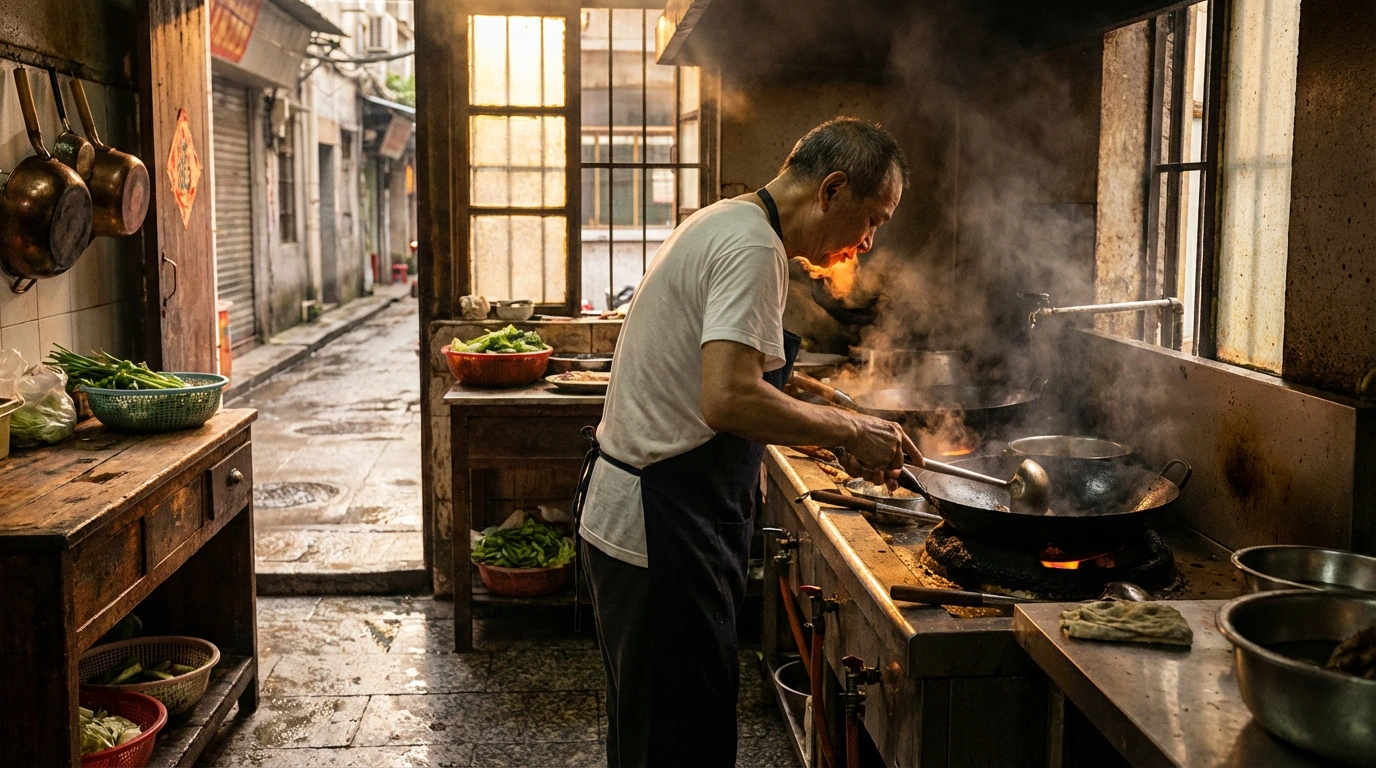
The dish exemplifies the region's mastery of wok cooking, particularly the technique of "wok hei" - the breath of the wok - which imparts a subtle smoky char to the wide, flat rice noodles known locally as "ho fun" or "hor fun". These noodles, made from rice flour and water, were traditionally produced fresh daily in market stalls throughout Guangzhou and Hong Kong.
The addition of beef reflects the Cantonese preference for quick-cooking tender cuts, while fermented black beans (douchi) provide the distinctive salty depth characteristic of southern Chinese cuisine. Historically, this preparation emerged from the need to utilise leftover noodles and small quantities of meat efficiently, transforming humble ingredients into a satisfying meal through high-heat cooking. The specific combination of tender beef and silky noodles became particularly associated with Cantonese teahouse culture, where it remains a popular choice for breakfast or late-night dining.
The dish gained international recognition through the diaspora of Cantonese people, particularly in Southeast Asia and Western Chinatowns, where it remains a menu fixture in dim sum houses and noodle shops. Unlike soupy noodle preparations, this "dry" stir-fry method allows the noodles to develop caramelised edges while maintaining a silky texture, representing the Cantonese emphasis on textural contrast and precise heat control. ■

Login or Register to comment