


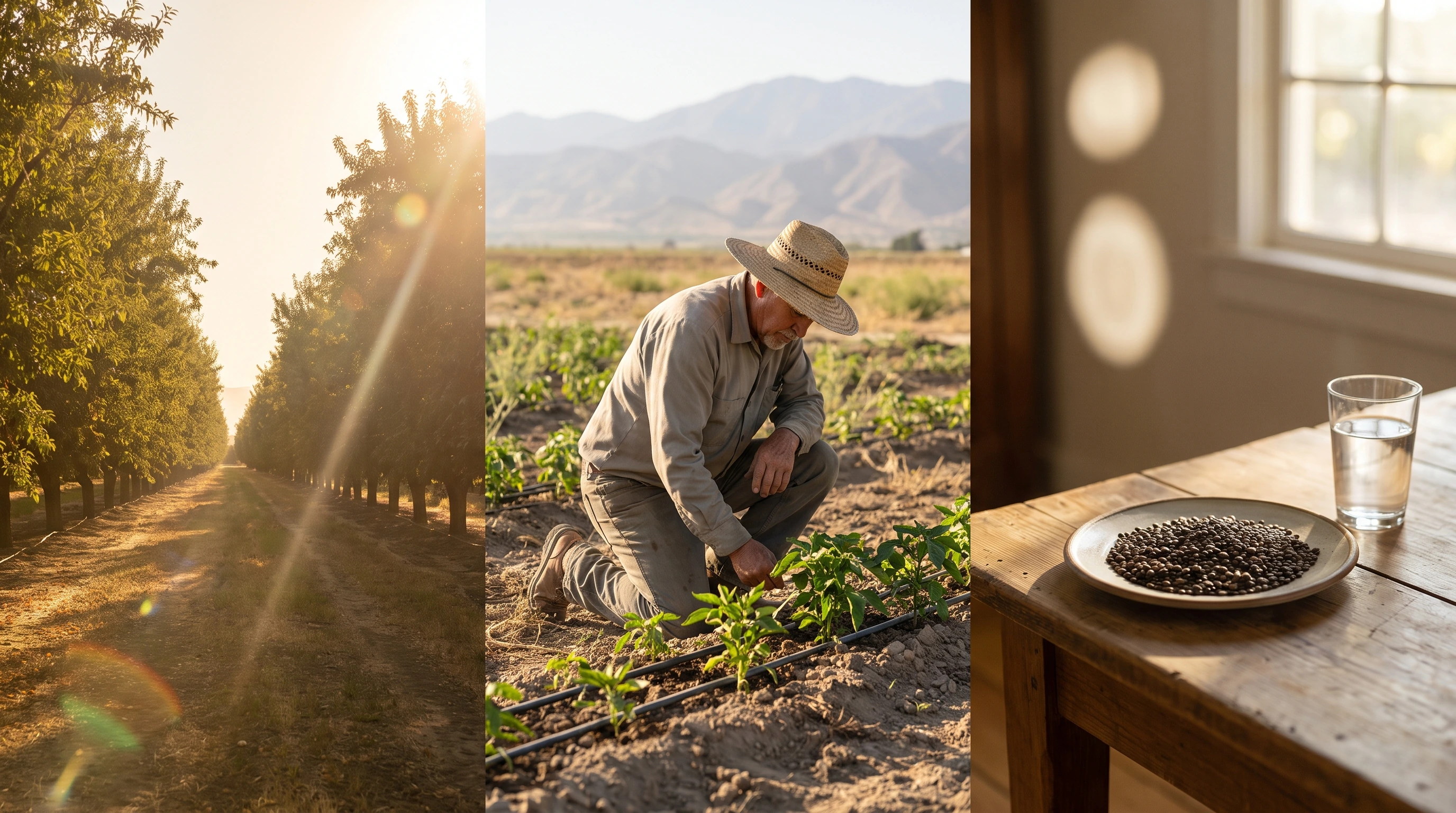

When you turn on the tap to rinse a carrot or brew a cup of tea, you are tapping into a resource that fuels nearly three quarters of global food production. Freshwater withdrawals for agriculture account for roughly 70% of all withdrawals, meaning that every bite carries a hidden water cost. As climate change sharpens droughts and population growth swells demand, the water embedded in our meals is turning into a silent driver of food security and trade.
Global freshwater use has surged about six-fold since the turn of the 20th century, a trend documented by Our World in Data. While the steep climb began in the 1950s, the pace appears to be easing, yet the total volume remains staggering. The most water-intensive nations-India, China and the United States-dominate the withdrawal charts, and many of the world’s bread-basket regions now sit on the brink of stress. In places such as sub-Saharan Africa and the Middle East, the combination of dwindling supplies and expanding agriculture creates a volatile mix that could reshape export patterns and even trigger geopolitical tension.
California’s almond industry illustrates the dilemma in vivid detail. The state’s most valuable crop consumes about one gallon of water for each almond, a figure that has turned orchards into flashpoints during the ongoing drought. Foodnavigator notes that water rights battles have intensified as growers vie for limited allocations, while consumers abroad continue to demand the nut that fuels everything from breakfast cereals to plant-based milks. The almond story underscores how a single high-value crop can amplify regional water scarcity and ripple through global supply chains.
Half a world away, India faces a different but equally urgent challenge. A strong El Niño is forecast to suppress the monsoon, threatening rain-fed staples such as rice and maize. The Food and Agriculture Organisation has warned that India is among the nations most exposed to agricultural drought, a concern echoed by DW’s coverage of farmers watching the skies for relief. With already deficient rainfall in the early monsoon weeks, the risk of crop failure looms, potentially driving up food prices and prompting emergency imports.
Technology offers a hopeful counterpoint. Israel, born of necessity in an arid landscape, pioneered drip irrigation - a system that delivers water directly to plant roots, cutting waste dramatically. Foodnavigator highlights that this innovation has become the most significant per-acre efficiency gain in modern farming, now exported to fields from the American Midwest to the Sahel. By reducing evaporation and runoff, drip systems can slash water use by up to 60%, providing a template for water-strained growers worldwide.
Understanding the water footprint of individual foods helps consumers make smarter choices. While plant-based diets generally require less water than meat-heavy ones, the picture is nuanced. Crops such as rice, almonds and avocados demand large volumes of irrigation, sometimes rivaling the water intensity of dairy. Conversely, legumes and many cereals sit on the lower end of the spectrum. The Water Footprint Network’s database, cited by Foodnavigator, shows that a single serving of beef can embed upwards of 2,500 litres of water, whereas a handful of lentils may require less than 100 litres.
Food companies are beginning to respond. Transparent water accounting, adoption of efficient irrigation, and on-site water harvesting are now part of many corporate sustainability roadmaps, according to Foodnavigator’s recent guide. In the United States, experts on the Colorado River basin argue that agriculture must accept permanent reductions in water use, a stance reported by Aspen Journalism. Such policy shifts, paired with investment in drought-tolerant crop varieties, could ease pressure on over-exploited aquifers like the Ogallala, which is being depleted faster than it can recharge.
For home cooks, the water narrative translates into practical steps. Choosing locally sourced produce that matches regional rainfall patterns, favouring lower-water crops, and reducing food waste all conserve the hidden water in our diets. Even simple kitchen habits-such as reusing wash water for plants or opting for steam cooking over boiling-can shave off litres that would otherwise be lost.
As the planet’s water budget tightens, the foods we grow, import and plate will increasingly be judged by their thirst. The challenge lies in balancing consumer preferences with the finite reality of freshwater, a task that will demand cooperation from farmers, corporations and diners alike.
Yum Opinion: Water-smart choices today will keep tomorrow’s tables full.