





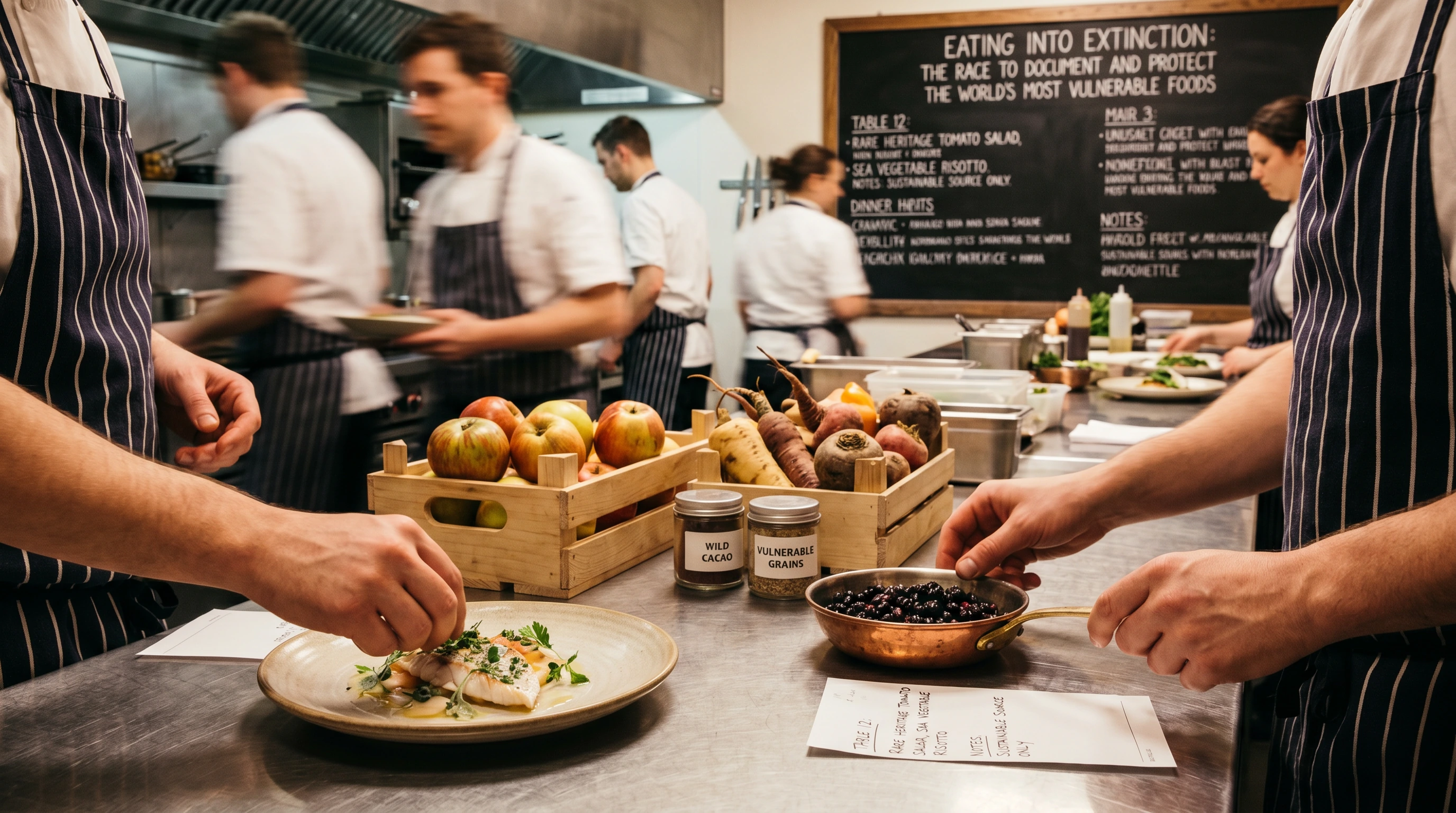
Across the globe, thousands of food varieties - from specific cacao strains to heritage apple cultivars and wild-harvested sea vegetables - are disappearing faster than they can be documented. The Slow Food Foundation's Ark of Taste already lists more than 5,000 endangered foods, yet climate-driven shifts in growing zones and rising demand for niche ingredients are accelerating the loss. As the catalogue grows, the urgency to capture, protect, and re-introduce these genetic treasures has never been greater.
On the remote cliffs of Robinson Crusoe Island in Chile, a single Dendroseris neriifolia tree clings to a sheer rock face, its survival a literal race against gravity. Futurism reported that scientists, working with Royal Botanic Gardens expertise, used a giant net in an attempt to catch viable seeds from the last known wild specimen. It is a dramatic image, but the point is practical: some food-linked biodiversity now depends on rescue work that looks closer to mountaineering than farming.
Half a world away, ancient DNA work on black abalone shells is offering a glimmer of hope for another imperilled food source. News UCSC reported that researchers sequenced genomes from more than 50 shells spanning 1,500 years, uncovering immune-gene clues that could help surviving populations resist the disease that devastated the species. Once important to Indigenous communities and California's coastal food culture, black abalone shows how museum collections and archaeological material can become tools for future restoration.
Food diversity is not preserved only in laboratories. Foodthink has highlighted the role of farmer-led seed saving in China, including Liu Yurong's work with traditional legumes in Hebei Province. Those local practices matter because seeds are not just genetic material. They carry cooking habits, village memory, and the daily knowledge of when to plant, harvest, dry, store, and cook foods that rarely appear in supermarket supply chains.
Even plants thought lost can reappear. The Times of India reported the rediscovery of Vaccinium piliferum, a wild Himalayan relative of blueberry and cranberry, in Arunachal Pradesh after 188 years without a reliable record. Finds like this are reminders that old herbarium sheets, local observation, and field science can still reconnect modern food systems with ingredients that almost slipped out of view.
Climate resilience is also pushing rare ingredients into the wider conversation. Scroll In has written about Excelsa coffee, a lesser-known variety being discussed for its ability to cope with changing weather. For coffee drinkers, that sounds like a flavour story. For farmers and buyers, it is also a risk story, because the future of familiar drinks may depend on crops that have spent years at the edge of mainstream attention.
The kitchen has a role in this, but it has to be handled carefully. When chefs, buyers, and curious home cooks celebrate rare ingredients, demand can help producers keep them alive. It can also push fragile wild foods towards overharvest if supply is not managed. The better model is one that links culinary interest to growers, seed banks, conservationists, and communities with a stake in the ingredient's survival.
Yum Opinion: every vulnerable ingredient carries flavour, culture, and adaptation, and protecting that diversity now gives future cooks a richer, more resilient pantry than the one industrial food systems alone can provide.