





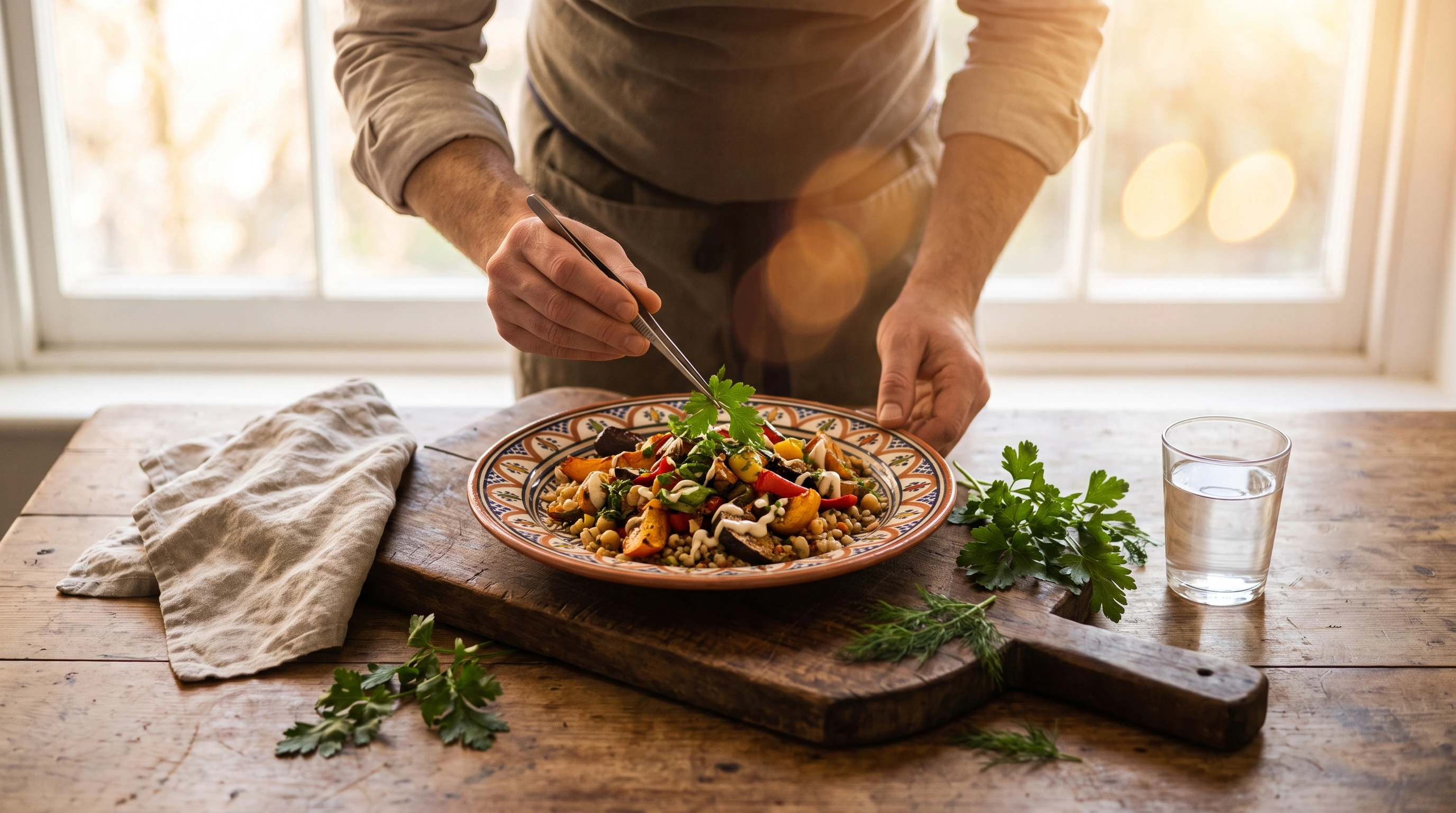
When a glossy burger or a perfectly drizzled dessert appears on a screen, it does more than tempt the palate-it shapes what we think food should look like. The surge of Instagram’s overhead flat-lays and the polished spreads of food television have turned a single frame into a cultural contract, promising flavour, texture and even status before the first bite.
That visual contract has not always been so intimate. In the 1990s and early 2000s, glossy magazine spreads favoured artificial lighting and pristine, almost sterile plating that read like a commercial catalogue. Over the past decade, a shift toward a more natural, ‘imperfect’ aesthetic has taken hold, inspired by the cinematic style of food programmes and the vibrant, abundant arrangements championed by chefs such as Yotam Ottolenghi. The result is a visual language that feels lived-in, as if the dish could be lifted straight from the plate to the viewer’s table.
Behind this shift sits the food stylist, whose job begins long before the camera rolls. As a guide on MyMagicIngredient explains, a stylist must translate a client brief into a visual story, selecting surfaces, props and plating concepts that will survive the rigours of a shoot. The process often involves scouting locations, curating mood boards and rehearsing the composition with the photographer. It is a form of visual communication that balances brand identity with the desire for authenticity.
Science, too, plays a quiet but decisive role. A chemist-turned-photographer writing for A Matter of Nourishment notes that the Maillard reaction - the browning that creates depth and aroma - is deliberately coaxed on set to give a steak that coveted caramelised crust. Understanding how heat, light and time alter colour and texture allows stylists to preserve the illusion of freshness; a drizzle of oil may be replaced with a clear glaze that catches light without sogging the garnish. These chemical insights turn a fleeting moment into a lasting image.
The commercial payoff of such meticulous work is stark. Research cited by Spoon Fed Atlanta shows that adding a professional food photograph to an online menu can lift orders by up to twenty-five per cent. In a world where consumers decide within seconds, a well-lit, colour-balanced image triggers an emotional response that a paragraph of description simply cannot match. Brands therefore invest heavily in high-end photography to secure that split-second advantage.
Yet the same technological push is now being challenged by artificial intelligence. A recent piece on MrsInternet documents how AI-generated food images, produced at the click of a button, have flooded delivery apps and social feeds, prompting a backlash that brands label as “AI slop”. Critics argue that synthetic pictures can look uncanny or overly perfect, eroding trust and raising ethical questions about deception. While AI offers speed and cost savings, many restaurateurs worry that the loss of tactile authenticity will alienate diners who crave genuine visual cues.
Tim Smyth’s commentary on food photography’s propensity to “lie” adds another layer to the debate. He reminds us that lighting tricks, angle choices and digital retouching have long been part of the craft, blurring the line between artistic interpretation and consumer misdirection. As AI enters the mix, the industry faces a crossroads: embrace new tools while preserving the tactile, cultural nuances that make food photography a mirror of society rather than a homogenised template.
Looking ahead, the craft of food photography will likely settle into a hybrid model where human expertise guides AI output, ensuring that each image retains a sense of place, season and story. Stylists will continue to wield chemistry, lighting and prop-hunting as their palette, while brands must navigate the fine balance between efficiency and authenticity. In the end, every click of the shutter remains a promise - a promise that the dish on the plate will live up to the dream it sells.
Yum Opinion: The future of food imagery belongs to those who can blend scientific precision, artistic honesty and responsible technology into a single, appetising frame.