




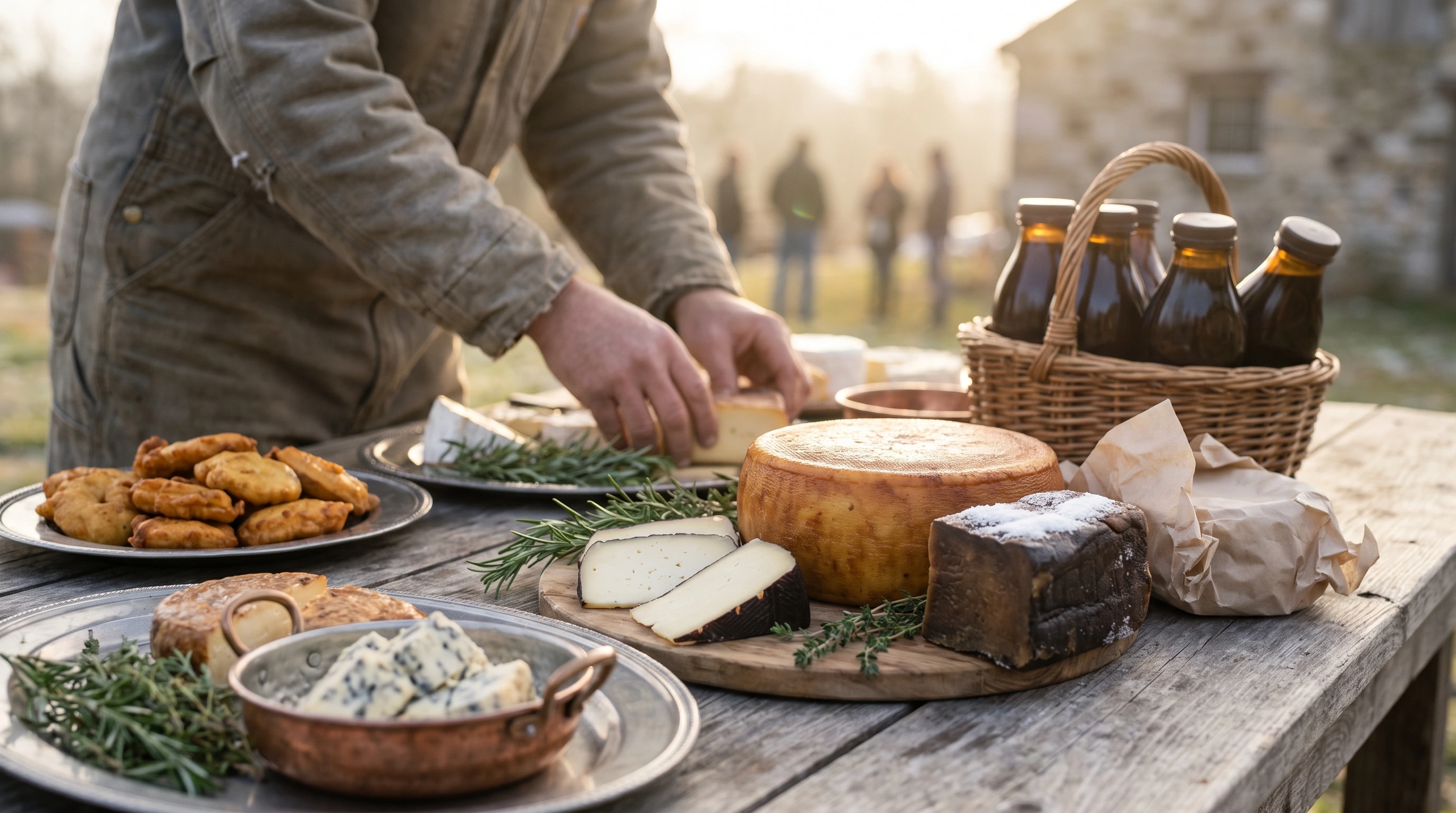
Cheese is arguably humanity’s first biotechnology - a living food that turns milk into a portable protein, a flavour library and a cultural badge. While the French brie, Italian parmigiano and Dutch gouda dominate supermarket aisles, a parallel map of curds and rinds stretches from the high Andes to the remote valleys of the Caucasus, each shaped by geography, faith and survival.
In northern Mexico, the Mennonite community has been perfecting a mild, semi-firm cheese known as queso Menonita for decades. Culturecheesemag notes that Quesería Holanda, founded in 1972 in Durango, still sources milk from local herders and follows the same hand-pressed techniques that migrants brought from Europe in the early 20th century. The cheese’s meltability makes it a staple for tacos and quesadillas, yet its story is rooted in a quest for self-sufficiency that helped the community endure harsh desert conditions.
Travel north to the Himalayas and the narrative shifts from cow to yak. ThePrint describes how Thenlay Nurboo’s family in Ladakh churns yak milk into churpi - a hard, dried cheese that can survive the region’s brutal winters. The same cheese recently won gold at Brazil’s Mundial do Queijo, proving that high-altitude pastoral knowledge can compete on the world stage. Across the Indian subcontinent, kalari-often called the “Mozzarella of the Himalayas” - is stretched and fried by Gujjar herders, while bandel cheese, a smoked delicacy from Bengal, carries the imprint of Portuguese colonial trade.
Further west, the Georgian village of Lakhamula preserves its own secret in Narchvi, a creamy cow-milk cheese with a funky aroma and a salty finish. Saveur recounts how the cheese is made in the family kitchen, aged on wooden boards, and served alongside flatbreads and amber wine. Its production remains a communal ritual, a reminder that cheese can be both sustenance and a social covenant.
China adds another layer of complexity. A Nature Communications study catalogued the microbiomes of 235 traditional Chinese cheeses, uncovering 395 distinct bacterial species, including 85 that appear to be novel. The research highlights how natural fermentation, unhindered by industrial starter cultures, creates flavour profiles that are as regionally specific as the terroir of the Sichuan hills or the grasslands of Inner Mongolia.
These diverse traditions clash with modern regulatory frameworks. In the United States, raw-milk cheese may only be sold after sixty days of ageing, a rule that excludes many of the very cheeses described above. The European Union’s Protected Designation of Origin system safeguards names like “Parmigiano-Reggiano” but can marginalise producers outside the bloc who craft similar styles, creating tension between heritage and legal protection. Meanwhile, precision-fermentation startups are racing to replicate dairy proteins, promising vegan alternatives that mimic the melt and stretch of traditional curds - a development that could either complement or compete with artisanal practices.
Despite these pressures, a renaissance is underway. Specialist affineurs in London, Paris and Tokyo are curating tasting rooms that celebrate raw-milk, cave-aged and regional cheeses, educating consumers about provenance and palate. The global appetite for such niche products has propelled Ladakh’s yak churpi from a mountain pantry to a gold-medal showcase, while Mexican queso Menonita is finding new fans among food-truck chefs in Mexico City. These success stories illustrate how market demand can lift obscure cheeses into the culinary mainstream.
Preserving these hidden curds is more than a gastronomic adventure; it is an act of cultural stewardship. Each wheel carries stories of migration, climate adaptation and communal identity that risk being lost to homogenised dairy production. By seeking out the cheese stalls of Svaneti, the yak farms of Changthang and the Mennonite dairies of Chihuahua, diners can taste history and help keep the world’s cheese tapestry vibrant.
Yum Opinion: The next great cheese discovery will not come from a multinational brand, but from the hands of the herders, monks and families who have been aging curds for centuries.