

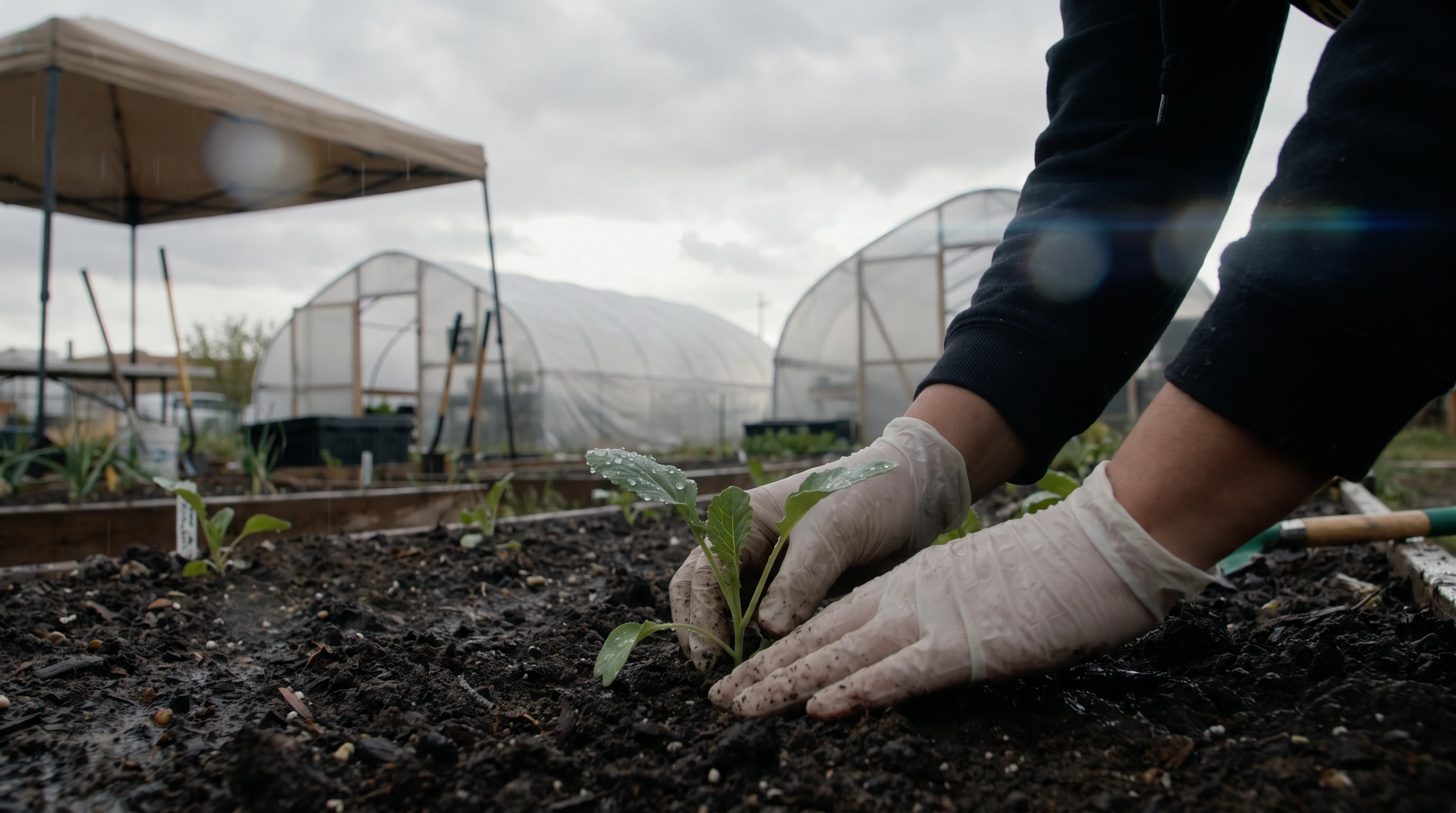

On a rainy, blustery Saturday morning in Albuquerque’s South Valley, several dozen people gathered beneath a canopy to celebrate a patch of cultivated ground. Community elder Earlson Creepingbear led a prayer at the 24 October grand opening of Raíces Sagradas Community Farm, a new classroom and gathering space built around 9,000 square feet of cropland [1].
The modest scale is part of what makes the opening feel tangible. This is a place intended to put organic produce, agricultural education and community life within reach of one another. The property was once an illegal dumping ground; after years of work and planning, it has been remade as a farm designed for long-term climate resilience and learning [1]. Its transformation gives the project a clear human dimension: neglected land is being asked to nourish a neighbourhood again.
Raíces Sagradas is a project of the Agri-Cultura Network, a South Valley-based collective of small-scale farmers and ranchers from across New Mexico [1]. The farm’s stated focus encompasses food independence, Indigenous agriculture and climate resilience, while its plans include workforce training and support for local food production [2]. Two newly built greenhouses are designed to allow growing throughout the year, giving the educational ambitions a practical home as seasons change [3].
That matters because the farm is not presented simply as a plot where crops will appear. It is also an organic, regenerative urban demonstration project in development: somewhere people can learn how food is grown and gain experience in agricultural work [2]. Agri-Cultura Network leaders have said the project aims to grow food and support agriculture education throughout the South Valley [2]. The opening celebration, which ran for four hours, drew community members around that shared purpose [3].
There is gentle hope in the way these functions meet on one piece of land. Produce can answer an immediate need; training can help people acquire skills; a classroom and gathering space can keep knowledge in circulation. None of those ambitions is small, but here they begin with a bounded, visible act: tending land that had been discarded. Raíces Sagradas now has the opportunity to show what patient cultivation can mean when growing food and growing local capacity are treated as the same neighbourhood task.
Yum Opinion: I find the conversion of neglected land into a working place for food and learning a quietly powerful measure of community care.