





Chicken Cacciatore
Pollo alla cacciatora, Hunter's chicken
Taste of the Past, Pride of the Region
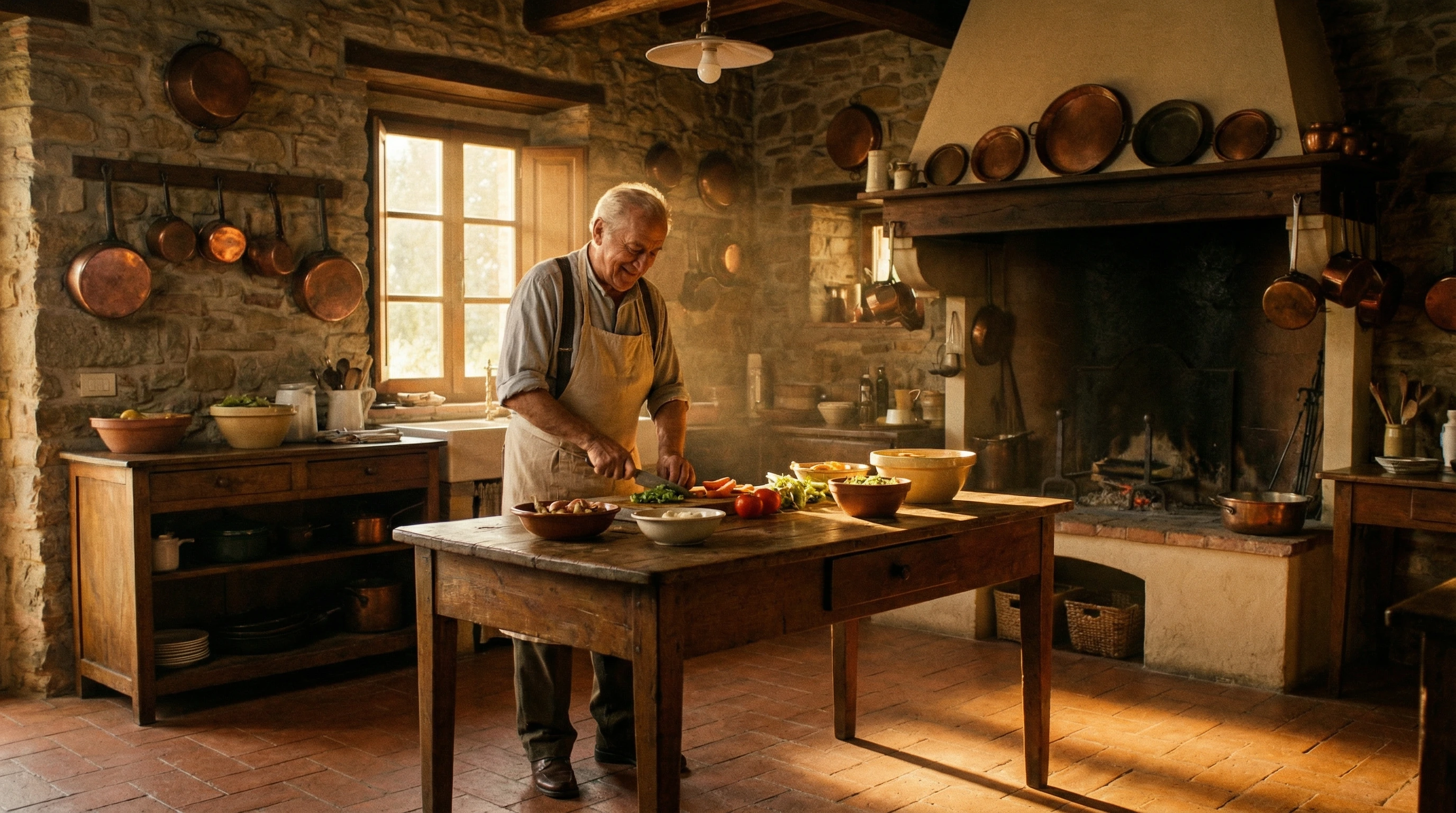
Tuscan cuisine emerged from Etruscan agricultural traditions and medieval Florence's merchant wealth.
The region's bread, made without salt due to medieval salt taxes, became fundamental to dishes like panzanella and ribollita. Renaissance Florence's Medici court elevated Italian cooking to an art form, with Catherine de' Medici allegedly bringing Italian culinary sophistication to France. Tuscany's "cucina povera" philosophy transformed humble ingredients - beans, stale bread, wild greens - into celebrated dishes. The Chianti region's vine cultivation dates to Roman times, while olive groves have anchored the landscape for millennia.
Florentine hunters developed techniques for wild boar, hare, and game birds. The bistecca alla fiorentina showcases the prized Chianina cattle breed raised since Roman times. White beans became so central that Tuscans earned the nickname "bean eaters." Modern Tuscan cuisine maintains simplicity and quality ingredients, emphasizing seasonal vegetables, Tuscan bread, exceptional olive oil, and grilled meats. ■

Login or Register to comment