






Sataraš
Balkan Vegetable Stew, Pepper and Tomato Stew

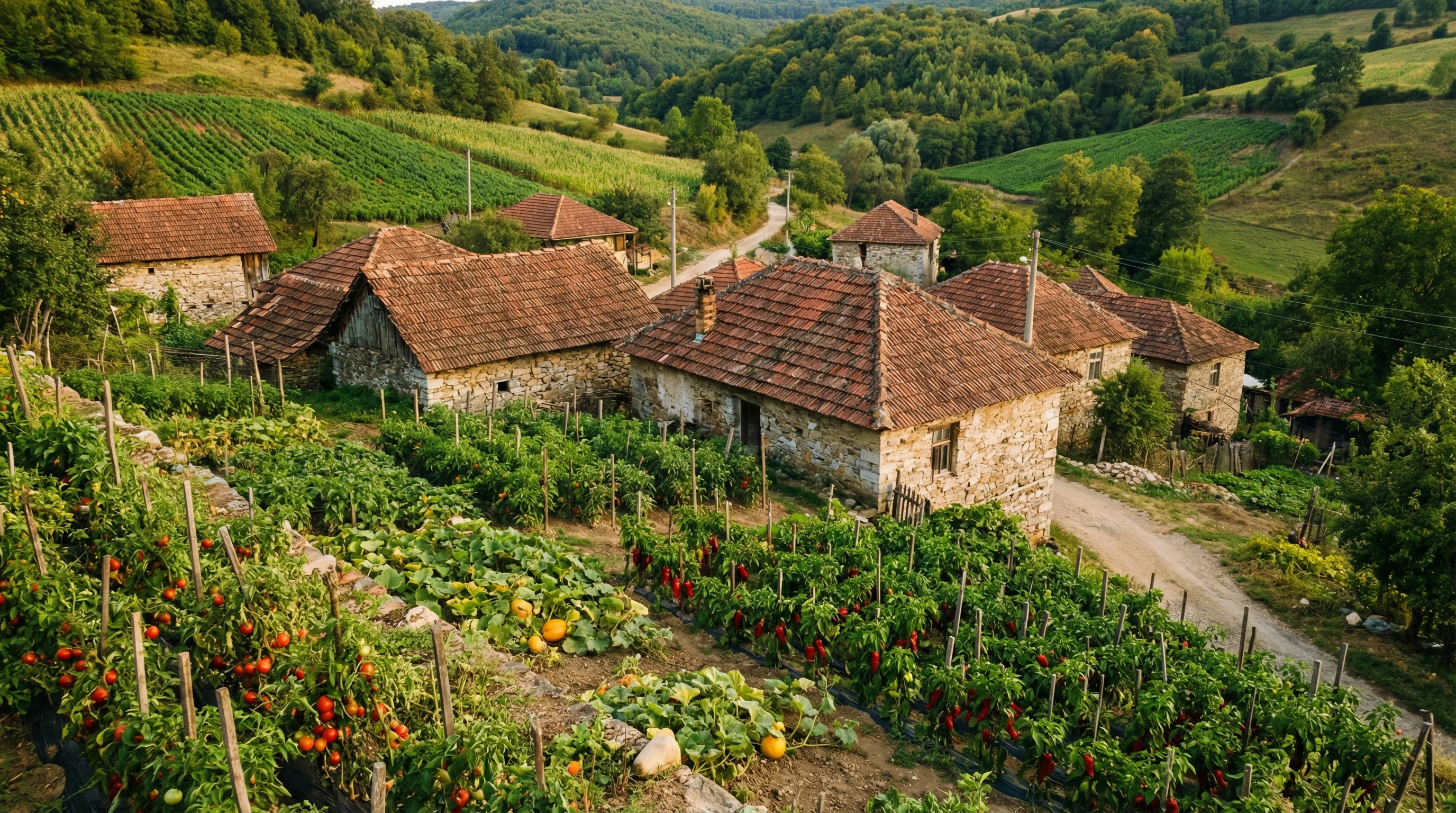
History behind the region and its food
Sataraš belongs to the broader family of Mediterranean vegetable stews that spread through Ottoman-influenced territories.
The name likely derives from the Hungarian szataras, though the dish itself is distinctly Balkan, with variations appearing across Serbia, Croatia, Bosnia and Herzegovina, and Montenegro. Traditionally prepared in late summer when peppers and tomatoes reach peak ripeness, it emerged as a practical method for preserving the harvest without formal canning. The dish shares similarities with Hungarian lecsó and Italian peperonata, reflecting centuries of culinary exchange along the Danube and Adriatic.
Unlike its cousins, however, Sataraš typically excludes paprika as a dominant spice, relying instead on the natural sweetness of vegetables and the savoury depth of slow cooking. Rural households historically cooked it in large batches, serving it warm with crusty bread or cold the next day as a salad-like accompaniment to grilled meats. Vegeta, a modern addition, represents the Yugoslav food industry's mid-twentieth century influence on home cooking, though purists often stick to salt and pepper alone. Today it remains a staple of domestic cuisine rather than restaurant fare, embodying the Balkan preference for unpretentious, vegetable-forward dishes that honour seasonal eating. ■
Login or Register to comment