





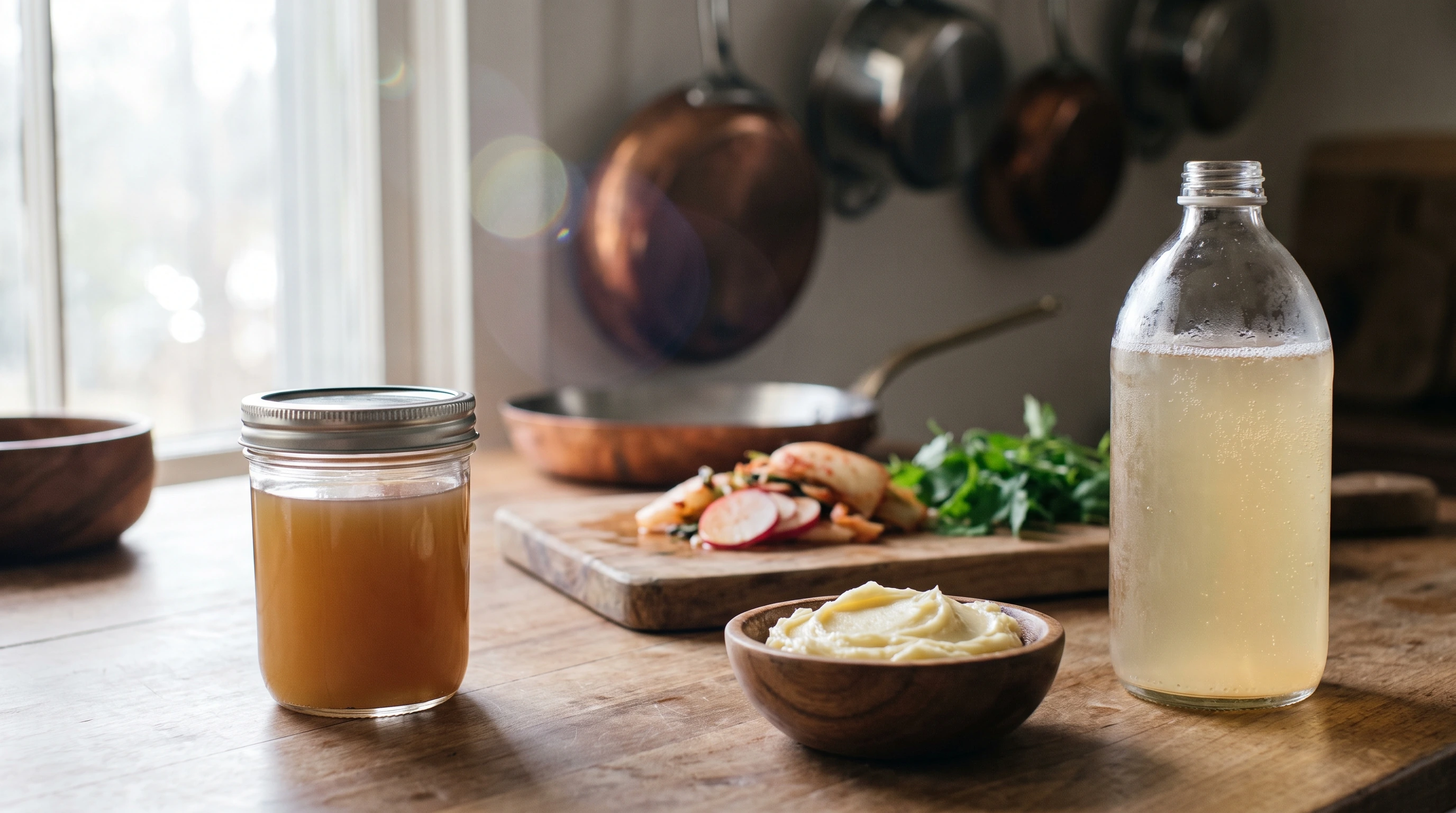
Fermentation, once the quiet work of preserving harvests, has become the loudest voice in contemporary gastronomy. Chefs across continents are reaching for living cultures the way painters reach for pigments, layering umami, acidity and texture with a precision that would have astonished their ancestors. The James Beard Foundation’s 2026 trend report even crowned intentional fermentation as a defining force on restaurant menus, signalling that the practice is no longer a side-project but a core pantry staple.
One of the most striking revivals is garum, the salty, fermented fish sauce that once seasoned every Roman banquet. According to Thedigitalcourier, today’s serious chefs treat garum exactly as the empire did - as an invisible flavour foundation that deepens every bite. In Maine, entrepreneur Liam Fisher has taken the concept a step further, up-cycling green crabs and eels into a locally-sourced garum that both reduces waste and adds a briny punch to everything from grilled octopus to vegetable-forward salads, as reported by the Boston Globe.
Half a world away, the Japanese fungus Aspergillus oryzae-known as koji - is being re-imagined beyond miso and sake. Alinear Id highlights a surge of fermented koji butter in fine-dining kitchens, where the buttery fat is inoculated with koji spores and left to develop a deep, mushroom-like umami over a few weeks. The result is a spread that can turn a simple slice of sourdough into a savoury experience, and it is now appearing on premium steak menus as a luxurious condiment.
The fermentation wave is not confined to elite kitchens. Saucy Spatula notes that home cooks are finally embracing the craft, thanks to low-tech kits that turn a jar of cabbage into kimchi or a bottle of brine into hot sauce in days rather than months. This democratisation aligns with a broader health narrative: the Baltimore Sun points out that rising concerns about gut health, colorectal cancer in younger adults and personalised microbiome therapies have pushed fermentation into mainstream dietary guidelines, encouraging Americans to add probiotic-rich foods to their plates.
Asia is adding its own flavour to the resurgence. The South China Morning Post reports that Chinese millennials are reviving kombucha, a fermented tea once popular in the 1980s, and sharing their home-brew experiments on social media, where the hashtags #kombucha and #homemadekombucha have amassed tens of millions of views. Meanwhile, in Bengaluru, The Nod Mag describes the Desi Cultures festival where chefs like Payal Shah blend leftover Indian dishes with koji and salt, creating a “reverse tamari” that transforms kitchen scraps into a savoury, ever-changing sauce - a practice that mirrors sourdough starter feeding but with a distinctly Indian twist.
These diverse stories sit within a larger industry shift towards ancestral techniques, as Pictureofthemoon observes. The movement is framed as a rebellion against the sterile uniformity of industrial food, with artisans and chefs turning to centuries-old microbes to unlock new taste dimensions. Scaling this revival requires a reliable supply of koji spores; growers are now cultivating them in controlled facilities to meet the growing demand from restaurants, home kits and even beverage innovators exploring fermented drinks beyond kombucha, such as tepache and jun.
Whether it is a Roman-style fish sauce drizzled over a modern ceviche, a slab of butter infused with Japanese mould, or a teenager bubbling kombucha in a bedroom, fermentation is proving that the oldest preservation methods can be the most exciting frontier in today’s culinary landscape.
Yum Opinion: The future of flavour lies in the microbes we nurture, not the additives we discard.