




Lagman (Лагман)
Uyghur Noodle Soup, Laghman, Lagman Noodles
Where Geography Meets Gastronomy
Lagman holds deep cultural significance amongst the Uyghur people of Xinjiang and across Central Asian republics including Kazakhstan, Kyrgyzstan, and Uzbekistan.
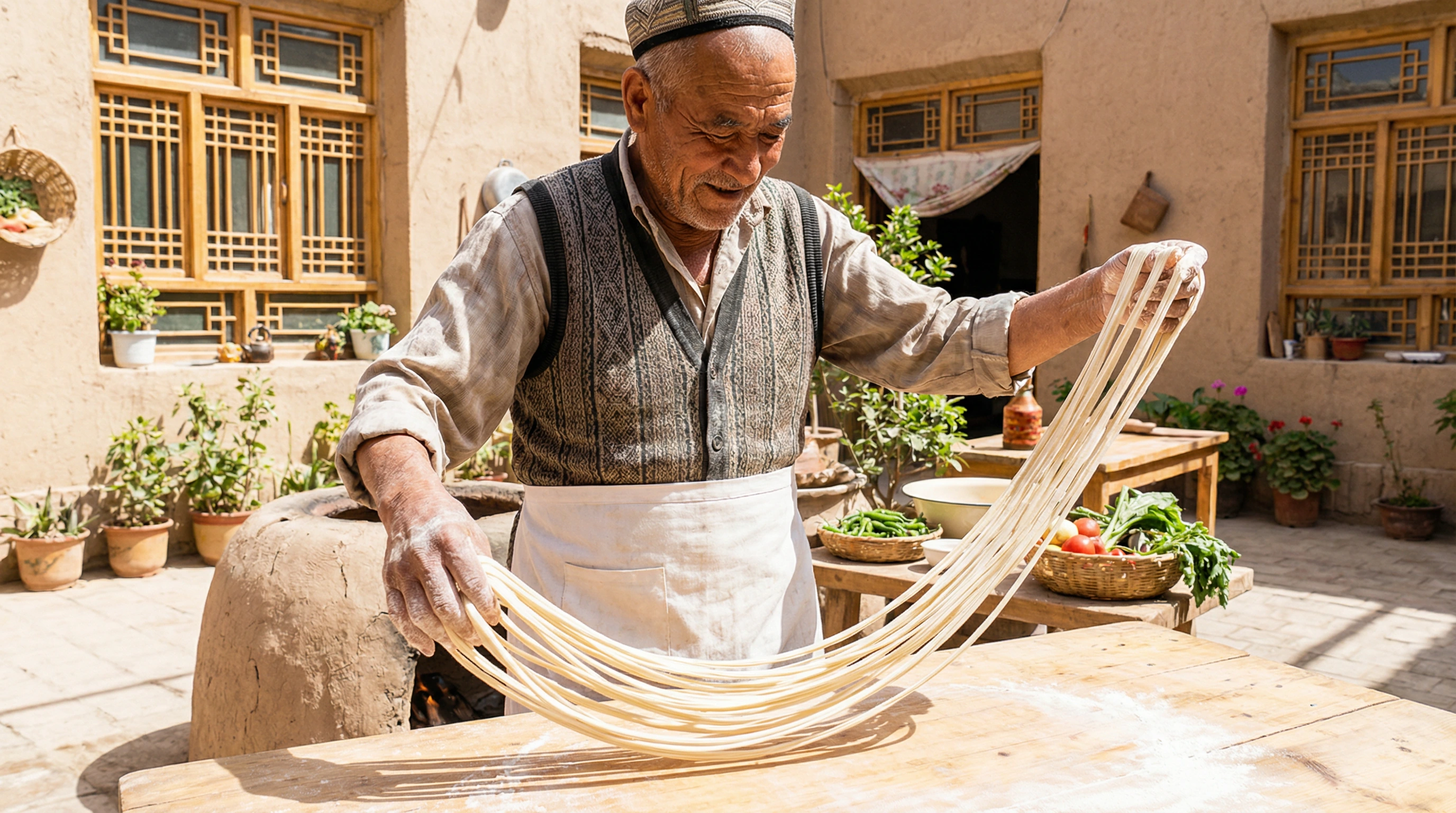
The dish exemplifies the Silk Road's culinary exchange, combining Chinese noodle-making techniques with Central Asian meat and vegetable preparations. Traditionally, the noodles are hand-pulled and stretched until they reach a shoelace-like consistency, a skill passed down through generations of home cooks and professional chefs alike. The name derives from the Dungan and Turkic languages, reflecting the region's diverse ethnic tapestry.
In Uyghur households, preparing lagman remains a communal activity, with family members gathering to stretch noodles and prepare the accompanying vegetable stir-fry. The dish varies by region; some versions incorporate more tomato for a redder sauce, whilst others emphasise the clarity of the broth and the crunch of fresh vegetables. Historically, wheat cultivation flourished in the Tarim Basin and surrounding oases, providing the foundation for noodle-based dishes. The technique of hand-pulling noodles likely arrived via Chinese influence, whilst the emphasis on lamb or beef and aromatic vegetables reflects pastoral nomadic traditions. Today, lagman stands as a staple of Uyghur cuisine, served in homes and traditional restaurants from Kashgar to Almaty, representing both everyday sustenance and cultural identity. ■

Login or Register to comment