





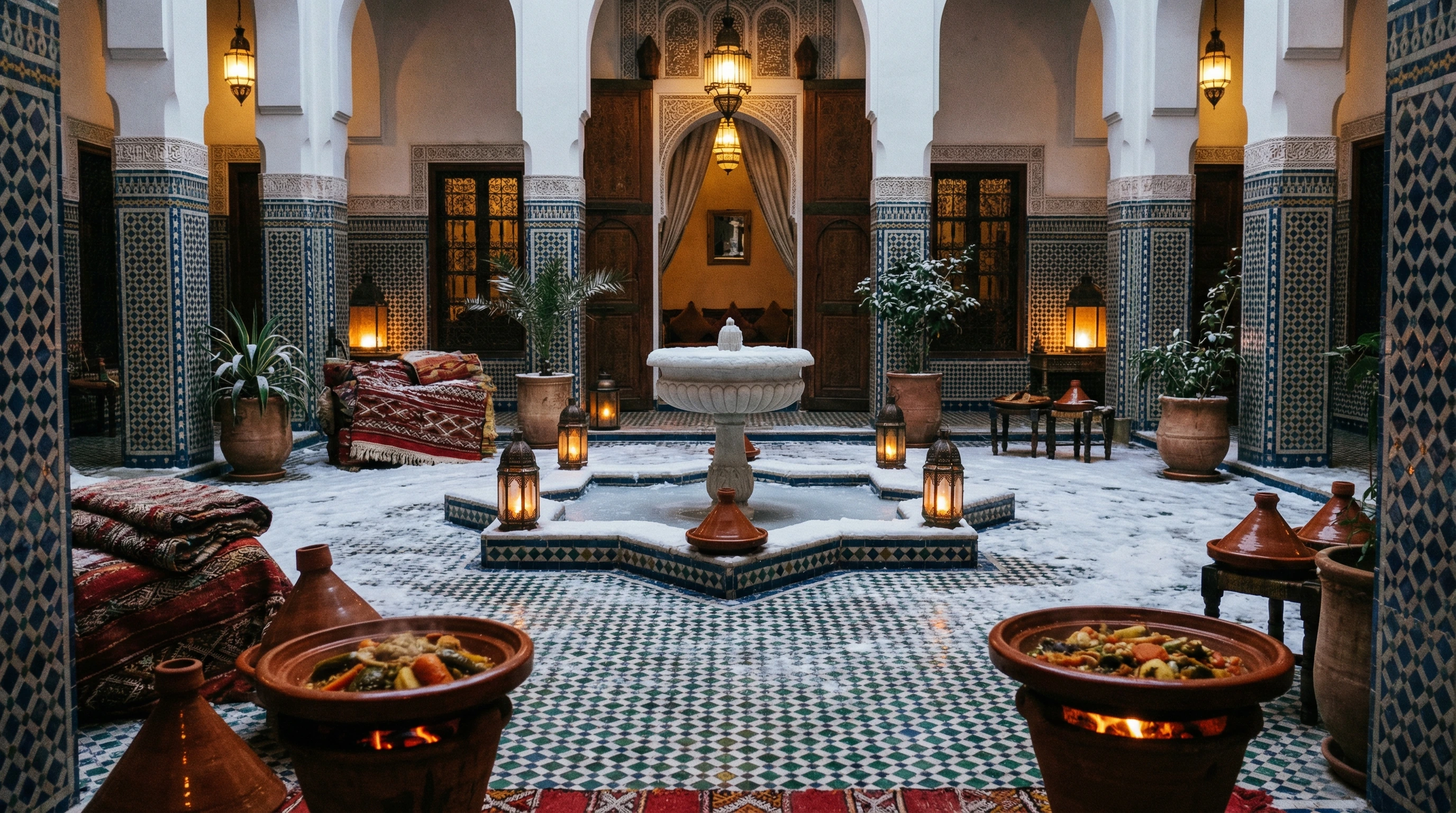
Chicken Tagine with Preserved Lemon
Tagine djaj bi hamad markad, Moroccan chicken tagine
Culture, Heritage & Culinary Tradition
Moroccan cuisine synthesizes Berber indigenous traditions with Arab, Moorish, Ottoman, and French colonial influences.
Ancient Berbers cultivated olives, preserved lemons, and developed tagine cooking vessels and couscous (possibly originating in Morocco or Algeria). Arab conquest in the 7th century introduced spices from Eastern trade routes - cinnamon, ginger, saffron, cumin - creating Morocco's signature spice blends like ras el hanout. Moorish refugees from Spain in the 15th century brought sophisticated Andalusian cooking techniques, orange blossom water, and preserved citrus methods.
Ottoman connections introduced coffee and pastries. The Jewish community contributed preserved meats and slow-cooked sabbath dishes. French Protectorate (1912-1956) influenced bread baking and café culture. Moroccan cuisine features tagines (slow-cooked stews with sweet-savory combinations), couscous (served Fridays traditionally), pastilla (flaky pastry with pigeon or chicken), and mint tea ceremony culture. Regional variations exist between Fez's refined imperial cuisine, Marrakech's market-based traditions, and coastal cities' seafood focus. Modern Moroccan cooking maintains traditional techniques while representing North Africa's most internationally celebrated cuisine. ■

Login or Register to comment