





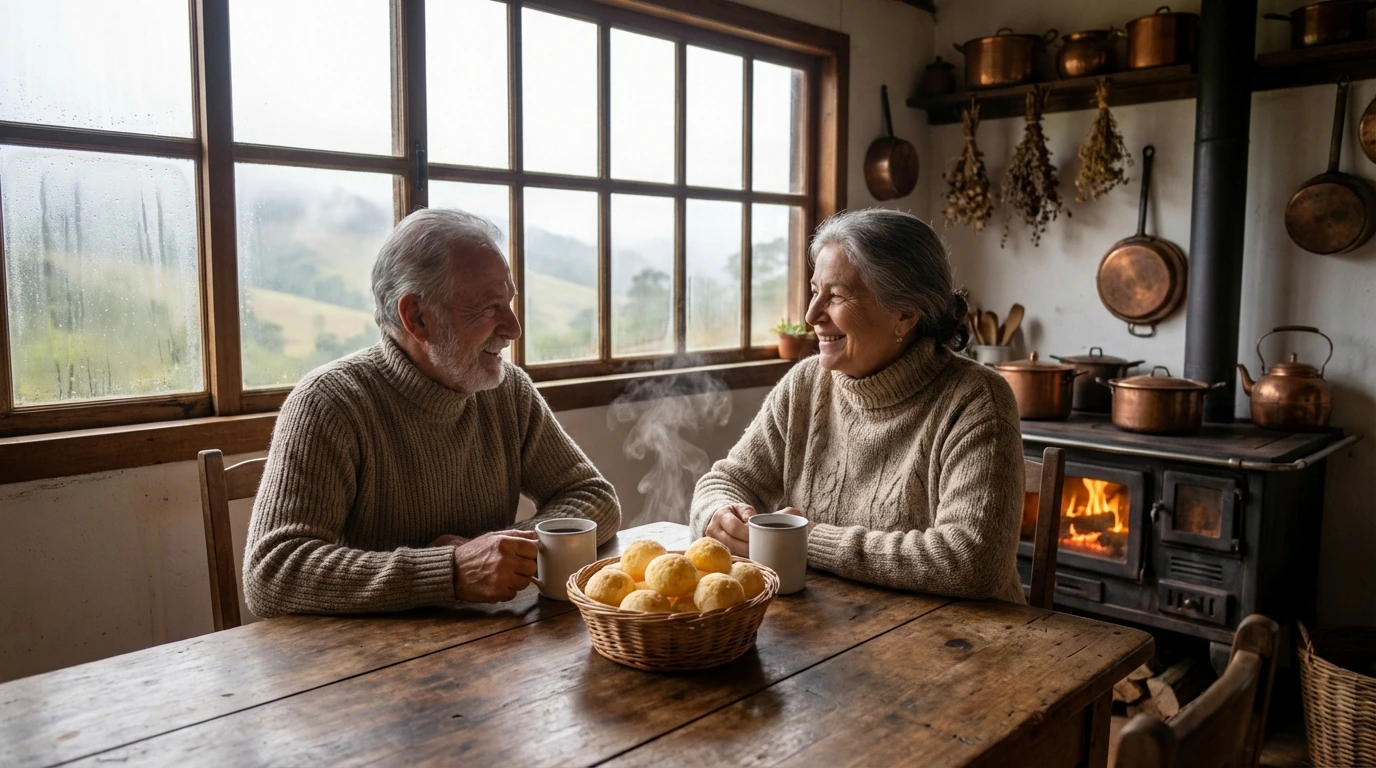
Pão De Queijo (Cheese Bread)
Cheese Bread, Brazilian Cheese Bread, Cheese Rolls
Food, Place & the Past
Pao De Queijo originated in the state of Minas Gerais during the colonial period of Brazil.
The recipe developed as a creative use of cassava starch, known locally as polvilho, which was a by-product of cassava processing. Combined with local cheese produced in the region's dairy farms, this humble ingredient transformed into a beloved staple. The tradition of cheese-making in Minas Gerais dates back to the eighteenth century when Portuguese colonists brought dairy farming techniques to the mountainous regions.
Local farmers began producing fresh white cheese, which paired naturally with the starchy cassava flour available from indigenous agricultural practices. Over generations, the recipe evolved from simple cassava and cheese mixtures to the puffed, golden rolls recognised today. While originally a regional specialty, Pao De Queijo gained popularity throughout Brazil during the twentieth century and has since become an iconic symbol of Brazilian cuisine. Modern versions maintain the essential combination of tapioca starch and cheese, though variations now include different cheese types and additional flavourings. The bread represents the fusion of indigenous cassava cultivation with European dairy traditions, embodying Brazil's diverse culinary heritage. ■

Login or Register to comment