





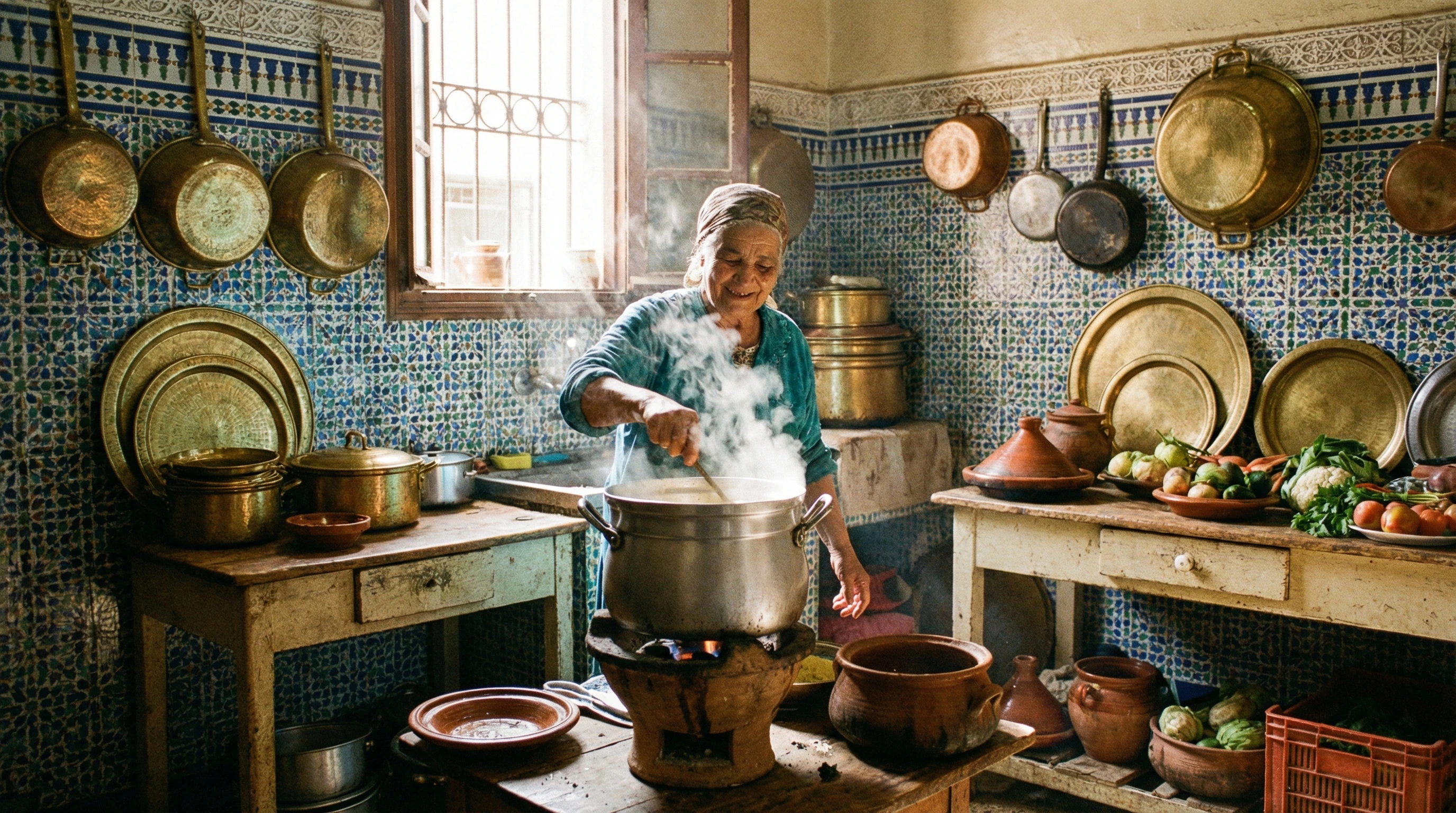
Lamb " Chickpea Couscous
Cuscús de pollo y garbanzos, cuscús bereber.
Las raíces culturales de la cocina regional
Argelia y Marruecos comparten fundaciones culinarias bereberes al tiempo que desarrollan identidades regionales distintas mediante diferentes experiencias coloniales y comerciales.
El centro de cocina de ambos países en el couscous, considerado un regalo de Maghrebi a la cocina mundial, con debates en curso sobre si se originó en Argelia o Marruecos. Antiguas tribus bereberes desarrollaron cultivos de grano, alimentos preservados y tradiciones nómadas de cocina adaptadas a diversas geografías de la costa mediterránea al desierto del Sahara. El comercio fenicio y romano trajo la cultura del aceite de oliva y el trigo. La conquista árabe-islámica unificó la región culturalmente al introducir especias orientales y técnicas de cocina.
La proximidad de Argelia a Túnez y la colonización francesa más larga (1830-1962) crearon una cocina urbana más influenciada por el Mediterráneo y Europa, manteniendo al mismo tiempo las tradiciones montañosas de Berber. La posición atlántica de Marruecos y la afluencia andaluza de refugiados crearon perfiles de sabor más insulares, únicamente marroquíes. Ambos países comparten platos basados en corderos, uso de harissa, cultura de té de menta y tradiciones culinarias de Ramadán. Los platos regionales argelinos incluyen el chakhchoukha y la pasta de rechta, mientras que Marruecos reclama la bastilla y el couscous de siete verduras. La identidad de Maghrebi compartida de los países mantiene técnicas e ingredientes comunes a pesar de las distintas cocinas nacionales emergentes en el período moderno. ■

Inicia sesión o regístrate para comentar