




English Breakfast with Sausages and Bacon
Full English, Fry-up, Full Monty, English Fry-up, Traditional English Breakfast
Roots, Region & Table
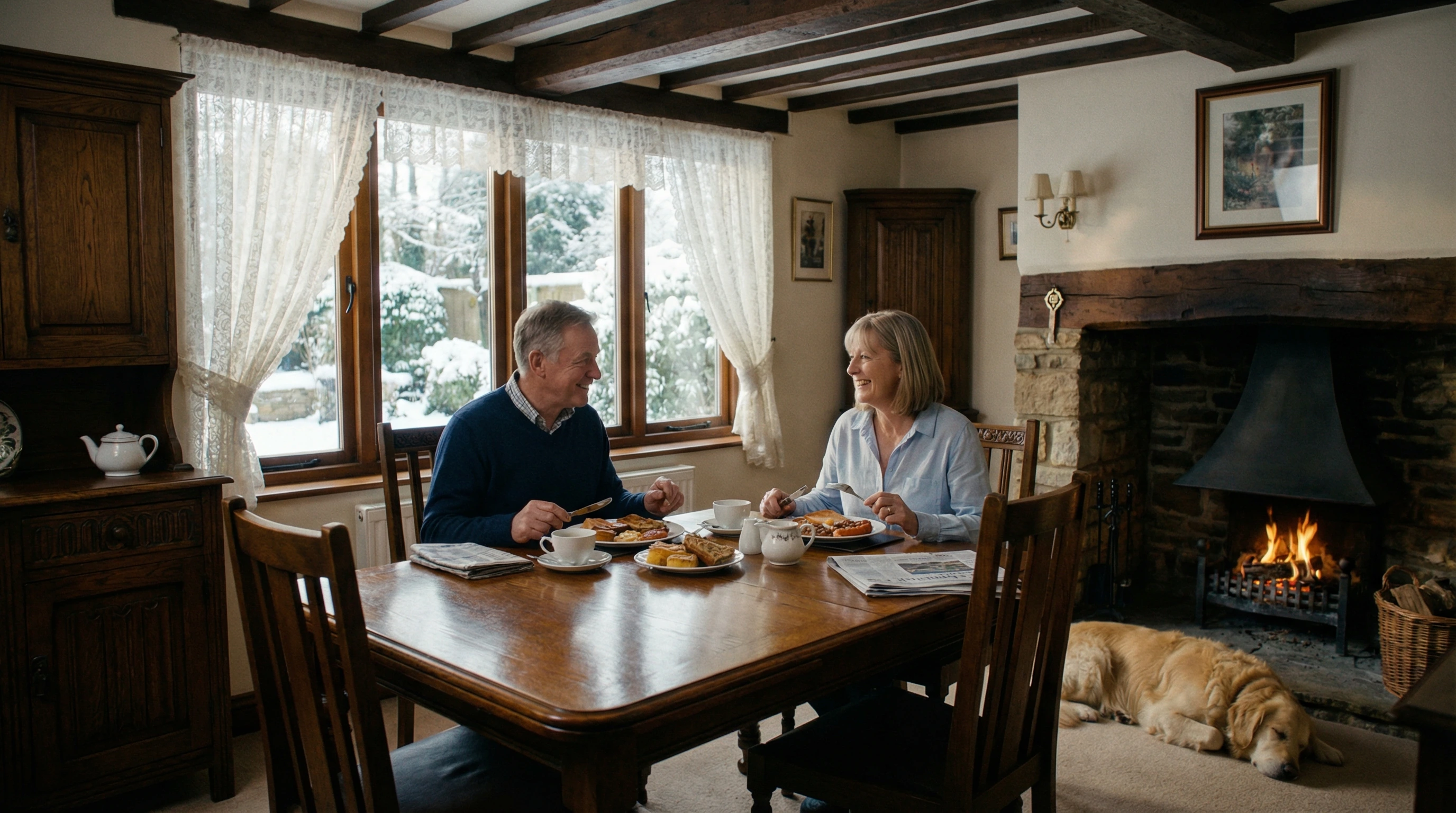
The full English breakfast, often called the 'fry-up', traces its origins to the Victorian era when the landed gentry began hosting elaborate morning feasts that demonstrated their wealth and hospitality to house guests.
These early versions evolved from Anglo-Saxon and Norman traditions of consuming hearty cooked meats to break the overnight fast, gradually incorporating imported ingredients and colonial influences such as tea, tomatoes and mushrooms. By the Edwardian period, the breakfast had become a competitive display among country houses, with hosts vying to offer the most impressive spreads featuring multiple meat courses, eggs, preserves and fresh bread.
The standardised version recognisable today developed throughout the mid-twentieth century, particularly during the 1950s when post-war rationing ended and protein-rich morning meals were actively encouraged for industrial labourers and factory workers. Bed and breakfast establishments, motorway service stations and seaside cafes subsequently democratised the dish, making it accessible across social classes and establishing it as a cornerstone of British hospitality. Regional variations persist, with northern counties often including black pudding or oatcakes, while southern versions might feature fried bread or bubble and squeak.
Despite modern health trends favouring lighter options, the full English remains a cherished weekend ritual and cultural touchstone, representing comfort, indulgence and the distinctly British art of the leisurely morning meal shared with family and friends. ■
See the full recipe for English Breakfast with Sausages and Bacon
Yum User contributed this on 27 Mar 2026
Login or Register to comment