





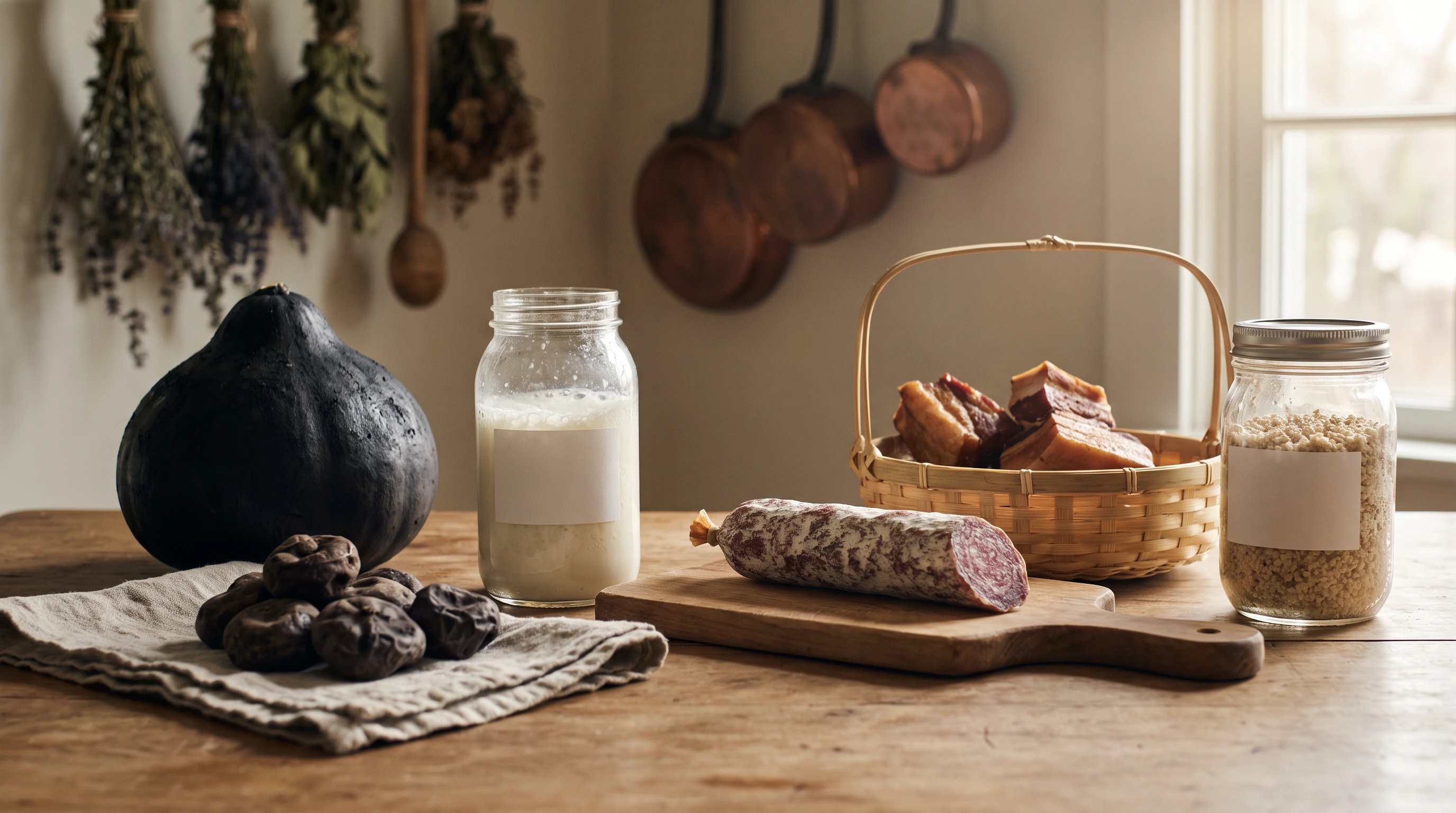
Bien avant l'invention du congélateur, chaque communauté sur la planète a imaginé des moyens de conserver les aliments : le fumage, le salage, la fermentation, le séchage, et même l'enfouissement. Une nouvelle vague de curiosité et de préoccupations climatiques a fait sortir ces pratiques des musées pour les ramener sur les plans de travail des cuisines. Enwave observe que les consommateurs recherchent désormais des aliments qui semblent « authentiques, enracinés et faciles à comprendre », un sentiment qui alimente la renaissance des méthodes de conservation ancestrales, tant comme vecteur de saveurs que comme stratégie de résilience.
La fermentation est en tête de file. Le Baltimore Sun note une prise de conscience accrue concernant la santé intestinale, avec le kimchi, la choucroute et le kéfir qui s'invitent aux petits-déjeuners aux États-Unis et au Royaume-Uni. Le récent guide de Julia Skinner, Essential Food Preserving, élargit la réflexion au-delà des classiques, encourageant les cuisiniers amateurs à explorer les sauces pimentées fermentées, les bouillies de céréales et les boissons lactées. La science confirme cette tendance : les aliments fermentés apportent des cultures vivantes capables d'équilibrer le microbiome, un avantage que les nutritionnistes modernes s'efforcent de promouvoir.
Le fumage trouve lui aussi un nouveau public. Dans la vallée du Rift, au Kenya, les Kalenjin préparent toujours le mursik en frottant l'intérieur d'une gourde avec des braises brûlantes de bois dur senetwet, y déposant un fin film de charbon qui colore le lait et y introduit des polyphénols aux propriétés antimicrobiennes. Dans l'Assam, en Inde, un duo mère-fille utilise la fumée de bambou pour saler le porc et fermenter les pousses, créant une cuisine forestière et zéro déchet que Thebetterindia décrit comme étant « bâtie sur les saisons et la survie, et non sur les tendances ». À travers les continents, ce goût fumé est célébré pour sa profondeur et son pouvoir de conservation naturel.
Le séchage, méthode la plus ancienne pour prolonger la durée de conservation, revient également sur le devant de la scène. Des archéologues ont mis au jour sur la côte aride du Pérou du chuño - des pommes de terre lyophilisées vieilles de 500 ans -, prouvant que les Incas maîtrisaient la déshydratation pour ravitailler leurs campagnes impériales. Aujourd'hui, des chefs reproduisent cette technique avec des déshydrateurs solaires, transformant les surplus de récoltes en collations légères et denses en nutriments qui ne s'altèrent pas, même sans électricité.
La charcuterie illustre comment le salage traditionnel peut prospérer dans un monde réglementé. De petits producteurs au Royaume-Uni, en Australie et aux États-Unis font revivre des races de porcs ancestrales pour produire des jambons de style espagnol et des salumis italiens, jonglant avec des règles d'hygiène strictes tout en préservant des saveurs artisanales. Un bar à bouillon dans l'est de Londres, décrit par Friar Street Kitchen, montre comment les clients se retrouvent désormais pour siroter un bouillon mijoté et admirer des rangées de bocaux en fermentation, faisant écho à des rituels millénaires. L'attrait réside dans la patience tactile du processus et la complexité gustative que seul le temps peut façonner.
Même la conservation par les moisissures sort des laboratoires. Le koji, un champignon filamenteux utilisé pour décomposer les protéines, a quitté les brasseries de saké japonaises pour investir les cuisines d'avant-garde du monde entier. Les communautés de fermentation rapportent que les cuisiniers amateurs inoculent désormais la viande et les produits laitiers avec des spores de koji pour créer des produits stables et riches en umami, une pratique qui jette un pont entre les astuces enzymatiques anciennes et l'ambition culinaire contemporaine.
Des universités, de Scandinavie aux États-Unis, proposent désormais des programmes de science de la fermentation, formant une génération capable de conjuguer microbiologie et tradition. Alors que les consommateurs exigent transparence, durabilité et saveurs audacieuses, la vieille boîte à outils du fumage, du séchage, de la fermentation et du salage est réinventée pour un garde-manger respectueux du climat. Il en résulte une culture alimentaire qui honore le passé tout en répondant aux défis actuels du gaspillage et de la santé.
L'avis de Yum : Adopter ces techniques éprouvées par le temps n'est pas de la nostalgie : c'est une voie pragmatique vers un avenir alimentaire plus savoureux et plus résilient.