





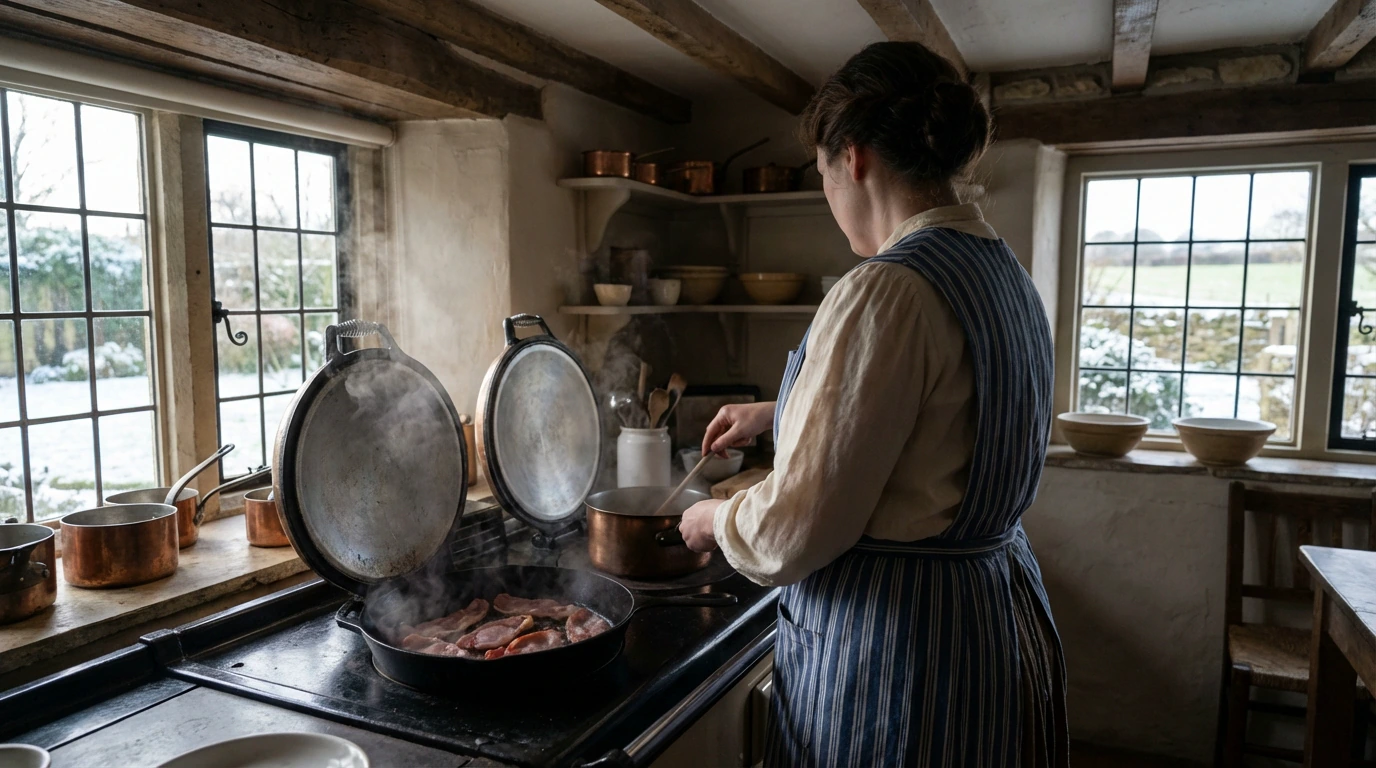
Full English Breakfast with Grilled Tomatoes
Fry-up, Full English, English Breakfast, Cooked Breakfast
History behind the region and its food
The Full English Breakfast, often simply called a 'fry-up', emerged from the landed gentry's morning feasts of the Victorian era, where elaborate breakfasts became a display of wealth and hospitality.
By the Edwardian period, the meal had filtered down to the middle classes, with hotels and railway dining rooms standardising the components we recognise today. Regional variations developed across the British Isles. The 'Full English' typically includes back bacon, eggs, and tomatoes, though some counties add black pudding or fried bread.
The Scottish version incorporates tattie scones and haggis, while the Welsh features laverbread and cockles. Northern Ireland offers the 'Ulster Fry' with soda bread and potato farls. The grilled tomato component specifically reflects Britain's historical tomato cultivation in glasshouses, particularly in the Lea Valley near London, which supplied the capital with fresh produce even in colder months. Unlike the continental preference for raw tomatoes, the British tradition favours cooking them, either grilled or fried, to intensify their sweetness and complement the savoury meats.
During the Second World War, bacon and eggs remained rationed but prized, making the Full English a symbol of resilience and comfort. Post-war, the rise of the 'greasy spoon' cafe democratised the dish, making it accessible to workers and travellers alike. Today, it remains a cultural institution, served in homes, pubs, and bed-and-breakfast establishments, representing a moment of indulgence in an otherwise hurried world. ■
See the full recipe for Full English Breakfast with Grilled Tomatoes

Login or Register to comment