





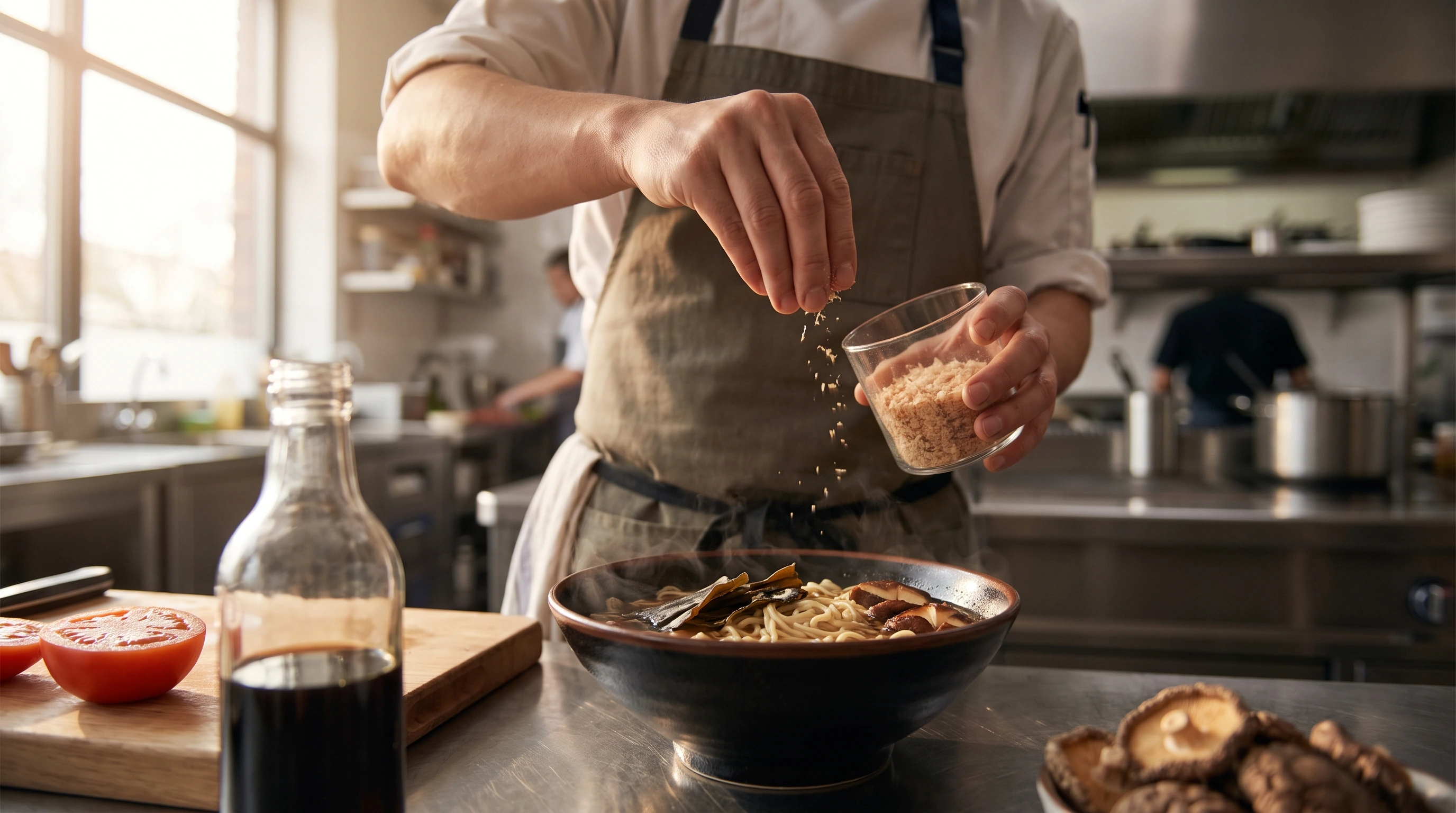
When Japanese chemist Kikunae Ikeda first tasted a kombu dashi broth in 1908, he sensed something that was neither salty nor sweet, bitter nor sour. He isolated glutamic acid, named the sensation “umami” - a blend of the words *umai* (delicious) and *mi* (taste) - and set the stage for a century-long quest to prove that the fifth taste was real. As food columnist Jasmine Mangalaseril notes, today the word appears on menus beside pepperoni, grilled asparagus and birria, signalling a shift from obscure science to everyday parlour.
The scientific community finally caught up in 2002, when researchers identified the T1R1/T1R3 receptor complex that responds to glutamate and its allies. This discovery explained why it took nearly a hundred years for the Western palate to accept umami as a distinct modality; without a known receptor, the taste lingered in the shadows of sweet, salty, sour and bitter. Modern flavour labs now map the exact molecular interactions, turning the once-mysterious savoury note into a predictable tool for chefs.
Long before Ikeda gave umami a name, cultures worldwide were harnessing its power through fermentation. Umamiscience reminds us that ancient Roman garum, Korean jeotgal and Cambodian prahok all relied on enzymatic breakdown to release glutamate, creating depth that fresh ingredients alone could not achieve. The ageing of Parmigiano-Reggiano, described by Terumi Morita, concentrates free glutamate to levels that can reach twelve hundred milligrams per hundred grams - a natural umami bomb that has delighted diners for centuries without a scientific label.
In the West, monosodium glutamate (MSG) has endured a reputation crisis born of the so-called “Chinese Restaurant Syndrome”. Recent reporting by NPR highlights how that myth is being dismantled by chefs who openly champion MSG for its ability to enhance flavour without added salt. By explaining that the glutamate in MSG is chemically identical to that found in tomatoes or cheese, these chefs are helping diners separate fact from fear, and the ingredient is slowly re-entering mainstream kitchens.
Plant-based cooks now wield a versatile umami toolkit that includes tomato paste, nutritional yeast, soy sauce, kombu, dried shiitake and even fermented bean pastes. Mangalaseril points to a steaming bowl of pho in Guelph, where tomatoes lend a subtle umami lift that makes the broth “go mmm”. Such ingredients let chefs craft meat-reduced menus that still deliver the mouth-filling satisfaction once reserved for animal-based dishes.
Research is pushing the boundaries beyond umami itself. A 2026 ScienceDirect review outlines how peptide sequences from food proteins can be engineered to bind the T1R1/T1R3 receptor with even greater potency, opening the door to next-generation flavour enhancers. Meanwhile, Ajinomoto’s scientists are probing “kokumi”, a proposed sixth taste linked to mouthfeel and fullness, suggesting that the flavour landscape may soon expand further. In the Philippines, Ajinomoto celebrates Umami Month with community recipes that showcase the seasoning’s ability to brighten simple home-cooked meals, underscoring the commercial and health potential of the taste.
Neuroscience adds another layer to the story. Glutamate is abundant in breast milk, a fact that helps explain why umami flavours feel innately comforting across cultures. Studies show that activation of the umami receptors triggers appetite-stimulating pathways in the brain, making dishes richer in glutamate more likely to be perceived as satisfying and to encourage continued eating - a double-edged sword for both chefs designing indulgent experiences and public-health advocates seeking balanced diets. As the science of savoury deepens, the culinary world is poised to harness umami not just for taste, but for texture, nutrition and emotional resonance.
Yum Opinion: Embracing umami means recognising that the most delicious meals are often built on chemistry as much as on tradition, and that a single word can bridge the gap between laboratory and kitchen.